What are the propagation methods for cineraria? Explained clearly in one article
1. Sowing method
Harvest the seeds after they mature, sun-dry them, place them in paper bags, and store them in a dry place. Sowing in spring each year is best.
2. Cuttings or division propagation
May each year is the flowering season for cineraria. At this time, the side shoots can be removed and inserted as cuttings in clean river sand. Some leaves can be removed as appropriate to ensure sufficient moisture.
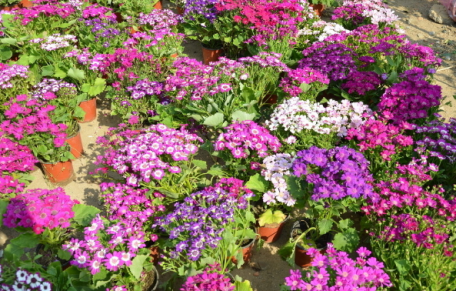
In fact, growing a pot of cineraria is very simple! Cineraria can not only be used as an ornamental plant, but also has a strong purifying effect on formaldehyde in the air! Placing a pot of cineraria at home can keep the air fresh at all times!
How to grow cineraria
Cineraria is a perennial herb, generally grown as a 1-2 year old flowering plant. The growing methods for cineraria are not suitable for all flower lovers. When growing cineraria, you should base it on your own actual growing conditions and combine it with the habits of cineraria. Below, let us look at the habits and characteristics of cineraria:
I. How to grow cineraria
Cineraria is native to the Canary Islands in the Atlantic Ocean. At present, it is widely cultivated in parks or courtyards across China. Its flower colors are beautiful and bright, with diverse colors. It is a common potted flower and an ornamental plant for decorating courtyards and rooms.
Cineraria prefers warm winters and climates without severe summer heat. It avoids dry air and direct exposure to the scorching sun, and also requires good light. During the bud stage, if light is less than 3 hours per day, it cannot develop buds and bloom normally. To prevent uneven crown development, the potted flower can be turned 180 degrees.
Cineraria requires loose, fertile, well-drained soil. It prefers a sunny and well-ventilated environment, but avoids direct scorching sunlight. It likes a cool and humid climate. Cool temperatures and ample sunlight are the main conditions for its good growth. It prefers sandy loam rich in humus and well-drained, avoids drought, fears waterlogging, and is suitable for neutral and slightly acidic soil. The flowering period is from December to April of the following year, with the full bloom period in March--April.
II. Key care points for cineraria
Temperature: It avoids heat. The suitable growth temperature is 10-20°C. During the flowering period, the temperature can be lowered a little more to prolong the flowering period. Seedlings can withstand a low temperature of 1°C.
Light: During the growth period, it should be placed in a greenhouse with good light for growth. After flowering, move it indoors for enjoyment. Every day it should be placed at least in front of bright south, west, and east windows to receive 4 hours of light, so as to maintain bright flower colors and robust plants. Spraying flower-strengthening agent during the bud stage can promote strong buds, larger petals, brighter flower colors, richer fragrance, and a longer flowering period. During cultivation, pay attention to frequently turning the direction of the pot so that the flower crown and plant shape are regular.
Watering: For pot cultivation, keep the potting soil slightly moist, and water thoroughly. But avoid poor drainage.
Fertilizing: Apply light fertilizer during the growth period, and be careful not to let fertilizer splash onto the leaves. After fertilizing, rinse promptly, and spray with new high-fat film to preserve fertilizer and moisture. Stop fertilizing during the flowering period.
Soil: Ordinary soil is sufficient.
Propagation: Sow seeds for propagation. Sow in pots from July to August. The suitable germination temperature is 20-25°C. Seedlings emerge in 10-20 days. According to the growth of the seedlings, gradually switch to pots of corresponding sizes.
Preventing and controlling aphids and red spider mites: First, maintain appropriate temperature and humidity, and keep good ventilation. Second, detect them promptly in the early stage of infestation, separate affected plants as early as possible, and spray a small amount of pesticide on the affected plants.
For severe damage by aphids and red spider mites, a 2000-fold dilution of dimethoate can be sprayed to kill them. Because red spider mites generally occur on the underside of leaves, while aphids generally occur on the tender tops of cineraria, when spraying pesticide, focus on the underside of leaves and the top of the plant, and also spray appropriately on the upper surface of leaves.
Propagation methods for cineraria
Cineraria is mainly propagated by sowing. For double-petaled varieties, to prevent natural hybridization or quality degeneration, cuttings or division can also be used for propagation.After cineraria blooms, from May to June, side shoots often grow from the leaf axils at the base. These side shoots can be removed and inserted as cuttings in clean river sand. When inserting, leaves can be appropriately thinned to reduce transpiration. After inserting, water thoroughly and shade to protect from sun. If the mother plant does not grow side shoots, all parts of the stem above 10 cm can be cut off to encourage side shoots to develop.
>Sowing method: Sowing is generally carried out in late July, and it can bloom by Spring Festival. From sowing to flowering takes about half a year. The sowing time can also be determined according to the desired flowering time. For example, for flowers for New Year's Day, sowing can be chosen in mid-to-late June. When daylight is longer, cineraria can develop flower buds earlier, but the stems are slender and the plants are smaller, affecting the overall ornamental effect. Early sowing results in lush plants and larger flowers, so the sowing period should not be delayed until after August.
The sowing soil is mixed from 1 part garden soil, 2 parts leaf mold, 2 parts rice husk ash, plus a small amount of decomposed base fertilizer and superphosphate. For sowing, a shallow pot or sowing wooden box can be used. Mix the seeds evenly with a small amount of fine sand, then sow them in the shallow pot, paying attention to spreading them evenly. After sowing, cover with a layer of fine soil, just enough that the seeds are not visible. After sowing, do not use a watering can to sprinkle water, to avoid exposing the seeds. You can choose the pot-soaking method or the spray method to make the potting soil completely moist. Cover the pot with glass to keep it moist, but leave a small gap on one side for ventilation and air exchange. Then place the sowing pot under a shade shed, or place it in a cold frame or on the shady side of a cold room, paying attention to ventilation and maintaining a relatively low temperature. The optimum temperature for germination is 21°C, and germination and seedling emergence occur in about 1 week. After emergence, gradually remove the shading material and move the glass away, so that the seedlings gradually receive sunlight, but they must be shaded at noon. After two weeks, full light can be given. To prolong the flowering period, sow once in pots about every 10 days.
Cuttings or division propagation: Double-petaled varieties are not easy to set seed, so cuttings can be used. From January to June, cut root sprouts or axillary buds after flowering as cuttings and insert them in sand. They can take root in about 20-30 days, and after 5-6 months of cultivation they can bloom. Young shoots from the roots can also be used for division propagation.