What are the propagation methods for Calathea orbifolia?
Division propagation
Division propagation is the most common propagation method for Calathea orbifolia. Division is most suitable when the temperature is stable at around 20°C, but if the temperature and humidity are suitable, propagation can be carried out year-round.
When propagating, first cut apart the root tubers that have stems, leaves and leaf buds; but if you are propagating only a small quantity, we can place the cut root tubers in flower pots; if we are carrying out large-scale propagation, they should be placed on a seedling bed; when the temperature and humidity are not suitable, we must cover them with plastic film; the temperature inside the film must be controlled between 20 and 28°C, and the humidity controlled above 80%.
Cutting propagation
There is no need to go into cutting propagation, it is a well-worn propagation technique, and if you have any questions you can read our previous articles. But we should note that the survival rate of Calathea orbifolia cuttings is not as good as that of division propagation, generally around 50%.
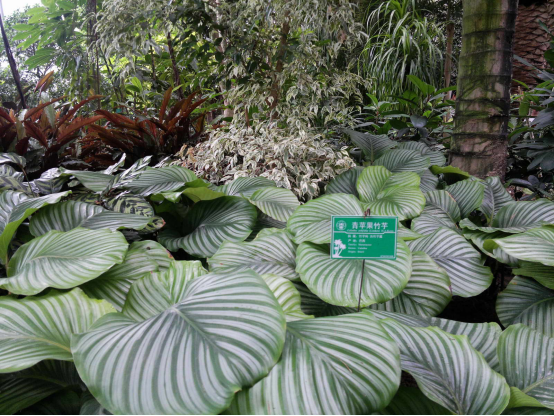
That covers the two propagation methods for Calathea orbifolia, next let us look at its pest and disease control!
Propagation methods for Calathea orbifolia
Division propagation of Calathea orbifolia
The propagation method for Calathea orbifolia is generally division propagation; the spring temperature is around 20°C, and division is best done at this time. As long as the temperature and humidity are suitable, propagation can be carried out year-round.
When propagating, use a sharp blade to cut apart the root tubers that have stems and leaves or leaf buds; if propagating a small quantity, the cut root tubers with stems and leaves or leaf buds can be placed directly in flower pots; if propagating a large quantity, they should be placed on a seedling bed; when the temperature and humidity do not meet the requirements, cover them with plastic film; make the temperature inside the film reach 20 to 28°C, and the humidity above 80%.
Cutting propagation of Calathea orbifolia
Cutting propagation uses the tender shoot tips; the cuttings are 10 to 15 cm long, and depending on leaf size, one third or one half of the leaf is retained; the cuttings are then treated with 500ppm naphthaleneacetic acid for 2 to 3 seconds, or they can be treated with indoleacetic acid and ABT rooting powder. After treatment, the cuttings are inserted into the seedling bed, with a plant and row spacing of 5 by 10 cm. Cover the cuttings with a plastic film arched tunnel , and the management method is the same as for division propagation. Cutting propagation can be carried out at any time when the temperature is not lower than 20 degrees. The cuttings root in 30 to 50 days, but the survival rate of cuttings will not be as high as that of division propagation, generally around 50%.
That is our introduction to the main propagation methods for Calathea orbifolia; Calathea orbifolia is suitable for indoor home decoration and beautification or for greening purposes. It can be placed in a relatively bright room for viewing.Is Calathea orbifolia toxic? Can Calathea orbifolia be grown at home?
Calathea orbifolia is a plant that likes shade and cannot tolerate high temperatures or strong sun exposure. Since being introduced into our country, it can now be seen in many places domestically. Many people are not very clear about what Calathea orbifolia is, and some even say it is toxic like plants such as narcissus. So what is the truth?
Is Calathea orbifolia toxic?
There are many classifications under the Marantaceae family, so we cannot make a sweeping judgment that anything in the Marantaceae family is toxic. After modern scientific research, there is no relevant evidence that it is toxic, so for now, Calathea orbifolia should not be toxic. Therefore, when handling the sap of Calathea orbifolia, we do not need to be so frightened and can be relatively calm.
Can Calathea orbifolia be grown at home?
Calathea orbifolia can be grown at home, and growing it also has certain benefits, mainly shown in the following points:
1. Ornamental value: Considering that the leaf surface of Calathea orbifolia is brilliantly colored, and it is a plant that tends to grow in shade, plus cultivating and managing Calathea orbifolia is relatively simple, it is widely used for indoor potted viewing. Indoors, because of the colorful leaves of Calathea orbifolia, it is a high-grade cut-leaf material that can be used directly for flower arranging.
2. Decorative value: As one of the most famous indoor household plants in the world, Calathea orbifolia can be used for permanent decoration in remote corners of hotels, and can also decorate a bedroom at home. Remember one point: in the process of cultivating Calathea orbifolia, after placing it indoors for a period of time, it should be placed on a balcony for a period of sunlight, so as to benefit its long-term viewing.
3. Greening value: Although the formaldehyde removal ability of Calathea orbifolia is one half that of spider plant, compared with other ordinary plants it is still much more efficient and can purify the air. In addition, Calathea orbifolia is also a master at removing ammonia.
Propagation methods for Calathea orbifolia
1. Division propagation.
1. The propagation method for Calathea orbifolia is generally division propagation; the spring temperature is around 20°C, and division is best done at this time. As long as the temperature and humidity are suitable, propagation can be carried out year-round.
When propagating, use a sharp blade to cut apart the root tubers that have stems and leaves or leaf buds; if propagating a small quantity, the cut root tubers with stems and leaves or leaf buds can be placed directly in flower pots; if propagating a large quantity, they should be placed on a seedling bed; when the temperature and humidity do not meet the requirements, cover them with plastic film; make the temperature inside the film reach 20 to 28°C, and the humidity above 80%.
2. Cutting propagation.
1. Cutting propagation uses the tender shoot tips; the cuttings are 10 to 15 cm long, and depending on leaf size, one third or one half of the leaf is retained.
2. The cuttings are then treated with 500ppm naphthaleneacetic acid for 2 to 3 seconds, or they can be treated with indoleacetic acid and ABT rooting powder.
3. After treatment, the cuttings are inserted into the seedling bed, with a plant and row spacing of 5 by 10 cm. Cover the cuttings with a plastic film arched tunnel, and the management method is the same as for division propagation. Cutting propagation can be carried out at any time when the temperature is not lower than 20 degrees. The cuttings root in 30 to 50 days, but the survival rate of cuttings will not be as high as that of division propagation, generally around 50%.
Which plants are toxic and unsuitable for keeping at home
1. Poinsettia. The whole plant is toxic, especially the white sap in the stems and leaves, which can irritate the skin and cause redness and swelling and trigger allergic reactions. If the stems or leaves are eaten by mistake, there is a risk of poisoning and death.
2. Corn poppy. The whole plant is toxic and contains toxic alkaloids, with the fruit being the most toxic; if eaten by mistake it will cause poisoning of the central nervous system, and in severe cases may even endanger life.
3. Oleander. It blooms in spring, summer and autumn each year, and is a flower that is both ornamental and medicinal, but can also poison people. Its stems, leaves and even flowers are all toxic, and if its scent is smelled for too long, it can make people drowsy and reduce mental ability. The milky white sap it secretes will cause poisoning if eaten by mistake.
Calathea orbifolia is not only non-toxic, it is also very suitable for growing at home, because it has a certain air-purifying effect. So everyone should not believe rumors in the future. When growing it at home, you can use division and cutting methods for propagation, which can make it grow better.