How to grow cineraria? Detailed guide to cultivation methods and precautions
1. Sunlight
Cineraria likes to grow in cooler places and has low tolerance for high temperatures, so it should not be left in direct sunlight for long periods in daily care and needs appropriate shading.
2. Temperature
For temperature, keeping it at around 15°C in daily care is best; too high a temperature will cause water to evaporate too quickly, leading to loss of nutrients.
3. Soil
Cineraria likes fertile soil, so the soil's fertility needs to be maintained in daily care. Regular fertilizing is extremely beneficial to the growth of cineraria, but be careful not to over-fertilize.
4. Water
Cineraria likes to grow in a relatively moist environment, so it needs sufficient water. Frequently check whether the soil is dry and whether the leaves are turning yellow. If it is relatively dry, water it promptly to avoid affecting the growth of cineraria.
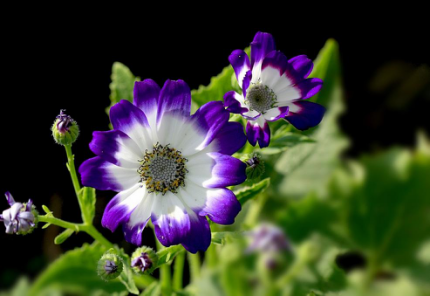
Well, that is all for today's content. I hope everyone can learn something from it! Each cineraria, just like its flower meaning, is so full of vitality. Its adaptability is very strong; no matter how harsh the environment, it can grow healthily. Actually, we should all learn from them! Thank you for your patient reading! For more cineraria information, please follow Four Seasons Plants Network!
How to grow cineraria, cultivation methods for cineraria
Cineraria likes a warm and humid environment. Because of its long flowering period and rich flower colors, it has become a main flower for New Year's Day and the Spring Festival. The cultivation methods for cineraria are not suitable for all flower lovers; cineraria should be grown according to the actual cultivation situation.
Cultivation methods for cineraria:
1. Soil: Cineraria likes sandy loam rich in humus and with good drainage. It is intolerant of drought and afraid of waterlogging, and is very suitable for neutral and slightly acidic soil.
2. Watering: Cineraria has large, thin leaves and needs sufficient water, but the potting soil must not be too wet; keeping the leaves from wilting is appropriate. Usually, watering depends on whether the potting soil is dry or wet; water again after it dries, about once every 2-3 days. You can spray the leaf surface with clean water once a day, and in hot weather you can spray twice to lower the temperature and increase air humidity. After flower buds appear, watering should be controlled as much as possible. During the flowering period, the pot should be placed in a cool environment of 8-12°C, which can extend the flowering period to 30-40 days.
3. Sunlight: Cineraria likes sunlight during the growing period and should not be shaded. Turn the flower pot regularly so that the branches and leaves receive light evenly and the plant shape is upright and not lopsided. After the flowers fade, the plant still needs moderate light to adapt to seed development.
4. Temperature: Cineraria likes warmth but cannot tolerate high temperatures, and grows best under conditions of 15-20°C. When the temperature is higher than 21°C, excessive vegetative growth can occur, which is unfavorable for flower bud formation. When the temperature is lower than 5°C, the plant stops growing and developing, and below 0°C frost damage occurs; the suitable temperature for flowering is 10-15°C. Below 6°C, buds cannot open, and above 18°C the flower stems grow thin and long, affecting ornamental value.
5. Fertilizing: In addition to applying base fertilizer when planting, cineraria should be given a thin cake fertilizer once every 7-10 days during growth, or diluted chemical fertilizer can be used. After flower buds appear, 1-2 additional applications of 1000 times diluted monopotassium phosphate solution can be given, and fertilizing continues until flowering (stop applying during the rainy season). If fertilizer contaminates the leaves during application, rinse them promptly.
6. Pests: The common pests and diseases of cineraria are aphids and red spider mites. For serious damage by aphids and red spider mites, a 2000 times diluted dimethoate solution can be sprayed to kill them. Because red spider mites generally occur on the back of leaves, while aphids generally occur on the tender top of cineraria, when spraying pesticide, focus on the back of the leaves and the top of the plant, and also spray the front of the leaves appropriately.
Precautions: Cineraria requires loose, fertile, well-drained soil. It likes a sunny and well-ventilated environment, but avoids direct blazing sunlight. It likes a cool and humid climate. Cool temperatures and sufficient sunlight are the main conditions for its good growth. It likes sandy loam rich in humus and with good drainage. It is intolerant of drought and afraid of waterlogging, and is suitable for neutral and slightly acidic soil. The flowering period is from December to April of the following year, with peak blooming in March-April.
Cultivation methods for cineraria How to grow cineraria
There are extremely many horticultural varieties of cineraria. They can be roughly divided into four types: large-flowered, star-shaped, intermediate, and multiflora, and within different types there are also varieties with different degrees of double flowers and different heights. Today let's learn about the cultivation methods for cineraria!
Cultivation methods for cineraria
I. Cultivation methods for cineraria
Cineraria is a plant in the Asteraceae family. It was originally produced in the Canary Islands and has now spread throughout the world. It has rich varieties, including large-flowered, small-flowered, double-flowered, and multiflora types, and the flower colors include red, snow blue, white, purple, pink, blue, and various mixed colors. It generally can grow to 20-70 cm tall. Around the upright stem there is white downy hair, the leaf blades are large and triangular or heart-shaped, and the capitulum forms flower clusters.
1. Cineraria seeds
In spring, when the weather is clear and the temperature gradually rises, the plant can be moved to a place with sunlight, and pollination is completed through warm wind and insects, making it easy to set seed. By April, when the light is relatively strong, partial shading measures need to be taken to help seed set. Usually it matures in one month. When white pappus first appears at the top of the fruit, it can be picked to prevent the seeds from falling. The collected seeds are dried in the sun, packed in paper bags, and stored in a well-ventilated and dry place.
Generally, seeds are sown in mid-September. After seedlings grow, they need to be transplanted twice, and final planting is carried out in December. For pot cultivation, a size of 18-20 cm should be chosen. Then, after cultivation, they can bloom in February-March of the following year.
2. Cultivation methods for cineraria
This plant is suitable for growing in a warm environment with sufficient water. It can tolerate a certain degree of cold. It can be cultivated in a cold frame or a low-temperature space. At night it should be above 5°C, and during the day it should be below 20°C. The optimal temperature range is between 10-15°C.
Light should be appropriate, avoiding excessive dryness and direct strong light, and there should be a smooth ventilation environment to keep it cool and humid. During the bud stage, the plant should be given more than 3 hours of sunlight to avoid affecting flowering. It is best to turn it during the middle period to avoid uneven crown growth.
For the soil, it is best to choose loose, easily drained, nutrient-rich sandy loam, preferably slightly acidic or neutral loam, with an appropriate amount of humus added, avoiding excessive dryness and waterlogging. Its flowering period is long, generally from December to April of the following year, and it blooms relatively well in March-April.
Cineraria
II. How to grow cineraria?
Propagation: Sowing can be used. Sow in July-August, provide a temperature of 20-25°C, and after about 10-20 days, buds gradually grow, then repot.
Soil: It can be made by mixing general leaf mold and peat with a small amount of sandy soil and a little base fertilizer, keeping it loose and not allowing waterlogging.
Temperature: Prevent the temperature from being too high during hot periods, and try to control it at 10-20°C. Its seedlings can survive at a room temperature of 1°C. During flowering, appropriate cooling measures can extend the flowering time.
Light: During the vigorous growth period, it should receive sufficient sunlight, retain moisture and warmth, and once flowers appear it can be placed indoors. Make sure it receives 4 hours of sunlight in the other three directions besides the north window, and constantly change the direction of the plant so that it grows evenly.
Water: Let the soil have a slight sense of moisture, water thoroughly in one go, pay attention to usual drainage, and pay attention to water supplementation in high-temperature weather.
Fertilizing: During the growth period, some diluted fertilizer can be applied. During this process, avoid fertilizer touching the leaves, then rinse and spray New High Lipid Film. Plants in the bud stage can be given Flower Bud Strengthening Agent to make the buds healthy and the flowers more beautiful. Please do not fertilize during the flowering period.
Diseases: The plant is susceptible to damage by red spider mites and aphids, so environmental conditions should be well controlled, diseased branches should be discovered early and removed immediately, and a small amount of pesticide can also be sprayed. If the disease situation is severe, focus on spraying 2000 times diluted dimethoate solution on the back of the leaves and the top of the cineraria. In addition, spray other parts as well.
Cineraria flower meaning
III. Cineraria flower meaning
Cineraria flower meaning: When its flowers bloom, there is a scene of abundance, vitality, and prosperity, symbolizing celebration, happiness, family harmony, prosperity, wealth, and financial fortune. Because it carries the meaning of wealth, attracting money, and prosperity, some people also call it Wealth Chrysanthemum. Giving it to relatives and friends during the most important Spring Festival of the year represents beautiful blessings.
In addition, different flower colors also have their own flower meanings. The white variety means noble and principled, the blue variety means the troubles of love, the red variety represents celebration and good fortune, the pink variety symbolizes luck, and the purple variety's flower meaning is confused memories. It is the guardian flower of Sagittarius.
Cineraria grows abundant stems and layered leaves. Whether in bleak autumn or hot summer, it remains green and vivid all year round, strong and upright, showing infinite vitality. It implies that no matter how the environment changes, once you firm up your beliefs and know what you want to protect, life remains forever young.
IV. What to do if cineraria leaves wilt?
1. There are several reasons why cineraria leaves wilt:
① It itself likes a humid environment. Once it is in dry conditions, leaf wilting will occur, turning yellow and even being invaded by pests.
② Light problems. If there is too little sunlight, the plant's immunity is poor and it is not robust enough, but if it is too strong, it is very easy for withering and yellowing to occur.
③ Temperature problems. If it is too high, it will accelerate the growth of branches and leaves, which is unfavorable for flowering; if it is too low, it will slow growth and affect the appearance of the leaves.
④ Fertilizer problems. Improper control of fertilizer amount, especially under poor ventilation, can also cause leaf wilting and even death.
2. What to do if cineraria leaves wilt:
① When dry, spray water on the surface first, then water thoroughly in one go, avoiding waterlogging.
② Control light. Place it in scattered light or take shading measures. If insufficient, supplement artificially. During cultivation, adjust the branches, leaves, and plant spacing in the pot so that every part receives sunlight evenly.
③ Adjust the temperature, generally placing it under 15-20°C conditions.
④ Adjust the amount of water and fertilizer. Usually, a thin fertilizer can be applied every two weeks, mainly phosphorus and potassium fertilizer, with a small amount of nitrogen fertilizer.