Sowing and Propagation Methods and Key Technical Points for Schizanthus
How to Sow
Once the soil is ready, sowing can begin. Slowly and evenly scatter the previously prepared Schizanthus seeds over the soil, then sprinkle a layer of soil over these seeds. Because Schizanthus seeds are relatively large, the final layer of soil should be thicker, preferably above 3mm, as this benefits the plant's growth.
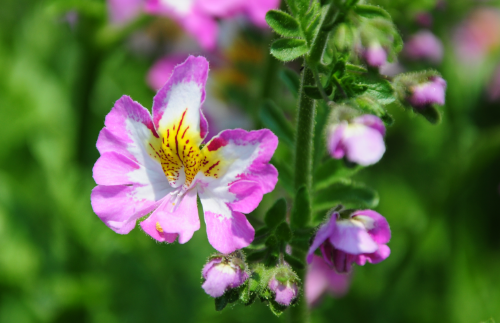
Post-Sowing Care for Schizanthus
After sowing Schizanthus, the seeds will generally sprout in about a week. Before sprouting, a shade net needs to be set up over the seedbed for shading, which can lower the temperature and retain moisture. After sprouting, the shade net can be removed, so that the Schizanthus seedlings can receive sufficient light. During the seedling growth period, pay attention to the amount of watering - not too much, and not too little. Also, carry out seedling separation in a timely manner, and do not let Schizanthus grow too tall.
The above is an introduction to sowing and propagating Schizanthus. We hope everyone can learn the relevant knowledge and make your Schizanthus burst with blooms every day!
Sowing and Propagation of Schizanthus
Key Propagation Points for Schizanthus
Sowing Time
Sowing and propagation of Schizanthus is mainly done in autumn, from late August to early October.
Sowing Soil
For sowing and propagating Schizanthus, a soil mix of leaf mold, garden soil and chaff ash can be chosen as the seedbed medium for sowing. Before sowing Schizanthus, the seedbed needs to be watered thoroughly, and sowing should be done after the water has seeped through.
Sowing and Propagation of Schizanthus
How to Sow
Evenly scatter the prepared Schizanthus seeds over the prepared soil, and on top of the seeds, sprinkle a layer of soil. Since Schizanthus seeds are relatively large, the final covering soil should also be thicker, no less than 3mm.
Post-Sowing Care for Schizanthus
For sowing and propagating Schizanthus, seedlings generally emerge about a week after sowing. Before emergence, a shade net needs to be set up over the seedbed for shading, which can lower the temperature and retain moisture. After emergence, the shade net should be removed so that the Schizanthus seedlings receive sufficient light. In the early stage of seedling growth, watering needs to be controlled. Carry out seedling separation in a timely manner, and control the growth height of the Schizanthus plants.
Transplanting and Planting Out
Basically, when the Schizanthus seedlings have grown 3-4 leaves, seedling separation and transplanting can be carried out. First use smaller pots for raising the seedlings, provide shade care first, and give normal light after the seedlings have recovered.
When the Schizanthus seedlings have grown to 6-7 leaves, they can be potted up. Generally choose flower pots with a diameter of about 15cm, and it is best to keep the original soil when transplanting.
Key Propagation Points for Schizanthus
Sowing Time
Autumn is the most suitable time for sowing Schizanthus. Generally, sowing can be done from August to October each year. Sowing at this time gives a higher survival rate for the plants, and the plants that grow will be more vigorous!
Sowing Soil
Schizanthus has some requirements for soil when sowing - it needs loose, breathable soil with good drainage. Generally, we can mix this kind of soil ourselves: chaff ash, leaf mold and garden soil can be selected and mixed in a certain ratio to obtain the soil needed for planting Schizanthus. If you find this method troublesome, you can buy special soil for Schizanthus at a flower shop. Before sowing Schizanthus, water the soil thoroughly first before sowing, as this will give a higher seed germination rate.