Reasons and solutions for air plant leaves turning yellow
Reduce watering
Watering involves a lot of knowledge; you cannot water too much. Normally, watering when the soil surface is slightly dry is enough, and the amount of water should not be too large.
Reduce light
You can place it on a balcony, and when the light is strong, you can provide appropriate shade for it, or slightly move its position. On the contrary, leaving it in a cool place for a long time is also not acceptable; it needs appropriate light.
Ventilation
Provide appropriate ventilation, or occasionally open a window at night. A ventilated environment is beneficial to its growth.
Raise the temperature and protect against the cold
In a low-temperature environment, you can take some warmth measures, or place it in sunlight when the sun is good, and appropriately control watering.
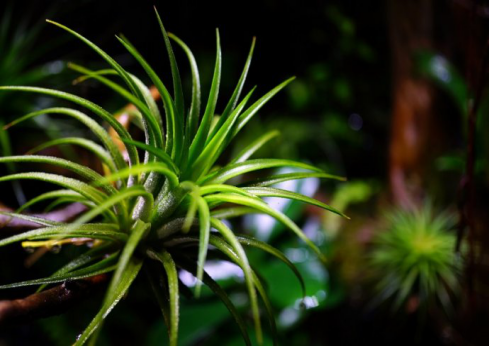
What should you do if pineapple leaves turn yellow? Solutions for pineapple leaves turning yellow
Pineapple generally is the short name for ornamental pineapple, and it is a relatively famous holiday flower. It is actually the pineapple we commonly see, except that the flower we see in flower markets should really be called ornamental pineapple; sometimes sellers casually shorten the name and call it pineapple. Many flower lovers buy a pineapple for home, and after keeping it for a while, they find that the pineapple leaves have turned yellow, and they do not know what has happened to the pineapple. After reading the introduction below, everyone should be able to know how to solve the problem of its leaves turning yellow.Yellowing and withered leaves may be caused by the following reasons:
1. It may be that the alkalinity of the irrigation water is too strong or that it contains high calcium and sodium.
2. The indoor air humidity is too low.
3. Overfertilization or too high a concentration of liquid fertilizer, causing salt damage, protoplasm separation and dehydration.
4. Poor drainage, causing the roots of the pineapple flower to rot.
Solutions:
If the leaves at the root turn yellow, it is fine; it is a normal phenomenon, and you can just cut them off. Pineapple flower is native to tropical regions and fears cold, so when growing it in winter, the temperature must reach above 5°C, so as to avoid disease. Because the pineapple flower's original natural state is as an epiphyte under the tropical rainforest, its need for sunlight is not too high either; on the contrary, too much sunlight can also cause leaves to turn yellow, flower tips to dry out, and so on. Therefore, the place where the pineapple flower is kept is best in a semi-shady, ventilated spot, to prevent exposure to the scorching sun.
Apply additional fertilizer 1-2 times per month. The potting soil can be kept moist. At the leaf base of the pineapple flower there is a leaf cup, and inside the leaf cup there is a water reservoir; as long as there is water in the reservoir, it is fine. However, the water inside is best changed once every half month, to avoid it becoming smelly. Usually, you should also sprinkle some water on the leaves and flowers to increase environmental humidity. After winter begins, it should be moved indoors for warmth, and the room temperature only needs to be kept at 5°C. If there is especially cold weather, you can put a plastic bag over the whole pot to increase warmth.
Repot and change the soil once every 1-2 years. For the potting soil, use 5 parts mountain soil, 4 parts sand, and 1 part rice husk ash or decomposed sawdust, mix them together, and then use it. If a small amount of bone meal is added to the soil, so much the better. Use ionized water or mineral water. Tap water has a relatively high pH.
The day before watering, it is best to store the water in the greenhouse for a day, and you can also use a thermometer to measure its water temperature, ensuring it is above 20 degrees.
When mixing fertilizer, directly mix it with deionized water. Generally, the fertilizer inside has a nitrogen-phosphorus-potassium ratio of about 20:10:20, because pineapple does not like too much phosphorus fertilizer; if there is too much phosphorus fertilizer, it will affect the growth of its root system.
Then it relatively likes nitrogen and potassium, but if there is too much nitrogen fertilizer, it will also cause excessive leaf growth. Generally, the ratio of nitrogen fertilizer to potassium fertilizer is about the same, nitrogen-phosphorus-potassium 20:10:20. Generally, the fertilization cycle is about half a month. You can also, during its growth process, take it out of the pot and observe the color of its root system. If the root color is relatively dark, it proves that the fertilizer concentration is relatively suitable for its growth. If the roots are a bit whitish, you can appropriately increase the concentration a little more, or shorten the interval a little. When fertilizing, pay attention to applying more potassium fertilizer and magnesium fertilizer, reduce the amount of phosphorus fertilizer applied, and strictly control the amounts of copper and boron applied.
Summary: The above is an introduction to the causes of pineapple leaves turning yellow and the solutions. We hope everyone will exchange more experience in pineapple care.
What should you do if pineapple flower leaves turn yellow? Introduction to the causes of pineapple flower leaves turning yellow
Speaking of pineapple, everyone may be a bit unfamiliar, but when you say pineapple, everyone is especially familiar with it. In order to observe pineapple flowers up close, people developed ornamental pineapple flowers. However, various problems appear during the planting process, such as pineapple flower leaves turning yellow. So, what should you do if pineapple flower leaves turn yellow? What are the causes of pineapple flower leaves turning yellow? Follow the editor of Shengduoduo Decoration Network to take a look! Photinia treeCauses of pineapple flower leaves turning yellow
Yellowing and withered leaf tips may be due to irrigation water quality being too alkaline or containing high calcium and sodium; air humidity being too low; overfertilization or too high a concentration of liquid fertilizer, causing salts to accumulate at the leaf tips, resulting in salt damage, protoplasm separation and dehydration; poor substrate drainage, causing root rot, so water cannot be fully supplied to the leaf tips, and so on.
Because the pineapple's original natural state is as an epiphyte under trees in tropical rainforests, its habit is to prefer semi-shade, and it should be prevented from exposure to the scorching sun. It is suitable to place it in a semi-shady spot or an indoor or windowsill location with bright light. Therefore, the pineapple flower's demand for sunlight is not especially high either. So when it is exposed to sunlight for too much time, some of its leaves will turn yellow, and then the flower tips will begin to dry out and turn yellow.
What should you do if pineapple flower leaves turn yellow
Apply additional fertilizer 1-2 times per month. The potting soil can be kept moist. Do not let the water in the cup dry out, and increase the frequency of spraying water on the leaves to improve environmental humidity. After winter begins, it should be moved indoors for warmth, and the room temperature only needs to be kept at 5°C. If there is especially cold weather, you can put a plastic bag over the whole pot to increase warmth.
Repot and change the soil once every 1-2 years. For the potting soil, use 5 parts mountain soil, 4 parts sand, and 1 part rice husk ash or decomposed sawdust, mix them together, and then use it. If a small amount of bone meal is added to the soil, so much the better. Use ionized water or mineral water. Tap water has a relatively high pH. Golden bell cultivation
The day before watering, it is best to store the water in the greenhouse for a day, and you can also use a thermometer to measure its water temperature, ensuring it is above 20 degrees.
When mixing fertilizer, directly mix it with deionized water. Generally, the fertilizer inside has a nitrogen-phosphorus-potassium ratio of about 201020, because pineapple does not like too much phosphorus fertilizer; if there is too much phosphorus fertilizer, it will affect the growth of its root system.
Then it relatively likes nitrogen and potassium, but if there is too much nitrogen fertilizer, it will also cause excessive leaf growth. Generally, the ratio of nitrogen fertilizer to potassium fertilizer is about the same, nitrogen-phosphorus-potassium 201020. Generally, the fertilization cycle is about half a month. You can also, during its growth process, take it out of the pot and observe the color of its root system. If the root color is relatively dark, it proves that the fertilizer concentration is relatively suitable for its growth. If the roots are a bit whitish, you can appropriately increase the concentration a little more, or shorten the interval a little. When fertilizing, pay attention to applying more potassium fertilizer and magnesium fertilizer, reduce the amount of phosphorus fertilizer applied, and strictly control the amounts of copper and boron applied.
Pineapple flower cultivation methods and precautionsLight
Pineapple flowers of different genera tolerate different degrees of light. Some can withstand full tropical sunlight, while others may scorch quickly. In general, however, pineapple flowers like a bright windowsill with plenty of light, rather than direct sunlight. A south, west, or east window is often perfect. Yellow plants may be receiving too much light, while plants that are dark green or leggy may be receiving too little light.
Temperature and water
Pineapple flowers are very resistant to drought conditions. In a normal house, it is not necessary to keep the central cup filled with water, but if light intensity, temperature, and humidity are high enough, this is an option. If you do keep water in the pineapple flower's central cup, make sure to rinse the central cup every so often to remove any built-up salts. In general, however, it is enough to water these plants weekly through the soil during the growing season and reduce watering during the winter rest period. Do not let your plant sit in standing water.
Potting soil
Although they are epiphytes, bromeliads can grow in a fast-draining potting soil. A mixture of 2/3 peat soil and 1/3 sand is one of the best methods. Pineapple flowers can also be grown when planted in other soils. These plants need frequent watering.