How to Care for Air Plants? Detailed Guide to Care Methods and Tips
Light
Among air plants, varieties with grayer leaves, more white scales, and thick, hard leaves prefer strong light;
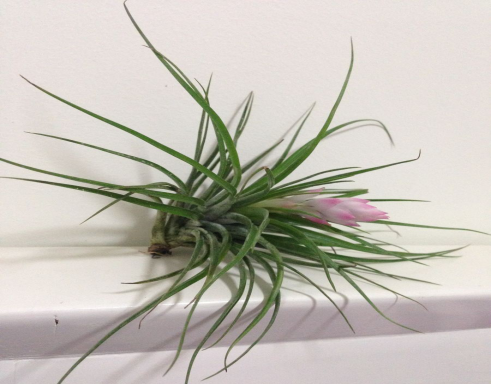
Strong light and appropriate temperature are the key to making air plant flower petals more attractive in color.
Water
Air plants can be divided into thick-leaf and thin-leaf types according to leaf thickness. Thick-leaf varieties prefer dryness, so moderately reduce the frequency of watering; thin-leaf varieties prefer moisture, so appropriately increase the frequency of watering. For indoor care, water two to three times a week, preferably with a spray. In dry conditions, once a day; for outdoor care, adjust appropriately according to the climate. Water amount: drying out completely within 3-5 hours after spraying is ideal. The leaf surface just needs to be fully wet; do not let water accumulate in the center of the leaf rosette. It is best to use purified water or rainwater, and do not use too much.
Temperature
Air plants can tolerate low temperatures of 5°C, but will die below 0°C. Their most suitable growth temperature is 15°C-25°C.
Key Points for Air Plant Care
Air plants are the only plants on Earth that grow entirely in the air. They can grow lushly without soil and can bloom with brightly colored flowers. They come in many varieties and diverse forms, offering both foliage and flowers to enjoy, and have characteristics such as good decorative effect and strong adaptability. During care, pay attention to the following points:
>Temperature Control
The optimal temperature for air plant growth is 15°C to 25°C, and the general growth temperature is 5°C to 40°C. If the temperature is higher than 25°C, ventilation should be strengthened and relative humidity increased, so that growth stagnation does not occur due to excessive heat. In winter, air plants can tolerate low temperatures of around 5°C, and some varieties can tolerate low temperatures of 0°C, but most varieties will suffer cold damage below 5°C, and the plants will die below 0°C.
>Light Control
Air plants' sunlight requirements vary by variety. Those with harder, gray leaves need sufficient sunlight or strong indirect light. Indirect sunlight or ordinary lamp light is also acceptable, and placing them near a window is the best way to obtain indirect sunlight, with about 10 hours of light per day. Varieties with green leaves are not so demanding about light and can grow normally in semi-shade or indoors. In addition, air plants like to breathe fresh air. Although they can also grow in ordinary indoor conditions, it is best to maintain air circulation.
>Watering and Humidity
The so-called no-watering requirement for air plants applies when air humidity reaches above 90%. During the growing season, spray the plants frequently to increase air humidity so they grow normally. It is recommended to use a spray-type watering can available on the market and spray a fine mist evenly on the leaf surface. The method is to spray once a day in dry seasons and 2-3 times a week in humid seasons. Needle-leaf and sword-leaf air plants store little water, so in any environment they should be sprayed 4-5 times a week. Broad-leaf types store more water and are suited to drier environments, so the spraying frequency can be maintained at once or twice a week. When spraying, spray until the entire leaf surface is moist; do not let water accumulate in the center of the plant, to avoid causing "heart rot." Note that it is best for the leaf surface to dry within 4 to 6 hours after becoming wet, and note that some varieties easily accumulate water in the leaf center, so they can be hung upside down to avoid stem rot.
>Proper Fertilization
In the wild, the places where air plants grow as epiphytes often accumulate humus, which can provide the nutrients needed for growth and absorption. In artificial cultivation environments, nutrients can only be supplemented through fertilization for absorption. During vigorous growth, spray once every 20-30 days with a 2000-fold diluted solution of Huabao, monopotassium phosphate plus a small amount of urea or other nitrogen fertilizer, and stop spraying in winter and during the flowering period. Some growers have summarized a method of using beer to care for air plants, which can keep air plants vigorous and brightly colored. The specific method is to mix clean water (distilled water is better) with beer every three to four weeks and spray it on the air plant leaf surface at a ratio of 50:1, or soak the entire air plant in beer diluted with clean water for several minutes, then take it out of the water and hang it upside down to dry. This method can wash the dust off air plants, which helps them breathe and absorb nutrients, and the nutrients contained in beer are also very beneficial to air plant growth.
>Common Diseases
Sunscald often occurs in environments with sufficient light. The cause is improper handling: water sprayed on the leaf surface does not dry in time, and the water droplets act like a convex lens, burning the leaf surface beneath them, but it does not spread, so just pay attention to ventilation during routine care. Heart rot and root rot are often caused by excessively high temperature and poor ventilation. In the hotter summer, pay attention to ventilation and avoid excessive water accumulation. At the same time, also avoid water quality with high calcium and sodium. As for pests, common ones include scale insects, snails, and slugs. For small air plants kept at home, it is recommended to improve ventilation conditions and remove pests by hand.
Four-Season Care for Air Plants
Spring
Spring is the season most suitable for air plant growth, with suitable temperatures and gentle light. Keep the temperature below 28°C, and every variety can enjoy an all-day sunbath. With good ventilation, you can water freely.
Summer
Summer is the season requiring the most attention in cultivation. In June, they can receive half a day of light. In midsummer, shading is recommended, and direct light should be avoided after 10 a.m.
Autumn
From September to November, this is also the growing season for air plants. When the temperature is high, please water and provide light in moderation to avoid smothering them. Autumn is dry, so watering can be done once every two days. Some varieties easily accumulate water in the leaf center, so note that it must not exceed two days; if soaking in water is needed, it must not exceed six hours.
Winter
From December to February, maintain all-day direct light. At this time, air plants need temperature the most. Place them on an indoor balcony or in a bright place. As long as they stay warm, air plants will continue to grow, only much more slowly than in other seasons. Water during the daytime; if the temperature is suitable, cold damage will not occur.
That is all for today's cultivation tips sharing! Thank you for reading!