How to Grow and Care for Philodendron bipinnatifidum (Tree Philodendron)
1. Soil
Philodendron bipinnatifidum has low soil requirements; a slightly acidic, breathable, well-draining soil is sufficient. The simplest option is a mix of leaf mold or humus soil, peat soil or garden soil, plus river sand. Mixing in a base fertilizer before planting is also fine, because Philodendron bipinnatifidum likes fertile soil.
2. Watering
The principle for watering Philodendron bipinnatifidum is that except in winter, the soil should be kept moist in all other seasons. Because summer temperatures are too high, mist the leaves to cool the plant down. In the rainy season, pay attention to drainage; do not let water accumulate around the roots, to prevent root rot.
3. Fertilizing
Philodendron bipinnatifidum does not have high fertilizer requirements. Add a base fertilizer when potting, then fertilize once a month. Fertilizing is generally based on dilute liquid fertilizer; well-rotted, dilute cake fertilizer works very well. In winter, because the temperature is too low, the plant stops growing, and fertilizing should also stop at this time.
4. Temperature and Light
The most suitable growing temperature for Philodendron bipinnatifidum is between 18°C and 25°C. Because summer temperatures are too high, mist the plant to cool it down; because winter temperatures are too low, move the plant indoors to keep it warm. In addition, Philodendron bipinnatifidum likes shade and does not particularly like light; placing it in a spot with diffused light is usually enough. Do not expose it to direct strong light in summer. Because winter light is relatively soft, it can be placed in the sun, but the temperature should not be lower than 8°C.
The above is an introduction to how to grow Philodendron bipinnatifidum. Below, let us look at what needs attention in the process of growing Philodendron bipinnatifidum.
How to Grow Philodendron bipinnatifidum: Growing Methods and Precautions
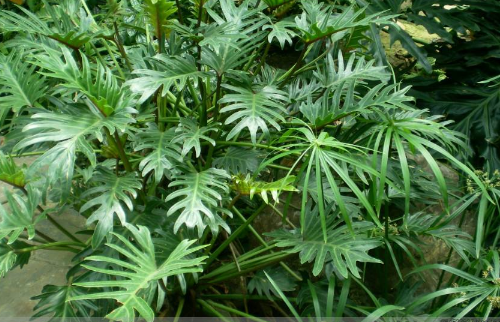
Most plant names are based on the plant's form and appearance. Philodendron bipinnatifidum is a green plant whose appearance resembles feathers. It is usually planted in some public places, because Philodendron bipinnatifidum is a relatively large plant, so the space where it is usually placed needs to be relatively large.
How to Grow Philodendron bipinnatifidum
Philodendron bipinnatifidum likes a hot and humid growing environment. It has low light requirements and a relatively strong tolerance for shade. Philodendron bipinnatifidum is relatively intolerant of cold; the suitable growing temperature is between 18°C——25°C, and the overwintering temperature in winter should not be lower than 5°C. Philodendron bipinnatifidum likes loose, fertile, sandy soil with good drainage.
Growing Methods and Precautions for Philodendron bipinnatifidum
1. Soil
As far as the habits of Philodendron bipinnatifidum are concerned, it likes fertile, loose, well-draining, slightly acidic soil, so its soil requirements are relatively low. For home cultivation of Philodendron bipinnatifidum, you can use a mix of leaf mold, peat soil, garden soil and a small amount of river sand.
2. Watering
Philodendron bipinnatifidum likes a relatively moist environment and has a relatively high water demand, but it is not demanding about water quality, so you can usually water it with rice-washing water. Be careful to keep the soil moist during the growing period. Note that the amount of watering needs to change according to the season. In summer, mist the leaves and the surrounding area more to maintain a moist environment; in winter, reduce the frequency of watering.
3. Fertilizing
Philodendron bipinnatifidum has strong adaptability; whether in a moist environment or dry conditions, it can adapt quickly. Therefore, its fertilizer demand is also not high. When potting, place some horn and hoof pieces or oil cake at the bottom, and after that only fertilize once a month with liquid fertilizer, such as dilute cake fertilizer water. Pay special attention to fertilizing less or not at all in winter, to meet the plant's needs.
4. Light and Temperature
Philodendron bipinnatifidum likes warmth and tolerates shade, but it is not cold-tolerant and fears light; avoid strong light exposure. The suitable temperature is 18°-25°. Therefore, in summer, Philodendron bipinnatifidum needs to be moved to a cool place to avoid direct sunlight; in winter, it can be moved to a place with sufficient light, and the overwintering temperature should be kept above 8° as much as possible. 5. Pests and Diseases
Common diseases of Philodendron bipinnatifidum include leaf spot and anthracnose, which can be prevented and treated with agents such as carbendazim and thiophanate-methyl. If problems such as yellowing or withering of leaves appear, pruning is needed. Common pests of Philodendron bipinnatifidum include red spider mites 1 and scale insects, which can be prevented and treated with specialized agents. In addition, more ventilation is needed to prevent pests.
6. Propagation
Keep the temperature at a fixed value of around 20°, avoiding air environments that are too hot or too cold; keep humidity high, misting and sprinkling water more to increase environmental humidity; keep light and temperature at normal values, avoiding too high or too low; the fertilizing principle is "light fertilizer, frequent application," mainly nitrogen fertilizer; watering frequency is high; in summer, ensure it stays moist at all times, and in winter, water alternately between dry and wet.
How Philodendron bipinnatifidum Overwinters
1. Control of Room Temperature
To be safe, 8 degrees and above allows it to safely pass the winter, and it is best not to let it go below 0°C. Although the plant may also be able to endure it and slowly recover in the following spring, we still should not gamble with our beloved plant.
2. Control of Moisture
We may have all heard that Philodendron bipinnatifidum is native to hot and humid places, so it has a relatively high water demand. Although it begins dormancy in winter and its water needs decrease accordingly, you still cannot forget to water it. Water promptly when the potting soil becomes dry and cracked, but do not let it sit in water. In addition, you can also care for it by sprinkling water on the leaves and misting the surrounding environment.
3. Control of Light
If it is placed in a dark place for a long time, its leaves may slowly turn yellow, and the beautiful green will gradually fade away. Therefore, let it see light regularly. However, it also does not like long periods of light. Yes, it is a bit demanding. So choose a semi-shaded environment, or let it sunbathe for a while and then promptly move it back.
4. Control of Fertilizer
From late autumn, pay attention to the amount used. In winter it enters dormancy and needs almost no nutrients, so fertilizing should be suspended.
Solutions for Rotting Leaves of Philodendron bipinnatifidum
If rot has already appeared and the situation is not serious, you can prune accordingly. If it is due to excessive water or improper fertilizing, then the soil needs to be replaced and the plant replanted.
Before planting the plant, you must choose soil with relatively good water permeability and breathability, so that even if you occasionally water too much, it will drain out easily.
During daily watering, do not pour it all in at once; pour slowly. Also, when watering, you can get a sense of the watering amount by seeing how much water you pour in before water comes out of the drainage holes at the bottom, and then make a record, so that future watering has a comparison. When the temperature drops to 15 degrees, you must control watering; at this time the plant's demand for water gradually weakens.
When fertilizing normally, be sure to pay attention to the concentration of the fertilizer, dilute relatively concentrated fertilizer, and apply it slowly along the edge of the pot.
Try to choose a place with relatively good air circulation for care.
The important thing in growing plants is to create a suitable growing environment according to the plant's normal growth needs, while also paying attention to some important growth stages of the plant, such as flowering, propagation, overwintering and getting through summer, and often observing the plant's growth state to deal with corresponding pests, diseases and special symptoms.
Hydroponic Growing Methods for Philodendron bipinnatifidum: Hydroponic Management Methods for Philodendron bipinnatifidum
Other names for Philodendron bipinnatifidum: Philodendron selloum, split-leaf philodendron, horsehead philodendron, little angel philodendron; it is a perennial evergreen herbaceous plant. It is relatively tolerant of shade. So what are the hydroponic growing methods for Philodendron bipinnatifidum? Let's take a look!
I. Hydroponic Growing Methods for Philodendron bipinnatifidum
1. Remove Soil from the Roots
The mother plant for hydroponics is best a well-growing, healthy, pest-free plant. Then loosen the potting soil, gently take out the Philodendron bipinnatifidum seedling, shake off all the soil from the roots, rinse the entire plant clean with water, and remove rotten leaves. It must not carry any soil, otherwise bacteria or water pollution may cause root rot in Philodendron bipinnatifidum.
2. Prune the Root System
After the plant is rinsed clean, cut the old roots shorter by 2/3-3/4, and also cut off the weak roots, old roots and dead roots, leaving only new roots.
3. Sterilization and Disinfection
After pruning the roots, disinfection is needed. You can soak the roots of Philodendron bipinnatifidum in a 3% to 5% thiophanate-methyl solution for about ten minutes.
4. Water Root Induction
Use rain flower stones to fix the Philodendron bipinnatifidum plant in the planting basket, or use perlite, vermiculite, etc. to fix it. During this process, thread the roots evenly through the bottom holes of the planting basket, and the root system should also be spread out. Then it can be placed in an induction pool to grow. But if we do not have such conditions, we can also make our own acclimation box. Choose a plastic bucket about the same size as the planting basket, then put the planting basket in, add water until it reaches the bottom of the planting basket. After that, it can be placed in a shade shed for root induction. Remember to check the water level in the box often and mist frequently. In about 10-20 days, new roots will grow, and the induction will be considered successful.
II. Hydroponic Management of Philodendron bipinnatifidum
1. Temperature and Light
Philodendron bipinnatifidum likes a warm environment; it is best to keep it at 18-30°C, and in winter it is best to keep it above 5°C. Philodendron bipinnatifidum likes sunlight and is also very tolerant of shade, but in summer do not expose it to direct sunlight, and pay attention to ventilation.
2. Nutrient Solution
Change the water once a week, and at the same time add nutrient solution in proportion; it can also be used to spray the leaf surface.
Philodendron bipinnatifidum grows quite fast; after a year, it may need a new planting basket and vase. That is all for the hydroponic method introduction. We hope everyone can succeed with hydroponics.