Fragrant Solomon's Seal: Growing Methods and Points to Note
1. Soil.
Fragrant Solomon's Seal is suited to growing in deep, well-drained, slightly acidic sandy soil. When planting, also be careful to change the soil every other year, so as to ensure the nutrients needed for the growth of Fragrant Solomon's Seal are supplied.
2. Seed germination.
Before sowing Fragrant Solomon's Seal, the seeds must first be germinated. First soak the Fragrant Solomon's Seal seeds in cold water for a day and a night, then take them out and drain the water. Put the thoroughly drained seeds into a wooden box filled with a 5 cm thick layer of sand to cultivate. During cultivation, keep the fine sand layer moist, and wait for the seeds to sprout and emerge.
3. Planting and growing.
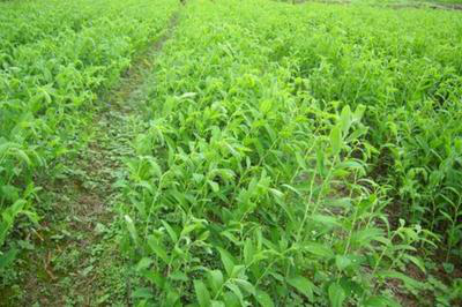
Fragrant Solomon's Seal is generally planted in October, preferably on an overcast day. After planting, water moderately to maintain soil moisture, and at the same time be careful to provide light for absorption.
4. Temperature.
After planting Fragrant Solomon's Seal, wait until the seedlings sprout and grow, when the temperature begins to drop. At this time, take good measures against the cold for overwintering, so as not to freeze and damage the young seedlings.
5. Fertilizing.
Fragrant Solomon's Seal likes fertile soil, so when planting, apply fertilizer on time and in the right amount. During the growth of the young seedlings, also apply supplementary fertilizer in good time. If sufficient base fertilizer was applied at planting, the amount of supplementary fertilizer can be reduced.
6. Pest and disease control.
The main diseases of Fragrant Solomon's Seal are leaf spot, root rot, gray leaf spot and so on. Once affected, promptly spray with chemicals for control.
The main insect pest of Fragrant Solomon's Seal is the white grub. The control method is to irrigate the roots of Fragrant Solomon's Seal and the surrounding soil with diluted pesticide solution, spraying to kill the pests.
Fragrant Solomon's Seal: Growing Methods and Points to Note
Growing Methods for Fragrant Solomon's Seal
Soil requirements
To grow Fragrant Solomon's Seal, it is best to choose deep, well-drained, sunny, slightly acidic sandy soil. Then, when planting and growing, be careful to replace the soil, changing it about every other year to ensure the nutrients needed for growth.
Selection of seed rhizomes
When growing Fragrant Solomon's Seal, first choose to propagate using the underground rhizomes. After preparing the rhizomes, be careful to spread the root buds in a sheltered, cool indoor spot for keeping.
Seed germination
Before germinating the seeds of Fragrant Solomon's Seal, first soak the seeds in cold water for 24 hours, then take them out and drain the water thoroughly. Then put the seeds into a wooden box to cultivate, and spread about 5 cm of wet sand over them, waiting for them to sprout and grow.
Planting and growing
Planting is generally done from early October to late October. It is best to choose an overcast or sunny day for planting, so as to promote the growth and sprouting of new seedlings. During this period, pay attention to keeping warm and watering to ensure soil moisture. Also provide sufficient light.
Points to Note When Growing Fragrant Solomon's Seal
Cold protection for overwintering
Although Fragrant Solomon's Seal is cold-tolerant, the weather in winter is too cold, so still pay attention to cold protection, so as not to freeze and injure the plant and prevent it from growing.
Fertilizing and supplementary fertilizing
Fragrant Solomon's Seal prefers fertile soil, so fertilize it on time and in the right amount to supply sufficient nutrients and benefit the plant's growth.
Not only should fertilizer be applied, but also pay attention to supplementary fertilizing. During the seedling stage, especially pay attention to supplementary fertilizing. However, note that if sufficient base fertilizer has been applied, there is no need to fertilize again, so as to avoid burning the roots.
Pay attention to pest and disease control
Fragrant Solomon's Seal mainly has diseases such as leaf spot, root rot and gray leaf spot. Be careful to spray with chemicals for control.
Insect pests include: white grub pests. The control method is to pour 90% crystalline trichlorfon at 1000-1500 times dilution around the roots and soil until the pests are killed.
Kangding Solomon's Seal: Growing Methods and Points to Note
Chinese scientific name: Kangding Solomon's SealLatin scientific name: Polygonatum prattii BakerKingdom: PlantaeClass: DicotyledoneaeFamily: LiliaceaeGenus: PolygonatumDistribution area: Sichuan (western), Yunnan (northwestern)Kangding Solomon's Seal is a plant of the genus Polygonatum in the family Liliaceae, and is a plant endemic to China. It is distributed in western Sichuan, Yunnan and other places in mainland China, growing in areas at altitudes of 2,500 m to 3,300 m. It generally grows under forests, in thickets and on mountain slopes and grasslands, and has not yet been introduced and cultivated artificially.1. Medicinal value
[Medicinal name]: Kangding Solomon's Seal[Pinyin]: KANGDINGYUZHU
[Source]: The rhizome of the dicotyledonous medicinal plant Kangding Solomon's Seal of the family Liliaceae.
[Effects]: Nourishes yin and moistens the lungs, promotes fluid production and quenches thirst.
[Main indications]: Treats wind-heat common cold with fever and cough, sore throat and thirst, dry cough with little phlegm; its action is mild but does not restrain pathogenic factors, and it treats damage to yin from dry-heat such as yin damage of the lungs and stomach, cough from dryness, dry tongue with little fluid, and great thirst with desire to drink.
[Nature, flavor and meridian entry]: Sweet, neutral. Lung and Stomach meridians.
[Usage and dosage]: Oral administration: 10-15 g; used fresh for clearing heat, processed for nourishing yin.
[Distribution of animal and plant resources]: Distributed in western Sichuan and northwestern Yunnan.
[Textual research]: First recorded in "Zhong Yao Zhi" (Records of Chinese Materia Medica).
2. Morphological characteristics
Rhizome slender and cylindrical, nearly uniform in thickness, 3-5 mm in diameter, can branch. Stem 8-30 cm tall. Leaves of the lower part alternate or occasionally opposite, those of the upper part mostly opposite, the uppermost usually in whorls of 3, elliptical to oblong, 2-6 cm long. Inflorescence with 2 (3) flowers, nodding, peduncle 2-6 mm long, pedicel (2) 5-6 mm long; perianth pale purple, united into a tube 6-8 mm long in total, lobes 6, 1.5-2.5 mm long; stamens 6, filaments very short, inserted near the middle of the perianth tube; ovary about 1.5 mm long, with a style of about equal length. Berry about 7 mm in diameter, brownish-red. Produced in Sichuan (western), Yunnan (northwestern). Grows under forests or on mountain slopes and grasslands. Polygonatum curvistylum Hua is a short species distributed in the same area, with many whorled leaves, each whorl with 3-6 leaves, linear-lanceolate to linear, 3-7 cm long, 1-5 mm wide, nodding downward after flowering; this latter trait is not found in other species of the same genus.3. Growth habits
Most plants of this species are short, with slender cylindrical rhizomes, and leaves mostly alternate and opposite, elliptical to oblong, relatively easy to distinguish from other species in this series, but there are also a few transitional types between it and Polygonatum verticillatum.4. Origin and habitat
Produced in Sichuan (western), Yunnan (northwestern). Grows under forests, in thickets or on mountain slopes and grasslands, at altitudes of 2500-3300 m.References
1. Kangding Solomon's Seal. Chinese Plant Species Catalog Database [cited 2014-02-8].