What to Do When Anthurium andraeanum Leaves Turn Yellow? Causes and Solutions
1. Frequent watering
If gardeners water too much while growing Anthurium andraeanum, the soil stays moist for a long time, which means there is not enough oxygen in the soil, so the roots cannot breathe in fresh oxygen. As a result, the plant does not absorb water and nutrients very well, and at this point the leaves begin to turn yellow.
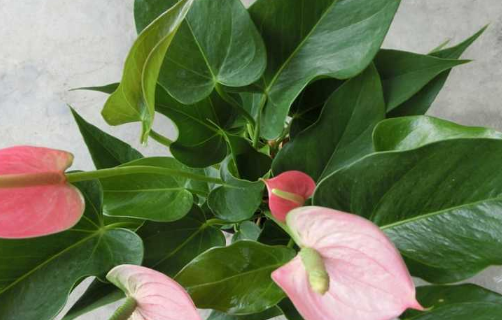
Solution
When you notice the young leaves turning pale yellow and the old leaves yellowing and withering, you need to control and reduce watering and stop fertilizing. Loosen the soil around the Anthurium andraeanum so it drains better, and when watering, try to water only when the soil is dry.
2. Too much fertilizer
When a plant is given a lot of fertilizer, it is very easy to burn the plant. Although the leaves are large and thick, yellow leaves can still appear, which greatly reduces the plant's beauty.
Solution
Stop fertilizing immediately, then increase watering so the excess fertilizer drains out of the pot with the water. If the overfertilization is quite serious, you need to replace the soil, and afterward fertilize reasonably.
3. Lack of nutrients
If nitrogen fertilizer is missing when fertilizing, or if no fertilizer is applied at all, Anthurium andraeanum will lack nutrients and turn yellow, showing specifically as withered, weak leaves and new leaves that become thin and yellow.
Solution
Apply a top dressing of dilute, fully rotted soybean cake water, then fertilize scientifically during care, generally once every 2-3 weeks. Before and during the flowering period, apply top dressings of nitrogen, phosphorus and potassium fertilizer. Ensuring the nutrients it needs to grow is very important.
4. Long-term lack of light
Among indoor ornamental plants, Anthurium andraeanum is actually very shade-tolerant and can grow in low-light conditions, but if it is placed in a dim environment for a period of time, its leaves will turn yellow from lack of light.
Solution
If you find that the leaves of Anthurium andraeanum have become thin, yellow, are not flowering, or the flowers are dull in color, check whether the growing environment lacks light. If the light in the environment is rather dim, move the Anthurium andraeanum to a place with light.
The above is an introduction to the causes of yellowing leaves in Anthurium andraeanum and how to solve them. Gardeners who keep Anthurium andraeanum at home should study this article well!
What to Do When Anthurium andraeanum Leaves Turn Yellow
Anthurium andraeanum leaves turning yellow - unsuitable light and temperature
During growing, not placing it in a spot with light, or giving it too few hours of light; temperatures that are too low or too high will all cause the plant's leaves to turn yellow.
Solution
During care, partial shade or scattered light is enough. In winter it can be given full sun to make up for what it needs to grow.
Regulate the temperature well; its optimum growing temperature is around 20-28°C. You can mist the leaf surface often to keep the leaves humid.
Anthurium andraeanum leaves turning yellow - harm from pests and diseases
During growing, if there is too much dust on the leaf surface, it is prone to leaf spot disease, leaf blight and so on, and these diseases all cause the leaves to turn yellow. There are also red spider mites, scale insects and others that chew the leaves and then gradually make them turn yellow.
Solution
When disease occurs, promptly spray a fungicide for control; when pest infestation occurs, you can control it by wiping them off.
Hydroponic Anthurium andraeanum leaves turning yellow - too much water
When growing Anthurium andraeanum, if there is too much water in the container used, it will cause root rot in the Anthurium andraeanum, which in turn makes the leaves turn yellow.
Solution
You can pour out the excess water so that it just barely covers the roots. If a net rack is used to suspend the roots, add water only up to about 2/3 of the roots; do not submerge them completely. That way the roots will not rot and cause the leaves to turn yellow.
Hydroponic Anthurium andraeanum leaves turning yellow - lack of fertilizer
If, while growing Anthurium andraeanum, you do not add fertilizer water for a long time and use only clean water, the Anthurium andraeanum will lack the nutrients it needs to grow because of the lack of fertilizer, and its leaves will turn yellow.
Solution
Be careful to fertilize on time and in the right amount, providing the nutrients Anthurium andraeanum needs as it grows, to ensure its normal growth.
[Gardening Encyclopedia] is a signed author of the Toutiao account
What to Do When Anthurium andraeanum Leaves Turn Yellow, and What to Do When Hydroponic Anthurium andraeanum Roots Rot
Anthurium andraeanum is actually a type of Anthurium, except that Anthurium andraeanum is pink; in fact there is no difference from Anthurium. Many people, having seen plenty of the bright, eye-catching Anthurium, instead prefer growing the fresh and beautiful Anthurium andraeanum. Although Anthurium andraeanum is very easy to grow, many gardeners still find that the leaves of the Anthurium andraeanum they grow turn yellow and drop. So how do you solve this?
What to Do When Anthurium andraeanum Leaves Turn Yellow
1. Reasonable watering
If the young leaves at the top of the Anthurium andraeanum turn pale yellow, the old leaves also slowly turn yellow, and the new shoots shrink, this is because overwatering has made the inside of the pot too moist, the soil is not breathable, and the roots rot, which then causes the leaves to turn yellow.
Control the amount of watering well, do not let water accumulate, avoid rain exposure, and loosen the soil often. If the color of the top leaves of the Anthurium andraeanum is normal, but the lower leaves slowly turn yellow and wither upward until they fall off, this is caused by the pot soil being dry for a long time. This requires a moderate amount of watering; remember to water thoroughly and keep the soil moist.
2. Reasonable light
If the Anthurium andraeanum is placed in a place without sunlight for a long time, or exposed to strong sun for a long time, it is also very easy to cause yellow leaves. So pay attention to giving it scattered light, provide proper shading in summer, and in winter, when the light is not strong, it can be given full sun.
3. Pot soil requirements
When the leaves of Anthurium andraeanum become thin and yellow, it may be because the fertilizer is insufficient, the pot size is unsuitable, or it has not been repotted for a long time. So choose a suitable pot, gradually increase fertilizer during growth, keep nutrients sufficient, and repot in time.
4. Ventilation requirements
This point is very important. Be sure to ensure good ventilation and give it a good, comfortable growing environment.
5. Fertilizer requirements
If fertilizer water is lacking for a long time and only clean water is used for care, the leaves will turn yellow because of insufficient nutrients. But if the leaves are uneven and bumpy, the new leaves are very thick, and the old leaves begin to turn yellow, then fertilizer damage has occurred. At this point stop fertilizing and water more. You can also put some vegetable seeds in the pot to help absorb the fertilizer and ensure the plant returns to its normal state.
What to Do When Hydroponic Anthurium andraeanum Roots Rot
1. Soil-to-water transition
If the Anthurium andraeanum was previously grown in soil, when converting it to hydroponics be sure to remember to wash the roots clean, and do not use too much water; just immerse half or 2/3 of the roots, otherwise the roots will easily rot. Before new roots have grown, change the water frequently, and promptly remove any roots you see rotting. Normally also pay attention to changing the water more often; in hot weather, change it about once every 20 days, and in cold weather, about once every month and a half.
2. Water source issues
Do not use freshly drawn tap water directly; let it sit for two days to let the chlorine dissipate before using it. You can also buy some nutrient solution specially made for hydroponics. When watering, if you see the water has become cloudy, be sure to change the water to keep it clean. In addition, water temperature is also very important. When the temperature is above 30 degrees, the saturated dissolved oxygen in the water decreases and cannot reach the critical value that Anthurium andraeanum needs, which leads to root rot, so control the water temperature well.
What to Do When Anthurium andraeanum Does Not Bloom
1. Suitable light
Light is an important condition affecting whether Anthurium andraeanum blooms. Generally, when the light is too strong, Anthurium andraeanum blooms poorly, because overly strong light, especially in summer, together with high temperatures, will sunburn the leaves of the Anthurium andraeanum and cause it not to bloom.
2. Relatively high humidity.
Anthurium andraeanum likes high humidity, but in relatively dry areas such as the north, this level cannot be reached; when the humidity is insufficient, it has an adverse effect on blooming.
3. In addition, if Anthurium andraeanum is to bloom well, two more points need attention. One is ensuring a suitable temperature; the suitable growing temperature for Anthurium andraeanum is between 20°C——30°C, and ensuring a suitable temperature helps it bloom. The second is reasonable fertilizing, mainly light but frequent applications, and you can also use some flower fertilizer to promote blooming.
How to Fertilize Anthurium andraeanum
Reasonable fertilizing can effectively promote the growth of Anthurium andraeanum. As for the choice of fertilizer, both compound fertilizer and liquid fertilizer are fine. It is worth mentioning that in compound fertilizer the ratio of nitrogen, phosphorus and potassium must be strictly controlled at 1:1:1. The best time to fertilize is early morning or evening, and the frequency can be controlled to a little more than once a week, for example every 7 to 12 days. If you choose liquid fertilizer, fertilizing once every three days is enough. It is especially important to note that only one of the two fertilizing methods can be used; the two cannot be used at the same time.
In fact, growing flowers and plants at home when you have nothing to do is also a very pleasant and happy thing. Anthurium andraeanum is pink and tender; although it is not as brightly colored as Anthurium or roses, it looks especially fresh, and its vibrant, positive, upward state is particularly eye-catching!