How to plant cornflower seeds? Detailed sowing method
Cultivation outline
It can be planted in both spring and autumn, but autumn sowing is preferable. Sow in a seedbed in mid-to-late September, cover with soil to the standard that the seeds are no longer visible, and firm it down, but do not press too hard. Cover with grass and water, keeping the soil constantly moist, and remove the grass cover after germination. When the seedlings have about 6 small leaves, they can be transplanted or planted out, with a plant spacing of about 30 cm. After they establish, apply diluted decomposed human manure liquid at 5 times water once every 10 days or half a month, and stop fertilizing in March of the following year to wait for flowering. If grown in pots, the potting soil needs to be loose and fertile, and it is best to use a mix of garden soil, leaf mold, plant ash, and so on.
Seedling raising:
The method is as above. Note that after the seedlings are planted out and established, pinch them back once, which helps produce more branches and promotes flowering. If there are too many branches, some side buds should be removed so that larger flowers can grow. Because of its taproot nature, it is best to sow directly in autumn, cover the ground for overwintering, and let it bloom in early summer. If overwintered in a cold frame, it can bloom in late spring. Spring sowing should be done as early as possible. It blooms in June.
Cultivation site:
Cornflower originates from European fields, so it is somewhat cold-tolerant and likes cool places with plenty of sunlight.
Soil:
Use loose, fertile, well-drained sandy loam as much as possible.
Watering:
Once a day is enough, but during summer drought, it also needs to be watered once in the morning and once in the evening to keep the potting soil moist and also lower the temperature of the potted plant, but it should not become waterlogged.
Fertilizing:
Cornflower is suited to heavy feeding. During the growing period, apply a diluted three-element liquid fertilizer once every month. If there are too many leaves, reduce the proportion of nitrogen fertilizer. Before flowering, it is better to apply more phosphorus and potassium fertilizer so that large and brilliant flowers can bloom.
Flowering period management: Cornflower can naturally grow side branches. With many side branches, the flowers are small. Once they reach a certain amount, remove some side buds and keep the smaller branches so that large flowers can grow. Cornflower is a long-day plant. In winter, when the daylight hours are shorter, using a plant light to supplement lighting at night helps make it bloom earlier.
Cornflower seeds
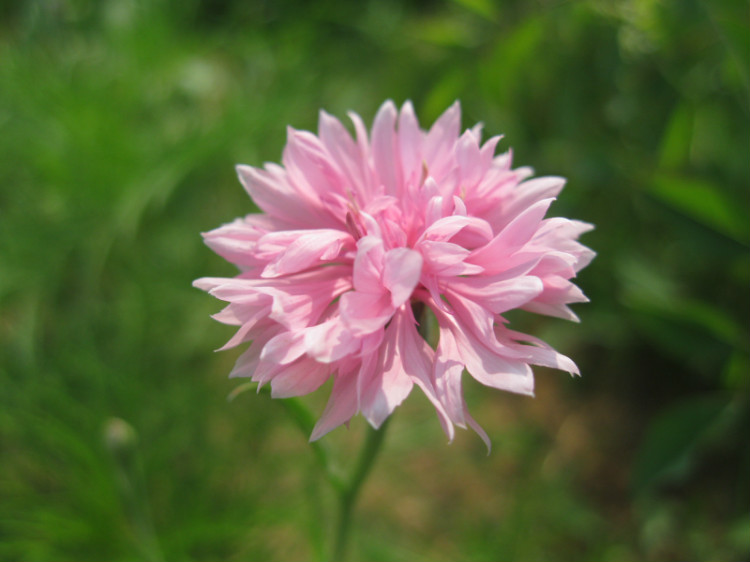
Cornflower is a herbaceous plant in the Asteraceae family. Its stem is straight and entirely white, branching from the middle section. The leaves grow alternately and are lanceolate. The basal leaves are generally pinnately lobed. The stem and leaves are not covered with thin spider-silk hairs, and the lower part has fine down. The terminal inflorescence is paniculate or corymbose. The flower colors include blue, pale red, white, pale purple, and so on. Purple and blue are relatively prized and give off a faint delicate fragrance. This plant is mainly abundant in Europe, especially in the German countryside, where it can be seen everywhere and is regarded as the national flower.
Cornflower seeds are generally sown in spring and autumn, with autumn being preferable, roughly from mid-August to mid-to-late September. When planting, sow the seeds in an open seedbed, press lightly, then water an appropriate amount, cover with grass, and they can germinate quickly. After sprouts appear, remove the grass on top. When the leaves grow to 6-7, they can be transplanted. They can be planted out in November, and afterward apply 1:5 decomposed human manure liquid once every 10 days or half a month until February to March of the following year. For potted sowing, fertile and loose soil is needed, and it is recommended to add mixed soil such as leaf mold.
How to plant cornflower seeds: cornflower planting methods
Cornflower was originally a wild flower plant. After many years of cultivation, its "wild" nature has decreased and its flower colors have become richer. Purple and blue cornflowers are the most prized. So how do you plant cornflower? And what are the cornflower planting methods?
1. How to plant cornflower
Cornflower is robust and relatively cold-tolerant, likes sunlight, and requires fertile, loose, well-drained soil. It is generally sown directly in a seedbed in September. In areas south of Central China, it can overwinter in the open ground without cold protection in winter, and is transplanted in November or early March of the following year. Because of the taproot nature of cornflower, direct sowing is preferable, and a soil ball must be kept when transplanting.
The stems of cornflower are slender and weak and tend to lodge, so the planting distance should not be too dense. Prevent overly dense growth and poor ventilation, which can cause lodging. During the seedling stage, pinch out the growing tips to encourage more branching and make the plant shorter, so that it blooms more and has a graceful plant shape.
If cornflower is grown in a pot, the potting soil should be loose and fertile, and it is best to use a mixed soil of garden soil, leaf mold, plant ash, and so on. When the cornflower seedlings have 6-7 leaves, the first transplanting can be carried out. For the later growth of cornflower, repot at least into a three-tube pot, because cornflower has a taproot system and large seedlings do not tolerate transplanting. In winter, it can be continuously buried in soil to overwinter, then taken out in early March. Fertilize frequently and stop fertilizing when flower buds appear.
2. Cornflower planting methods
1. Seedling raising: When cultivating cornflower, choose loose and fertile soil for the bed, cover with about 0.2 cm of soil, and transplant when the seedlings have developed 6-7 true leaves. For pot culture, plant one plant per 13-17 cm pot. After the seedlings are planted out and established, pinch them back once to encourage more branching and more flowering. Conversely, if there are too many branches, some side buds should be removed when necessary to obtain larger flowers. Because of its taproot nature, direct sowing is preferable. Sow in autumn, cover in the open ground for overwintering, and it blooms in early summer. If overwintered in a cold frame, it can bloom in late spring. Spring sowing should be done as early as possible. It blooms in June.
2. Environment: Because cornflower is native to European fields, it is somewhat cold-tolerant and likes cool places with plenty of sunlight.
3. Soil: Cornflower relatively prefers loose, fertile, well-drained sandy loam. The growing soil should be kept as well-drained and well-aerated as possible. If the soil is rather clayey, mix in 30-40% tree fern fiber or perlite to improve it.
4. Watering: In principle, watering once a day is already enough, but in drier summer weather, water once in the morning and once in the evening to keep the potting soil moist and lower the temperature of the potted plant, but avoid waterlogging.
5. Fertilizing: Cornflower likes heavy feeding. During the growing period, apply a diluted three-element liquid fertilizer once every month. If the leaves are too luxuriant, reduce the proportion of nitrogen fertilizer. Before flowering, it is better to apply more phosphorus and potassium fertilizer so that larger flowers with beautiful colors can be obtained.
6. Pruning: Cornflower can naturally produce side branches. With many side branches, the flowers are smaller. When necessary, remove some side buds and keep only the smaller branches, so that larger flowers can be obtained.
7. Flowering period management: Cornflower can naturally produce side branches. With many side branches, the flowers are smaller. When necessary, remove some side buds and keep only the smaller branches, so that larger flowers can be obtained. Cornflower is a long-day plant. In winter, when the daylight hours are shorter, using a plant light to supplement lighting at night can make it bloom earlier.
Abouthow to plant cornflowerandcornflower planting methodsthat is all we have to share. To grow cornflower with abundant flowers and lush leaves, correct cultivation methods and careful care are of course indispensable. We hope the above content is helpful to everyone.
Recommended reading:
1. How to grow corn poppy: corn poppy cultivation methods
2. Verbena cultivation methods: gardening enthusiasts' experience sharing
3. How to grow Tillandsia: Tillandsia cultivation methods and precautions
4. Pomegranate flower cultivation methods: how to grow pomegranate flowers
5. How to cultivate rose flowers: rose flower cultivation methods