Will eating 250 grams of blueberries at once kill you?
The editor solemnly tells you that eating 250g of blueberries at once will not kill you! Generally, the blueberries we buy in supermarkets are pre-packaged in boxes, each box about 125 grams. Many people love blueberries so much that they unconsciously eat an entire box in one sitting. Although it won't kill you, it may cause some uncomfortable symptoms. After all, blueberries are cooling in nature, and too much of a good thing is as bad as too little!
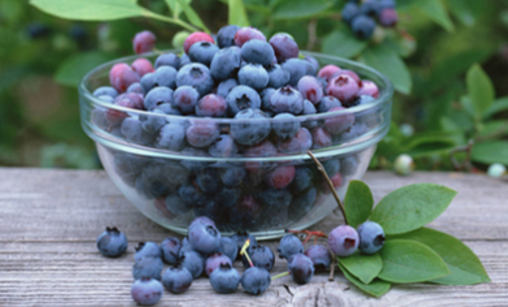
Blueberry Cultivation Methods Blueberry Introduction
Blueberry Cultivation Methods Blueberry Pictures
Blueberry, also known by other names such as lanmei, dusi, dushi, dushi, dushi, dianguo, and dusi huckleberry. In the narrow sense, it refers to a group of flowering plants in the genus Vaccinium, subgenus Vaccinium, section Cyanococcus (scientific name: Cyanococcus). In the broad sense, it can include all species in the genus Vaccinium that bear blue berries. These species are native to North America and East Asia, and are shrubs ranging in height from 10 cm to 4 m; the shorter species are called "lowbush blueberries," while the taller species are called "highbush blueberries." The leaves can be deciduous or evergreen, ovate to lanceolate in shape, 1 to 8 cm long and 0.5 to 3.5 cm wide. The flowers are bell-shaped, ranging in color from white to pink to red, sometimes with a faint greenish tinge. Botanically, the fruit is a false berry, 5 to 16 mm in diameter, with a flared crown at the end; it starts out light green, then turns reddish-purple, and finally becomes blue or deep purple, at which point it is ripe and ready for harvest. When ripe, it has a sweet flavor with varying degrees of acidity. Other subgenera within Vaccinium include wild shrubs with other edible berries, such as cranberries, bilberries, and lingonberries. The blueberry season runs from May to October each year, peaking in July. Vaccinium uliginosum (also known as dusi or dushi) produced in northern China is also often called blueberry.
Blueberry, a superfruit that has risen in popularity in recent years, is the most popular of all. Among the top ten healthy foods including green tea announced by the World Health Organization, blueberry is the only fruit included. The Food and Agriculture Organization of the United Nations also listed blueberry as "one of the five major health foods for humans." According to the American magazine Time, "blueberries may contain more antioxidants than any other fruit or vegetable."
With the development of society, the improvement of living standards, and the enrichment of leisure life, growing flowers and plants yourself has become a trend. Moreover, a large number of people have started growing small fruit trees on balconies and terraces, and blueberry is certainly a choice. Besides being edible, its small and delicate berries also have high ornamental value.
Blueberries in China are mainly northern highbush, southern highbush, half-highbush, lowbush, and rabbiteye blueberries.
§ Southern highbush: low chilling requirement, large fruit, good flavor, suitable for the Yangtze River basin and areas to the south
§ Northern highbush and half-highbush: high chilling requirement, large fruit, good flavor, suitable for areas north of the Yangtze River basin
§ Lowbush: small fruit, easy to maintain, extremely cold-hardy, suitable for extremely cold regions
§ Rabbiteye: tall plant, tolerant of heat and humidity, high yield, suitable for areas south of the Yangtze River basin and South China
Several conditions for growing blueberries:
1. Soil pH: Blueberries can only grow healthily in acidic media. The pH value of the growing medium between 4.5 and 5.5 is most suitable for blueberry growth. The pH value of garden soil is generally between 6 and 7. Even the acidic soil sold at flower and bird markets has a pH value at the lowest between 5.5 and 6. Generally, planting bases use sulfur powder to acidify the soil. Adding one gram of sulfur powder per liter of soil can lower the soil pH by 1. There are also some individual varieties that do not have high acidity requirements, but none grow as well as those planted in acidic soil.
2. Chilling requirement: The so-called chilling requirement is the duration of low temperatures below 7.2°C generally needed for blueberries to flower and fruit normally. The classification of blueberry varieties is mainly based on the chilling requirement. If the chilling requirement is not met, even if they bloom, they will not bear fruit. (PS: In the above classification, the suitable regions are for reference only. For example, many southern highland areas are also suitable for growing northern highbush blueberries.)
3. Fertilizer: Blueberries dislike heavy fertilizer and calcium. During planting, it is generally sufficient to add decomposed cow, sheep, or rabbit manure or leaf mold at the initial stage. Although they dislike heavy fertilizer, it does not mean they cannot be given supplemental fertilizer, so in subsequent cultivation, a small amount of supplemental fertilizer is still necessary. Absolutely avoid heavy fertilization! Generally, a compound fertilizer with a nitrogen-phosphorus-potassium ratio of 1:1:1, or a 1:2000 ammonium sulfate solution is used. Also be careful to keep away from calcium-containing things, such as eggshells that some people often put in flower pots.
4. Watering: Blueberries like moisture, but need loose and breathable soil, so the soil's water permeability and breathability must be good. When the temperature is high and hot, it may be necessary to water once in the morning and once in the evening. Through my trial growing of northern highbush with a friend in Guangdong, I found that proper watering can help blueberries resist high temperatures and safely get through the summer.
5. Light: Blueberries' need for light is the same as other plants and is indispensable. Relatively speaking, for the same variety, if light intensity is insufficient, fewer flower buds will be produced and fruit quality will be reduced. For orchards with overly dense planting, proper pruning helps photosynthesis proceed. For balcony and terrace growers, light management for blueberries is simpler than in orchards, but ventilation should be noted. It is recommended to place them on a south-facing balcony.
6. Pollination: Pollination is a crucial step for blueberries, and blueberries are mostly cross-pollinated. Highbush blueberries can set fruit through self-pollination, while rabbiteye blueberries and lowbush blueberries generally require pollinator trees. Due to the structural characteristics of blueberry flowers and the high viscosity of the pollen, pollination is mainly completed by insects. It is generally believed that the wing vibrations of bumblebees can shake out pollen, and for varieties with deep corollas, honeybees have difficulty collecting pollen, so plantations mainly rely on bumblebees for pollination. For hand pollination, you can use a soft brush to gently pick up pollen; some friends use a hair dryer for pollination and the effect is quite good, which shows that a sufficient amount of wind can also play a good role in pollination.
7. Cold protection: Lowbush and half-highbush blueberries have relatively strong cold resistance, but due to different low temperatures in different regions and the occurrence of extreme weather, freezing damage still occurs. The main issues are freezing damage to the tips of branches and flower buds during open-field overwintering, and even the death of entire plants. Therefore, in cold regions, blueberry cultivation and overwintering protection are also important measures for increasing yield.
8. Pot cultivation: In increasingly compact cities where land is precious, blueberries are mainly grown in pots. Almost all blueberries are suitable for pot cultivation, but some blueberry varieties with larger canopies, greater height, and spreading growth habits are not suitable for balcony growers. Terrace growers should also pay attention to choosing varieties of appropriate height so that the pots can be moved easily.
Let me reiterate a few key points~~
1. Blueberries like acidity, so keep them as far away from alkaline things as possible, especially plant ash!!
2. Blueberries dislike calcium, so keep them as far away from calcium-containing things as possible, such as: lime, eggshells!
3. Blueberries lack acid. Many people ask me, CCTV said to water with vinegar. I don't know which expert gave that advice. Do you know what is in vinegar? Do you dare to trust the data in the material ratios? Chinese people's level of toxin resistance is so high that they feel nothing, but if blueberries drink it and don't adapt, they will die on you. And what about the dosage? Did the expert tell you? If acid is lacking, rice washing water, pineapple peel, and other fruit peels can be fermented, then diluted with water to a pH value of 4-6 before use. Method of use: one fermented water, then two plain waters, then one fermented water again; at most twice a month with fermented water. Ferrous sulfate, although not recommended, can also quickly supplement acid and iron. Dosage (ferrous sulfate) 1:2000 (water) solution, method of use same as above. Coconut
4. Bran, I don't know about other flowers and plants, but I absolutely do not recommend using it on blueberries, as its water-retention capacity is too strong.
5. Pine needle soil, pine needle soil is not the same as pine needles. Everyone who grows plants knows that, right?
Blueberries' vitality is still very strong. This spring, because the sprinkler irrigation was clogged, more than ten plants were not watered at all. By the time I found out, the soil in the pots was completely dry and the flowers, fruits, and leaves had all fallen off. I decisively soaked them in water, and ten days later they sprouted new buds again.How to Grow Blueberries
Blueberry is a fruit we are all fairly familiar with, but in daily life it is a fruit that people eat very little of. What people are more familiar with eating more of is probably blueberry jam. In fact, blueberries are sweet and sour, delicious, and nutritious, making them a very good health-preserving fruit. So how are blueberries grown?
How to Grow Blueberries
1. When buying blueberry seedlings, it is best to choose 2-3 year old small seedlings. Small seedlings are cheaper and more adaptable, making them very easy to grow successfully.
2. For the flower pot used to grow blueberries, it is best to choose a clay pot. Clay pots have strong breathability and are cheap; the downside is that the black-gray color is not very attractive. If you cannot buy a clay pot, you can choose a ceramic pot, followed by a purple clay pot or plastic pot. Never use a glazed porcelain pot. As for the size of the pot, for 2-3 year old seedlings, choose a pot with a diameter of 25-30 cm. Avoid putting a small seedling in a large pot. After it grows larger, switch to a bigger pot. For 4-5 year old mature plants, of course, the bigger the better.
3. Blueberries can only grow healthily in acidic media. The pH value of the growing medium between 4-5 is most suitable for blueberry growth. This problem troubles many blueberry enthusiasts, because the pH value of garden soil is generally between 6-7. Even the acidic soil sold at flower and bird markets has a pH value at the lowest between 5.5-6. After the blueberry seedlings are planted in pots, place them indoors in a ventilated place without sunlight for one week. This process is called acclimatization. After one week, they can be moved outside to the balcony for normal care.
4. Blueberries like moisture, especially in summer, and need sufficient water every day. But also note that water must not accumulate, otherwise the roots will rot. On rainy days in Shanghai, blueberries do not need to be brought indoors. No matter how heavy the rain, as long as the flower pot has good drainage, there is no problem. You can find that during the growing season, after several consecutive days of rain, blueberry leaves become emerald green and glossy, full of vitality, and new leaves also grow very quickly.
5. Blueberries like sun. Even sun at 40 degrees Celsius in summer will not kill them. During the growing season, they can endure high temperatures of 40°C to 50°C in the surrounding environment, as long as they are given sufficient water in the morning. If there is insufficient sunlight, blueberry growth stalls, and even if they bloom, they will not bear fruit.
6. Blueberries do not have high fertilizer requirements; heavy fertilization will instead harm them. A certain amount of leaf mold in the medium can basically meet the growth needs of blueberries. Of course, if you want to eat blueberries you grow yourself, you still need to apply an appropriate amount of supplemental fertilizer in normal care. It is recommended to use "Huaduoduo," 1 gram diluted in 1000 grams of water, once every 7-10 days. This fertilizer is relatively mild, and even if used in excess it will not burn the roots.
Growing Potted Blueberries
1. Avoid fruit seedlings from a certain place and choose good-quality varieties. You must distinguish small seedlings well. Buying high-quality seedlings is the key. What you fear most is buying fake seedlings, or poor-quality ones that grow for a year but neither bloom nor bear fruit, or poor-quality small seedlings that bear only a few berries.
2. Moreover, you must distinguish clearly. Just looking at pictures of seedlings, it is not the taller ones that are three-year seedlings. You also need to see whether the fruit seedlings have been pruned and whether they are growing strong and sturdy. You should also understand a little pruning technique yourself. When pruning blueberry branches, be careful to cut off thin, weak, diseased, and damaged branches, and it is better to keep the vigorous water-sprout branches.
3. If you are growing blueberries, soil is the most important thing, very crucial. You should choose nutrient-rich humus soil, soft and breathable organic soil. Do not choose soil that is too compacted. Also, when watering normally, do not water too frequently, and do not let the humidity in the flower pot be too high.
4. Next is fertilizing. It is recommended to use organic fertilizer when fertilizing, such as chicken manure or decomposed cake fertilizer. If using compound fertilizer, use just a few granules at a time, do not place them too close to the roots, and just put them at the edge of the flower pot.
5. If it is a non-cold-hardy variety, remember to spread something around the flower pot in winter or cover it with straw. It can also be placed on a south-facing balcony. In the central China region where the editor is located, placing it directly on an open-air balcony also allows it to overwinter successfully.
How to Care for Blueberries
1. Water 3 to 5 cm per week. Be careful not to overwater.
2. Prune once every winter. In the first winter, cut off all flower buds, which allows it to become more vigorous before it starts fruiting. Also prune off branches that have stopped growing so that the fruiting parts grow better.
3. Every year after that, cut off the branches that grow too slowly, cutting from the branching node. Also cut off all dead branches and small twigs, as well as discolored and spotted areas.
4. For lowbush varieties, prune all stems. Pruned plants will not fruit the next season, so it is best to cut only half at a time.
5. Pruning branches can increase growth speed by about 1/3 to 1/2. Try to cut off side branches.
6. Fertilize blueberries. If your blueberries grow less than 30 cm per year (or less than 10 cm for lowbush varieties), you can consider using natural fertilizer to speed up their growth. If possible, use organic fertilizer, which will neither harm the roots nor fail to provide the nitrogen blueberries need.
7. Harvest in late July or early August. For some varieties, including rabbiteye, ripening is later. The ripening time each year varies slightly with climate change.
Harvesting Blueberries
Rabbiteye and southern highbush blueberry fruits do not ripen uniformly, so harvesting generally lasts 20 to 30 days, usually once a week. For fresh eating, the fruit must be picked by hand; for processing, mechanical harvesting can be used. Blueberry diseases are caused by fungal diseases, bacterial diseases, and nematodes, among others. China is a newly introduced cultivation area, so pests and diseases occur relatively little.
Blueberries have a unique flavor, sweet with a hint of sourness, and are especially delicious. They are the favorite of many food lovers. Moreover, blueberries can not only be eaten directly but can also be made into various delicious and beautiful desserts and drinks. From this perspective, the prospects for growing blueberries are broad!