Calendula (Pot Marigold) Growing Methods and Precautions
Soil
Calendula does not have strict soil requirements and prefers to grow in fertile, well-drained alkaline sandy soil. The soil pH is best around 6-7. Sufficiently fertile soil ensures that calendula will branch more and bloom more.
Light
Calendula prefers to grow in an environment with ample sunlight, but high-temperature environments should be strictly avoided. Under high-temperature conditions in summer, it needs to be placed in a shaded area for care. If the temperature is too high, it can easily cause calendula to grow slowly and enter a semi-dormant state.
Temperature
The suitable temperature for calendula growth is 15 to 25 degrees. It is not tolerant of cold or frost. When summer temperatures are too high, it will also show obvious poor growth. When the temperature is too low, it will also enter a dormant or dead state.
Fertilizing
After calendula is planted, 7-10 days later, pinching should be carried out, which can encourage calendula to branch more. Spray the leaves of calendula with a 0.4% daminozide solution 1-2 times to regulate the plant height of calendula. During the growing period, fertilize calendula once every half month. Sufficient fertilizer can make calendula bloom more and larger.
Have you all learned the growing methods above? Do you know what other uses calendula has?
Calendula - Calendula Pictures | Calendula Growing Methods
Calendula
Calendula (scientific name: Calendula officinalis), also known as pot marigold, everlasting chrysanthemum, golden bell flower, evergreen chrysanthemum, golden cup, etc., is a plant of the genus Calendula in the Asteraceae family. It is an annual or overwintering herbaceous plant that likes light and does not have strict soil requirements. It can grow well in dry, loose, fertile alkaline soil and is tolerant of poor soil. It is often used for flower bed displays.Calendula Growing Methods
1. Soil: It is not particular about soil. Fertile, loose, and well-drained sandy loam or potting mix is suitable, and the best soil pH is 6-7. In this way, the plant will have more branches and produce large and numerous flowers.
2. Sunlight: In spring, summer, and autumn, it needs to be cared for under shaded conditions. When the temperature is relatively high (daytime temperature above 25 degrees C), if it is placed in direct sunlight for care, the leaves will noticeably become smaller, the internodes of the branches will shorten, the lower leaves will turn yellow and fall off, and growth will be very slow or it will enter a semi-dormant state. In winter, it should be given direct sunlight to facilitate photosynthesis and the formation of flower buds, flowering, and seed setting.
Calendula Picture Gallery
1. Ornamental value: Calendula is suitable for arrangement in central squares, flower beds, and flower borders. It can also be used as an edging flower for lawns or for potted ornamental display. Varieties with long stalks and large flowers can be used for cut flowers.
2. Air purification: Calendula has a very strong resistance to sulfur dioxide and also has a certain resistance to cyanides and hydrogen sulfide. It is an excellent pollution-resistant flower and is also a main material for spring flower beds. It can be used as cut flowers and potted plants.
The Uses of Calendula
The uses of calendula: 1. Ornamental. Calendula has rich flower colors that are bright and eye-catching. It is suitable for arrangement in central squares, flower beds, and flower borders. It can also be used as an edging flower for lawns or for potted ornamental display. Its ornamental value is relatively great.
The uses of calendula: 2. Air purification. Calendula has a very strong resistance to sulfur dioxide and also has a certain resistance to cyanides and hydrogen sulfide. It is an excellent pollution-resistant flower. When planted in pots and placed in the home or planted in home courtyards, roadside flower beds, and other places, it can all play a certain role in improving the air.
The Effects and Uses of Calendula
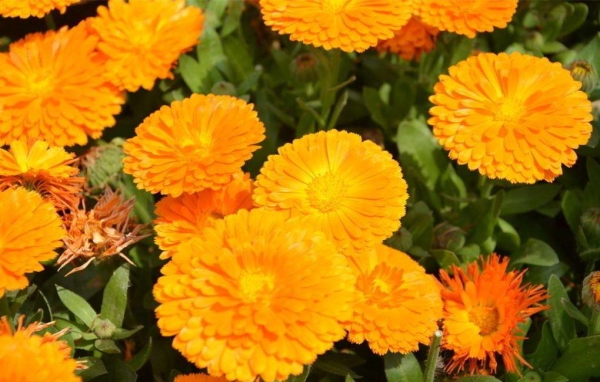
The calendula plant is short and dense. Its flower colors include pale yellow, orange-red, yellow, and others, bright and eye-catching. It is a common herbaceous flower in early spring gardens. It is suitable for arrangement in central squares, flower beds, and flower borders. It can also be used as an edging flower for lawns or for potted ornamental display. Varieties with long stalks and large flowers can be used for cut flowers.
Calendula has a very strong resistance to sulfur dioxide and also has a certain resistance to cyanides and hydrogen sulfide. It is an excellent pollution-resistant flower and is also a main material for spring flower beds. It can be used as cut flowers and potted plants. Calendula is rich in multiple vitamins, especially vitamin A and vitamin C; almost all parts can be eaten; its petals have a cosmetic function. The flowers contain carotenoids, lycopene, violaxanthin, rubixanthin, volatile oil, resin, mucilage, malic acid, and others. The roots contain bitter substances and arctanediol; the seeds contain glycerides, ceryl alcohol, and alkaloids. Putting it into shampoo can make the hair color lighter.
Calendula Flower Language
Calendula flower language: sadness and jealousy, the pain of parting, infatuation, broken love and sorrow
Calendula looks magnificent and has brilliant colors. It represents: sorrow, reluctant parting, infatuation, disappointment, and the pain of parting. It is the most suitable flower for the broken-hearted, those parting, and those feeling down. Calendula also symbolizes noble sentiments and is a symbol of a gentleman. Therefore, if you think a person is upright, generous, and responsible, then calendula is also very suitable for him.
Calendula Flower Tea
Calendula flower tea benefits:
1. Calendula is sweet in nature, clears damp-heat, and can cool internal heat. It has the effects of relieving pain and promoting wound healing, helps treat stomach pain and gastric ulcers, reduces inflammation, kills bacteria, promotes blood circulation, and relieves menstrual pain. When drunk during a severe cold, it can promote urination and reduce fever.
2. Rich in the mineral phosphorus and vitamin C, it treats insomnia and reduces anxiety and neurasthenia. It protects vision, treats lymphadenitis, and maintains intestinal function / nourishes the liver and brightens the eyes, beautifies the skin, and detoxifies and reduces inflammation.
3. It can reduce menstrual pain, relieve menstrual cramps, stimulate bile secretion, and break down fat. It is suggested that women may want to drink more of it. It has an excellent therapeutic effect on digestive system ulcers and lymphadenitis. It has an excellent therapeutic effect in treating digestive system ulcers and lymphadenitis.
Related Encyclopedia
Pocket scale non-woven bag rush pith crab claw Redmi Note 3 YKK zipper YBS zipper Prunus sargentii climbing rose wild senna winter plum green pine wristwatch Omega Longines famous watch children's building blocks flint cremastra curled stick sugar apple
Calendula Growing Methods
Calendula, also known as pot marigold and golden cup. An annual or biennial herb in the Asteraceae family.
Morphological characteristics: Plant height 20〜30, the whole plant covered with fine hairs. Leaves alternate, oblong to obovate-oblong, entire or with inconspicuous serrations. Capitulum, solitary, flower diameter 4〜8 0!1, ligulate flowers yellow or orange, tubular flowers yellow or purple. Achene curved. There are many cultivated varieties.
Growth habits: Native to the Mediterranean coast from the Canary Islands in southern Europe to Iran. It is relatively cold-tolerant and can overwinter outdoors in the Yangtze River basin. It likes sun and is slightly shade-tolerant. It has strong adaptability and does not have strict soil requirements, but grows better in loose, fertile soil. It easily self-sows and reproduces.
Propagation method: Mostly by sowing. It is usually cultivated as a biennial. In East China, autumn sowing is in early to mid-September. After sowing by conventional methods, seedlings emerge in 7〜10 days. When the seedlings grow 4〜5 true leaves, they should be transplanted and temporarily planted. They can overwinter outdoors in a wind-sheltered, sunny place. Calendula grows quickly and has large leaves. If overwintering in a nursery, it should be transplanted and planted in time in early spring. When cultivated as an annual, it is often sown in early July and can bloom in autumn. The seed viability of calendula is 3〜4 years.
Cultivation and care: Calendula has strong adaptability and grows quickly and robustly. After autumn-sown seedlings are transplanted or thinned and grow 5〜6 true leaves, they can be planted in the ground or potted. In East China, potted seedlings are mostly cultivated under protected conditions or on south-facing enclosed balconies. After planting and before overwintering, apply 1〜2 topdressings. After growth begins in early spring, apply a compound fertilizer once every 7〜10 days. Flowering begins in late March, full bloom is in early May. After flowering, spent flowers should be removed in time to keep blooming continuously. Usually by June〜July after summer arrives, poor growth occurs due to high temperatures. Summer-sown seedlings, after timely transplanting and planting, bloom in September〜October. Their care requirements are the same as the methods after planting autumn-sown seedlings, with the only difference being that cold protection is not needed, while attention should be paid to fertilizer and water management when overwintering through summer.
Pest and disease control: Powdery mildew is the main disease of calendula. The affected parts are mostly leaves and stems. In the early stage of the disease, white powdery mildew-like round spots appear, and finally develop until the leaf surface, leaf back, and stems are all covered with a white powdery layer, causing the plant to stop growing and leading to yellowing and death. This disease is likely to occur under dry conditions at 20〜241 and spreads extremely quickly. Excessive plant growth also makes this disease more likely to occur. Control methods:0 Remove diseased leaves and diseased plants, and destroy them. ② In the early stage of the disease, spray 15% triadimefon wettable powder at 1,000〜1,200 times dilution or 20% thiophanate-methyl wettable powder at 1,000 times dilution for control.
. Horticultural uses: Calendula is relatively cold-tolerant and can bloom in early spring. It is often used for flower bed arrangements, and can also be forced in a greenhouse for cultivation, as a potted Lantern Festival flower or for cut flower cultivation. It can also be used as a self-sowing wildflower cultivation along the edges of homes.