How do you care for obedient plant? An introduction to everyday care methods
Obedient plant likes a moist environment, so potted plants need frequent watering; if the soil dries out even slightly, the plant will droop its head and look listless. Light duration must also be guaranteed; if it is insufficient, flowering will be affected. When the flower spikes are forming, bury a little phosphorus fertilizer, potassium fertilizer or special flower fertilizer to promote flowering.
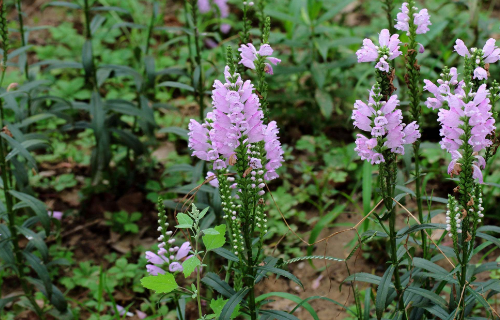
Obedient plant likes light but cannot tolerate strong, scorching sun. It is cold-hardy and tolerates partial shade, but the temperature must not drop below 5 degrees, especially when grown in the north, where winter protection must be done well. Propagation is generally by sowing and by division or cuttings.
How is obedient plant grown
Soil
Obedient plant does not have high requirements for soil, but it is best to choose loose, airy, fertile sandy soil. Because planting in the ground requires a thick layer of soil, but if planting in a flower pot, you can choose a loose, airy, well-draining growing medium.
Light
Obedient plant is very fond of sunlight, and during its growing period it should be given plenty of light, but note that in summer, because the temperature is too high and the sunlight is also very strong, the plant should be given appropriate shading, but it should not be shaded too much, otherwise the plant will become leggy due to lack of light.
Temperature
Obedient plant likes to grow in a warm environment; its most suitable growing temperature is between 18-28°C, and it also has strong cold tolerance. In summer, because the weather is too hot, you can use a spray bottle to mist the plant to achieve the purpose of cooling it down, generally spraying 1-2 times a day. After the temperature drops in autumn, place the flower pot in a south-facing, wind-sheltered window for care, and just keep the soil moist. In winter, place obedient plant indoors in a spot with good light for care, especially in the northern regions of our country, where attention must be paid to cold protection and warmth; generally the indoor temperature must not be below 5°C.
Watering
Obedient plant still has a high demand for water, and the soil must always be kept in a moist state. Because it is not drought-tolerant, pay attention to watering it more in summer; if the soil is too dry, it will cause poor growth of the plant, but you also cannot water too much. If there is standing water in the flower pot, drain it promptly, otherwise the plant's roots will rot.
Fertilizing
Use decomposed compost as the base fertilizer. Apply nitrogen, phosphorus and potassium once a month, with a slightly larger proportion of phosphorus and potassium fertilizer, to promote flowering. Be careful to control the amount of fertilizer to prevent the plant from becoming leggy. When the flower spikes are forming, apply 1-2 additional applications of phosphorus fertilizer, or a special fertilizer.
What is the difference between obedient plant and snapdragon? Obedient plant's growth habits
The flower spikes of both obedient plant and snapdragon extend upward, and obedient plant's petals are also very messy and unruly, looking very similar to snapdragon from a distance. However, from the names we can accurately judge that they are indeed two completely different plants.
What is the difference between obedient plant and snapdragon
1. Morphological differences
1. Flowers
From the flowers, snapdragon's flowers grow very compactly, that is, they all grow together, very densely, while obedient plant's flowers are relatively scattered, often with many obedient plant flowers borne on a single plant.
2. Leaves
In terms of leaves, snapdragon's leaves are green, crystal-clear and smooth, and the edges feel very smooth to the touch, while the leaf tips of obedient plant have some rather sharp, saw-like little things that prick your hand when you stroke them.
3. Stems
From the characteristics of the stems, the surface of snapdragon's stems has tiny fine hairs distributed on it, and the base has already become woody; on the other hand, the shape of obedient plant's stems is somewhat close to a quadrangular prism.
2. Care differences
1. Sunlight requirements
Regarding sunlight requirements, snapdragon is very fond of light, so when growing it, it needs to receive enough sunlight; good photosynthesis allows it to accumulate more nutrients, so it can grow better. However, note that in summer you should try to avoid long periods of sun exposure and provide shade for it, otherwise the color of the flowers may not be as bright as normal.
Obedient plant. Although obedient plant also likes to grow in the sun, it has relatively high temperature requirements; it needs to grow in a relatively warm environment, and it cannot be too hot or too cold.
2. Soil
In terms of soil, snapdragon's requirements are not very high; it only needs relatively loose and airy soil, and watering should be done in moderation. Overall, snapdragon is still very easy to grow.
Although obedient plant also needs relatively loose soil, it has certain requirements for fertility; when cultivating it, it is best to place it in a relatively fertile substrate for growing. It is relatively tolerant of fertilizer, so during cultivation you can apply a little more fertilizer.
Obedient plant's growth habits
Obedient plant likes a warm growing environment with plenty of sunlight, and the soil is generally best as loose, fertile sandy soil. Obedient plant has cold tolerance, can tolerate heat, and can also tolerate partial shade; it is relatively robust by nature and also relatively tolerant of fertilizer.
Obedient plant has a strong ability to reproduce on its own; it can reproduce plants by itself, and can also be propagated by sowing and by division and cuttings.
Division propagation of obedient plant
1. Propagation time
Division propagation is carried out before sprouting in spring. Spring and autumn are the most suitable seasons for division.
2. Selecting plants for propagation
Generally, obedient plant plants around 3 years old are used for division.
3. Specific method
Just cut young plants or underground rhizomes from the mature plant and plant them separately. You can also cut robust new shoots in autumn and insert them into a well-draining sand bed, then transplant them after they have rooted.
Care of obedient plant during the flowering period
1. Sunlight: If there is no ample sunlight for a long time, besides making the plant leggy, it will also seriously affect its flowering. But overly strong sunlight also needs to be blocked.
2. Water: Its flowering period is summer; if the water supply is insufficient in this season, it will limit the plant's growth and likewise affect the quality and quantity of the flowers. It should be placed in a spot with good air circulation, and the soil should always be kept in a moist state.
3. Nutrients: If you want it to keep blooming throughout the summer, then nutrients are also very important. Apply flower fertilizer once every half month, and when the flower spikes are emerging, apply 1 to 2 additional applications of phosphorus and potassium fertilizer.
Although obedient plant is unruly by nature, wild and free-spirited, growing obedient plant cannot be done just any way you please. If you want obedient plant to grow tall and upright, swaying in the wind, you must let obedient plant get plenty of sunlight, water and fertilizer. So people can never be that unruly; although obedient plant looks unruly, only it itself knows whether it lives unruly.