Mallow cultivation methods and care tips
Soil
Mallow does not have high requirements for soil. We can use slightly acidic leaf mold or nutrient soil, or sandy soil is also fine. After transplanting mallow into a flower pot, we should first place it in a position that can receive sunlight and let it bask for half a day. This will help the plant bloom later.
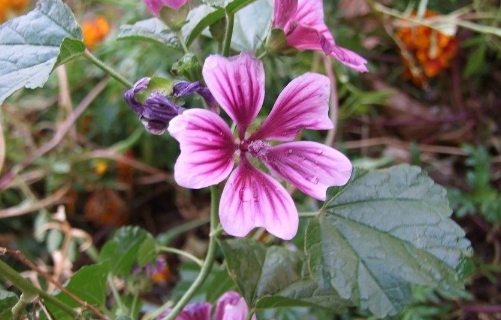
Light and temperature
Mallow likes sunlight very much. During its growth period, it needs sufficient light to grow healthily. In addition, it likes to grow in a cool environment because it is relatively cold-tolerant. The most suitable growth temperature for mallow is between 18°C and 25°C. During this period, it is also necessary to ensure that the plant can receive sufficient sunlight every day. In winter, the temperature is very low, so the plant should be kept warm at this time. The plant can be placed indoors in a position that can receive light for care, and the temperature at this time should be between 3°C and 5°C.
Watering and fertilizing
The plant should be watered when the soil is dry. Be careful not to water too much and let water accumulate in the flower pot, as this can easily cause the plant's roots to rot, which is very unfavorable for the plant's growth. This is especially important to note in summer and winter. Because mallow blooms many times each time, it also needs a lot of nutrients. During the growth period before mallow blooms, we can apply a compound fertilizer of nitrogen and phosphorus to the plant. During the flowering process, fertilizer mainly based on phosphorus should be applied to promote flowering.
The above is an introduction to the question of how to grow mallow. Below, let us look at what else needs attention during the cultivation process of mallow.
Mallow cultivation methods
Mallow is native to Asia, Europe and North America, and is a biennial or perennial herbaceous plant. It is cold-tolerant, drought-tolerant, and not choosy about soil, with sandy soil being the most suitable. It has strong growth vigor and likes sufficient sunlight.
[Planting] It is best to do this before Qingming. Choose nutrient soil or leaf mold with a pH value of 5.5 to 6.5. After potting, place it in a place with half a day of sunlight so that the leaves will be green and the flowers abundant. Otherwise, it will be very difficult for it to bloom.
[Fertilizing] Because mallow blooms relatively many times, it needs sufficient nutrients. From May, it enters the growth period. Apply fertilizer combining nitrogen and phosphorus 1 to 2 times. From June, it begins to bloom successively until October. Each month, apply fertilizer mainly based on phosphorus 1 to 2 times as a top dressing, so that the flowers continue to bloom without interruption.
[Watering] In the hot midsummer season, the potting soil should be on the dry side and avoid being wet to prevent root rot. Sometimes it will drop leaves, and in the following spring it will grow new leaves again.
[Pruning] At any time, cut off dead branches, diseased branches, weak branches, overly dense branches, and residual flowers and stems to facilitate ventilation and light penetration. For single-petaled ones, leggy and long branches should also be shortened so that more side branches grow and more flowers are produced.
[Cold protection and warmth] After winter begins, it should be moved indoors in time and placed in a sunny and warm place. Keep the indoor temperature at 3 to 5°C so it can overwinter. The potting soil should be on the dry side and avoid being wet to prevent root rot. Sometimes it will drop leaves, and in the following spring it will grow new leaves again.
[Harvesting and storage] Harvest in summer and autumn, and dry in the sun.
Mallow cultivation methods and precautions
Mallow cultivation methods
Soil
Mallow does not have high requirements for soil. You can choose sandy soil, or use slightly acidic nutrient soil or leaf mold. After potting mallow, you need to first place the potted mallow in a sunny place for half a day, which can promote flowering.
Light and temperature
Mallow likes a sunny environment and likes a somewhat cool environment, and it is cold-tolerant. For cultivating mallow, the suitable growth temperature is between 18°C and 25°C, and sufficient sunlight should be ensured. In the cold winter, the potted mallow needs to be placed indoors in a warm place with sufficient sunlight, and the temperature should be kept at 3°C-5°C.
Watering and fertilizing
In terms of water and fertilizer, watering should be noted to be on the dry side and avoid being wet, so as to prevent root rot, especially in severe cold and hot summer. Because mallow blooms relatively abundantly, the nutrients it needs are also relatively great. Therefore, during the growth period of mallow, some compound fertilizer of nitrogen and phosphorus can be applied. During the flowering period, fertilizer mainly based on phosphorus fertilizer should be applied to promote flowering.
Propagation methods
Mallow propagation generally uses cuttings and layering. For cuttings, strong branches can be selected for cutting, and roots will form in about one month. Layering mainly includes air layering and ordinary layering.
Precautions for mallow cultivation
Pruning
During the growth process of mallow, pruning needs to be carried out frequently, cutting off dead branches, diseased branches, weak branches, dense branches and residual flowers. This is beneficial for ventilation and light penetration and promotes more branching and flowering of mallow.
Pests and diseases and their control
During the care process, mallow will develop some diseases, mainly sooty mold. It can be treated by spraying with medicinal agents, and attention should be paid to ventilation to avoid diseases. During the care process, mallow sometimes also encounters pests, mainly aphids and scale insects. When these pests occur on mallow, spraying with a 2000-fold dilution of 10% omethoate can be used for control.