Reasons Why Lipstick Vine Does Not Bloom and How to Fix It
1. Improper watering and fertilizing.
During the growing season, the lipstick vine has a relatively high demand for water and nutrients, but you should not apply too much fertilizer or water too heavily just to make it grow faster, as this leads to excess nutrients, causing the flower stems to grow rapidly and affecting flower bud differentiation, so it fails to bloom or blooms sparsely.
And too little water and fertilizer will cause a lack of nutrients, because it cannot supply enough for blooming. Secondly, if too much nitrogen fertilizer and too little phosphorus fertilizer is applied, the problem of not blooming also easily occurs.
Solution: Do a good job of water and fertilizer management for the lipstick vine, fertilize reasonably, and water appropriately. During the flowering period, reduce nitrogen fertilizer and appropriately increase some phosphorus fertilizer to promote blooming.
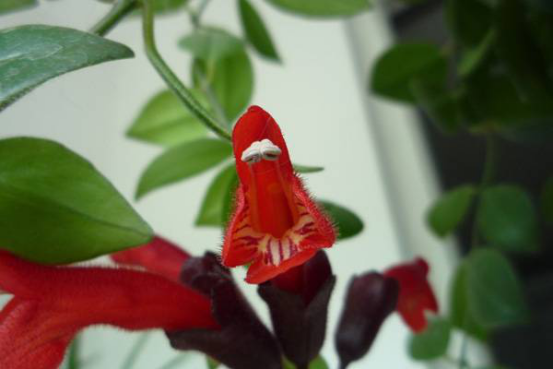
2. Unsuitable light and temperature.
The lipstick vine is suited to growing in a temperature environment of around 20-30, and it needs to be ensured plenty of light, but it also cannot be exposed to strong direct light or insufficient light.
With little light time, the lipstick vine only grows branches and blooms sparsely. And if the temperature is too high or too low, it will affect the lipstick vine's blooming. When growing it indoors in winter, pay attention to keeping the room temperature somewhat lower and increasing the indoor light intensity, as this can promote the lipstick vine to bloom more.
3. Unsuitable soil.
The lipstick vine likes slightly acidic or neutral soil. If the potting soil is on the alkaline side, or if the soil gradually becomes alkaline due to long-term watering with tap water, it will affect the growth of the lipstick vine, leading to reduced blooming or no blooming.
Why the Lipstick Vine Does Not Bloom, Why the Lipstick Plant Drops Flower Buds
The lipstick vine likes a semi-shady environment with bright light, and can only receive at most 2-3 hours of direct sunlight per day. When grown indoors, it is best hung at a south-facing window. The optimum growing temperature is 21-26°C; it is relatively cold-tolerant, but prefers a high-temperature environment. It likes well-drained soil. So why does the lipstick vine not bloom? Why does the lipstick plant drop flower buds? Below, the wed114 wedding website editor brings you the detailed content.
Why the Lipstick Vine Does Not Bloom or Drops Flower Buds
1. Improper watering and fertilizing
Improper watering and fertilizing of the lipstick vine is what causes the phenomenon of not blooming or bud drop.
Generally, during the growth period of the lipstick vine, if water and fertilizer are excessive and nutrients are superfluous, it will cause the plant to grow leggy, the flowers will grow poorly, and flower bud differentiation will be affected, making it not bloom, or bloom less, and it is also prone to bud drop; while too little water and fertilizer will make the plant grow poorly and may cause the lipstick vine not to bloom. Secondly, when too much nitrogen fertilizer is applied and phosphorus fertilizer is lacking, this phenomenon also easily occurs; when the air is relatively dry, bud drop also easily occurs.
Therefore, when growing the lipstick vine, you need to pay attention to doing a good job of water and fertilizer management, and fertilizing requires the reasonable use of fertilizers with various elements.
2. Unsuitable light and temperature
Unsuitable light and temperature will also affect blooming.
The lipstick vine likes a warm growing environment with bright light. When light is insufficient, the plant will grow leggy, thereby reducing blooming. Temperature is also an important factor and needs to be kept within a reasonable range. Even though it is not cold-tolerant in winter, the temperature also cannot be too high; too high a temperature makes it sprout and grow early, and there will not be enough nutrients for blooming the next year, so it will not bloom.
So when growing the lipstick vine, pay attention that it cannot be too shaded, and the temperature needs to be kept within a suitable range.
Why the Lipstick Vine Does Not Bloom or Drops Flower Buds
3. The soil used is unsuitable
The lipstick vine likes soil that is slightly acidic or neutral, and is afraid of saline-alkaline soil. If the soil used has a relatively high saline-alkaline content, it will affect its blooming, and in severe cases can cause the plant to die.
4. Other factors
If the lipstick vine lacks pruning and has many messy branches, it will consume nutrients, and it will bloom little or not at all.
If the lipstick vine suffers from pests and diseases, it will also lead to flower and bud drop.
Therefore, during the care period of the lipstick vine, timely pruning and prevention and control of pests and diseases are very important.
When Does the Lipstick Vine Bloom
The Flowering Period of the Lipstick Vine
The flowering period of the lipstick plant is generally from November of the current year to June of the following year, but in some places the blooming lasts only until February. In short, the flowering period is within the range of November to June; due to environmental differences in different places, the blooming and fading times will differ somewhat.
Reasons for Differences in the Lipstick Vine's Flowering Period
The differences in the lipstick vine's flowering period are mainly manifested in the climate differences between the north and the south; differences in temperature, humidity, and light will affect the lipstick vine's blooming time. In addition, the ability to artificially change the environment is also very powerful; potted lipstick vines are mostly kept on balconies at home for care, and the environment in each household is different, so naturally the blooming time is also different.
What to Pay Attention to During the Lipstick Vine's Flowering Period
The lipstick vine's blooming time is relatively long, blooming in summer and autumn; it is necessary to ensure sufficient supply of fertilizer and water, and when cultivating, apply a sufficient amount of decomposed organic fertilizer. If the air is relatively dry, spray water on the leaf surface to increase the humidity of the leaf surface and the surrounding environment.
If slight bud drop occurs during the flowering period, it can be considered normal; if there is a lot of bud drop, then there is a problem in the care. Generally, plants are fertilized before blooming, and no fertilization is needed during the bud stage; if heavy fertilizer is applied during the bud stage, it will lead to large-scale bud drop.