How to propagate the lipstick plant? A detailed guide to common propagation methods
Among the propagation methods for the lipstick plant, cuttings are a relatively convenient method, and the survival rate of cuttings is higher. For friends growing it at home, cuttings are also easy to carry out.
If the temperature is suitable, lipstick plant cuttings can be taken in all four seasons. But for a higher survival rate, cuttings are best taken during the spring growing period of the lipstick plant, as this makes it easy for them to root and survive.
When taking cuttings, cut a stem about 10 cm long from the top of a branch to use as the cutting, insert it into a container with clean sandy soil as the medium, water moderately, keep the room air humid, and maintain the temperature at around 25 degrees at room temperature. Generally, after about one month the cutting will send out roots and buds, and once the root system is strong it can be transplanted into a flowerpot for care.
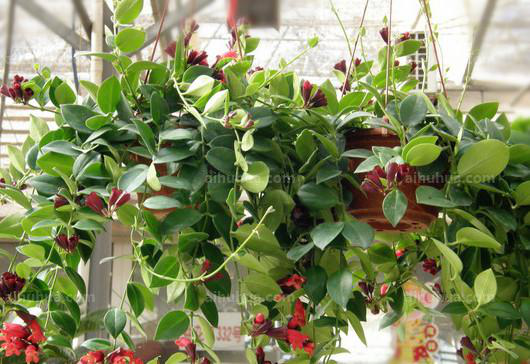
How to grow the lipstick plant: cultivation methods for the lipstick plant
The lipstick plant, also known as lipstick trailing plant, flower vine grass, large red mango lipstick plant, etc., is an excellent trailing plant introduced to China in recent years. Both its flowers and leaves have high ornamental value. It has a graceful plant shape, lush stems and leaves, and bright flower colors. It can be placed on a table or desk, or hung for viewing. As a small indoor foliage and flowering plant, let us take a look below at the cultivation methods and precautions for the lipstick plant!
Growth habits of the lipstick plant
For lipstick plant cultivation, loose, fertile sandy loam is best, and drainage must be good. The cultivation site must be shady and ventilated, with about 50-70% sunlight, and it should avoid direct strong light. The suitable growing temperature is about 15-25°C. It likes a semi-shady environment. If the placement site has too much or too little light, the leaves will easily turn pale green or yellow-green, lose their vitality, and lose their proper ornamental value, or even dry up and die. If exposed to direct sunlight and dry air, it is most prone to scorching. It should avoid continuous high temperature and high humidity; poor drainage and ventilation will cause rot.
Propagation methods for the lipstick plant
The lipstick plant can be propagated by cuttings, with spring and autumn being the suitable periods. Select healthy, plump branches, cut each 7-10 cm into 1 section, and insert them into loose sandy soil, or a growing medium made of 50% fine tree fern fiber, 20% perlite, and 30% coarse sand. Maintain appropriate humidity, receive about 50-60% sunlight, and after about 30-40 days roots can develop into seedlings. After the root mass grows vigorously, transplant them into pots or cultivate them in flower beds.
Cultivation methods for the lipstick plant
1. Soil: For lipstick plant cultivation, loose, fertile sandy loam is best, and drainage must be good. For potted plants, slightly acidic soil is preferable. A potted growing medium made of peat soil, sand, and vermiculite can be used, with an appropriate amount of superphosphate added.
2. Light: The lipstick plant likes a semi-shady environment. Except for the strong light at midday in midsummer, which should be properly shaded, it should be given sufficient light at other times, especially in winter. If the placement site has too much or too little light, the leaves will easily turn pale green or yellow-green.
3. Temperature: The lipstick plant should be placed in a shady, ventilated place, and attention should be paid to maintaining environmental humidity. It should avoid continuous high temperature and high humidity; poor drainage and ventilation will cause rot. It is not cold-tolerant, and in winter it needs to be brought indoors to overwinter.
4. Watering: For lipstick plant cultivation, the potting soil should often be kept moist, and water accumulation in the pot must be avoided to prevent root rot. From March to September, during the vigorous growth period, the water requirement is relatively large, so it should be watered and misted frequently to increase humidity. As the weather gradually turns cooler in autumn, gradually reduce the amount of watering and fertilizing. In winter, the potting soil should be slightly dry.
5. Pruning: When the lipstick plant grows vigorously, it can be appropriately pinched back to promote branching. After the winter flowering period, promptly cut off the spent stems that have flowered, which can save nutrients, promote new branch growth, and help it produce more buds and flowers.
Precautions for lipstick plant cultivation
1. After the lipstick plant is potted, keep the potting soil moist, but not overly wet. Especially when the pot has poor ventilation, the root system is prone to rot or leaf drop. Frequently spray water mist on the leaves to keep the air humidity at around 80%.
2. In the hot summer, the lipstick plant can be placed outdoors under a shade shed or in a ventilated spot under tree shade, with about 50% shading. It can also be hung under a balcony trellis with bamboo blinds for shade, or the pot can be hung on the inner side of a south-facing door or window where there is sufficient scattered light.
3. The lipstick plant should avoid wind blowing on its branches and tendrils, so that the drooping stems are not worn through by the rim of the flowerpot. As the weather gradually turns cooler in autumn, gradually reduce the amount of watering and fertilizing.
4. When caring for the lipstick plant in winter, the potting soil should be slightly dry. Apart from appropriately applying some fertilizer liquid containing a little more phosphorus before budding and flowering, under normal circumstances it should be fertilized little or not at all.
Cultivation methods for the lipstick plant: when does the lipstick plant bloom
Soil
The lipstick plant likes acidic soil, so the potting soil for planting the lipstick plant is best chosen to be slightly acidic. A growing medium made of peat soil, sand, and vermiculite can be chosen. An appropriate amount of calcium phosphate can be added to the soil. Alternatively, mix leaf mold and coarse sand at a ratio of 8:2, then add a small amount of decomposed animal manure or compound fertilizer for cultivation.
Watering
Every year from March to September is the growth period of the lipstick plant. This period also has relatively high temperatures, and the plant's water requirement is relatively large, so it needs frequent watering or misting to increase air humidity. In summer, open the windows as often as possible for ventilation. After autumn, gradually reduce the amount of watering to improve the plant's cold resistance.
Temperature
The growth temperature of the lipstick plant is 18-30°C, with the most suitable temperature at around 25°C. Its cold tolerance is relatively poor, and the overwintering temperature should be above 12°C. In winter, the potted plant needs to be brought indoors in time for care, and cold wind should be avoided from blowing directly on it.
Light
The lipstick trailing plant likes to grow in a semi-shady environment. Except for the strong light at midday in midsummer, which should be properly shaded, it should be given sufficient light at other times. If during care the leaves of the lipstick plant are found to turn red, it is mainly caused by too low room temperature or too strong light. At this time, you need to raise the room temperature in time. Being in an environment with too low a temperature for a long time can easily cause leaves to fall and branches to dry up.
Fertilizing
The lipstick plant usually requires relatively little fertilizer. Apply some decomposed liquid fertilizer every two weeks, and it is better to apply it dilute rather than concentrated. When potting, add an appropriate amount of livestock hoof and horn pieces and crushed bone pieces as base fertilizer, which can make it grow well. During the vigorous growth period of the lipstick plant, apply a decomposed organic fertilizer liquid once every 15-20 days. After summer, apply more phosphorus and potassium fertilizers, such as a 0.1% solution of potassium dihydrogen phosphate and a 20-fold solution of decomposed fish offal water, bone water, etc.