How to grow Dutchman's pipe (Aristolochia tubiflora)? Detailed planting methods and techniques
1. For growing Aristolochia tubiflora, weed and loosen the soil frequently during the seedling stage. When the seedlings reach 5 cm tall, weed once, but be careful not to damage the roots of Aristolochia tubiflora. After that, weed about 3 more times in combination with fertilizing.
2. When the seedlings reach 5 cm, thin them out at this time, keeping the strong and removing the weak. When the seedlings reach 10 cm, final thinning should be carried out. After that, they can be lifted from the nursery and planted out.
3. When Aristolochia tubiflora enters the vigorous growth period, remove the stems and vines that have not produced flower buds. After the fruit is harvested, cut off all stems and vines, and apply additional fertilizer and cultivate the soil.
4. Aristolochia tubiflora does not need frequent watering. If it is found to be rather dry, water it appropriately, and drain promptly during the rainy season.
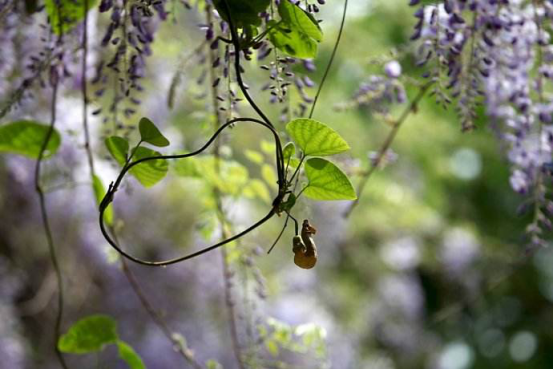
After reading the above introduction, doesn't Aristolochia tubiflora have many uses? In fact, Aristolochia tubiflora can often be seen in daily life, and its utilization rate is also quite high!
Cultivation methods for Aristolochia kwangsiensis
Aristolochia kwangsiensis is a large woody vine; the tuberous roots are spindle-shaped, often several connected together, brown on the surface, the outer bark often cracked, pale yellow inside; young branches are angular, densely covered with dirty yellow or pale brown long stiff hairs, old branches hairless, with a thickened, strip-like exfoliating cork layer. Leaves are thickly papery to leathery, ovate-cordate or round, the apex often with a small spiny tip or short tip, the base cordate, young leaves sparsely covered with short hairs on the surface, mature leaves densely covered with long stiff hairs on both sides; petioles are thick, densely covered with long stiff hairs.
Racemes are axillary, the inflorescence often bending downward, densely covered with long stiff hairs, with small bracts near the base, the bracts subulate, densely covered with long stiff hairs; the middle of the perianth tube bends sharply, pale green outside, with longitudinal vein lines and longitudinal ridges, densely covered with long stiff hairs, the limb disc-shaped, nearly round-triangular, blue-purple above, with dark red spiny protrusions, covered with brown long stiff hairs outside, the marginal lobes spreading, broadly triangular, the margins often recurved outward, yellow; anthers oblong, paired and attached near the base of the gynostemium; ovary cylindrical, the apex of the gynostemium 3-lobed, the lobe apex blunt, the margins extending downward and rolled back, with papillary protrusions.
Capsules are ellipsoid-cylindrical, brownish-yellow, ridged, with a beak tip about 3 mm long at the apex, narrowed at the base, splitting into 6 valves from the top downward when mature; seeds ovate-triangular, flatly convex on the back, concave on the ventral side, chestnut brown. Flowering period April—May, fruiting period August—September.
..........
Cultivation methods for Aristolochia kwangsiensis
The cultivation methods for Aristolochia kwangsiensis are also relatively common, generally based mainly on seed propagation, though division propagation can also be used. Sow on the seedbed in early spring in April. Before sowing, soak the mature seeds in warm water at 35°C for one day, mix the seeds with 3 times their volume of wet sand, put them in a cloth bag, bury them in a sunny soil pit, cover with soil, and use plastic film to retain moisture and warmth. After about 15 days, once the seeds germinate, they can be sown.
On the seedbed, open furrows at a certain row spacing, evenly scatter the germinated seeds into the furrows, cover with soil and then add straw mulch to retain moisture, and full seedlings emerge in 15—20 days. When the seedlings are 15 cm tall, transplant them at a certain plant and row spacing. In mid-to-late April, select plants more than 2 years old, dig them out, choose healthy roots, cut them into segments about 10 cm long, mix in an appropriate amount of plant ash, open holes at the row spacing, place 1 segment flat in each hole, cover with soil and firm it, and keep the soil moist to encourage rooting and sprouting.
..........
Field management of Aristolochia kwangsiensis
When the seedlings are about 3 cm tall, loosen the soil and thin the seedlings. When the seedlings are 10 cm tall, final thinning can be carried out at a plant spacing of 4—5 cm. When the seedlings are 15—20 cm tall, transplant them. During final thinning, promptly fill in gaps where seedlings are missing, bringing soil with them. The seedlings are relatively drought-tolerant, but water appropriately in case of severe drought. Water appropriately during the flowering and fruiting period to prevent flower and fruit drop due to lack of water. Pay attention to drainage during the rainy season. After applying sufficient base fertilizer, from the second year after transplanting, apply additional fertilizer 2—3 times each year. Before flowering in summer, add an appropriate amount of organic fertilizer and apply it in shallow furrows beside the plants, which helps increase yield; in mid-to-late August, mainly use phosphorus and potassium fertilizers to promote root growth.
After fruit set, spray phosphorus and potassium compound fertilizer on the leaves 1-2 times to prevent flower and fruit drop. During the seedling stage, hoe weeds frequently. When the seedlings are about 6 cm tall, hoe shallowly to keep the soil loose and free of weeds. When clearing the clumps, keep 2—3 vigorous buds per plant and remove the rest. After May—June, growth enters the peak season and flower buds appear, so cut off branches that grow too vigorously and have no flower buds. In October, after the fruit is fully harvested, cut off the stems and vines, clear weeds from the field, apply compost and then loosen the soil, and earth up before winter to keep warm through the winter, preparing for high yield the following year. When the seedlings are 30 cm tall, insert bamboo poles or branches beside the plants, with the trellis about 2 m high, to facilitate climbing growth of the stems, improve ventilation and light penetration, and promote fruiting.
.....
Editor's summary
The reason Aristolochia kwangsiensis is widely cultivated is also because of its medicinal value. Its tuberous roots are used as medicine and have the effects of clearing heat, detoxifying, stopping bleeding, and relieving pain, treating sore throat, abdominal pain, bruises, malaria, snake bites, and so on. From this, it can be seen that this oddly shaped plant also has many uses. That is all for today's introduction, thank you everyone for reading!
What are the effects and functions of Aristolochia? Cultivation techniques for Aristolochia
[Common questions]What are the effects and functions of Aristolochia? How should it be grown?
[Expert answer]Aristolochia is a perennial herbaceous plant, named because its mature fruit resembles a hanging horse bell. It has considerable medicinal value and landscaping use, with effects such as clearing the lungs and directing qi downward, relieving cough and calming panting, and high cultivation value. The effects, functions, and cultivation techniques of Aristolochia are introduced below.
Image: Aristolochia cultivation
I. Effects and functions of Aristolochia
1. Cough-relieving effect:Aristolochia has a significant antitussive effect on the cough model induced by ammonium hydroxide spray, and the strength of the effect is comparable to codeine phosphate.
2. Asthma-relieving effect:Aristolochia ethanol-removed infusion 0.5 ml (2 g/ml) can significantly inhibit the isolated tracheal smooth muscle of guinea pigs spasmed by 0.5 ml histamine (10 g/ml), indicating a certain asthma-relieving effect.
3. Expectorant effect:Using the method of measuring respiratory tract mucus secretion in anesthetized rabbits, it was proved that oral administration of Aristolochia decoction (1 g/kg) has a weak expectorant effect, less effective than Aster (Ziwan) and Arisaema (Tiannanxing).
4. Anti-inflammatory effect:Effect on capillary permeability in mice: Aristolochia 10 g/kg has a significant inhibitory effect on the increase in skin capillary permeability in mice caused by intradermal injection of histamine (50 micrograms/ml) at 20 microliters per mouse.
5. Antibacterial effect:In vitro tests show that Aristolochia water infusion (1:4) has a certain inhibitory effect on common skin fungi. Fresh fruits and leaves of Aristolochia contorta have an inhibitory effect on Staphylococcus aureus in test tubes, with the fruit stronger than the leaves, and it remains effective after removing tannins.
6. Blood pressure-lowering effect:Aristolochia has a mild and lasting blood pressure-lowering effect, suitable for relatively early-stage hypertension. Preparations and usage vary from place to place, and the therapeutic effects also differ slightly.
Image: Aristolochia cultivation
II. Cultivation techniques for Aristolochia
1. Land selection and preparation:For Aristolochia planting sites, loam rich in humus should be chosen. After the previous crop is harvested, plow once, about 30 cm deep. While preparing the land, apply 45000 kg of farmyard manure or compost per hectare as base fertilizer, and plow once more before planting. Level and harrow finely, make seedbeds 1.2 m wide, and prepare drainage ditches around them before planting.
2. Timely transplanting:Before the winter freeze for Aristolochia, dig planting holes 20 cm deep at a row and plant spacing of 35×25 cm, apply 10 kg of farmyard manure per hole as base fertilizer, fill the holes to the top with fine soil, and let it stand 10 cm above the ground. In early March to April of the following spring, open the planting holes, plant the cultivated seedlings into the holes, 1 plant per hole, and after planting water thoroughly to set the roots.
3. Loosening soil and weeding:During the seedling stage of Aristolochia, loosen the soil and weed frequently. Generally, when the seedlings are 5 cm tall, cultivate and weed once, and it should be shallow to avoid damaging the roots. After that, cultivate and weed 3—4 more times in combination with additional fertilizing to prevent weed overgrowth. When the seedlings are 5 cm tall, thin them while loosening the soil and weeding, removing the weak and keeping the strong. When the seedlings are 10 cm tall, final thinning is carried out at a plant spacing of 3—5 cm. When the seedlings are 15—20 cm tall, they can be lifted from the nursery and planted out. kg
4. Reasonable additional fertilizing:In winter or early spring, control the amount of nitrogen fertilizer applied to Aristolochia to avoid excessive stem and leaf growth and damage from pests and diseases. Before flowering, mainly apply decomposed barnyard manure and add an appropriate amount of phosphorus fertilizer. In the late growth stage, in mid-August, apply 750 kg of superphosphate and 150 kg of potassium fertilizer per hectare, which can both increase the fruit-setting rate and benefit root growth, and is an important step for increasing yield.
5. Watering and trellising:Aristolochia is drought-tolerant and afraid of waterlogging, so it generally does not need watering. However, water appropriately when it is too dry during the growth period, and drain promptly during the rainy season to avoid root rot. Aristolochia is a trailing herb. After transplanting, when the seedlings are 30 cm tall, set up trellises in time, using bamboo poles as supports between the rows, with ropes pulled in the middle, 1.8—2 m high, to guide the stems and vines to climb and grow.
Image: Aristolochia
6. Pruning:When Aristolochia plants enter vigorous growth in May—June, cut off the stems and vines that grow too vigorously and have no flower buds, to reduce nutrient consumption. After harvesting the fruit in October, cut off all stems and vines, remove all weeds from the field, and earth up and apply additional fertilizer before winter to help keep warm through the winter and lay the foundation for a bumper harvest the following year.
7. Harvesting:Generally harvested in September—October when the fruit turns from green to yellow. Pick the fruit from the stalk and dry it in the hot sun, turning it as it dries until dry (if picked too early, the product shrinks; if too late, it just splits open).
[Editor's conclusion]Aristolochia has good therapeutic effects on symptoms such as lung-heat cough and asthma, loss of voice, coughing blood, and hemorrhoid asthma swelling and pain, and has relatively high cultivation value and cultivation benefits. The above introduced the effects, functions, and cultivation techniques of Aristolochia for everyone, and I hope it can be helpful to you all!