What should be noted when growing hollyhock mallow?
Pruning
During the growth of hollyhock mallow, pruning needs to be carried out regularly. Cut off dead branches, diseased branches, weak branches, crowded branches and spent flowers. This helps ventilation and light penetration, and encourages the plant to branch more and bloom.
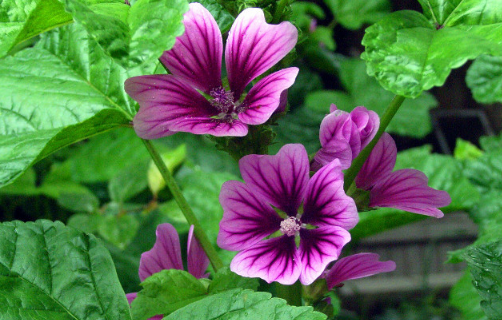
How to grow hollyhock mallow and points to note
How to grow hollyhock mallow
Soil
Hollyhock mallow has low requirements for soil. You can choose sandy soil, or use slightly acidic nutrient soil or leaf mould. After potting the hollyhock mallow, first place the pot in a sunny spot for half a day, which can encourage it to bloom.
Light and temperature
Hollyhock mallow likes a sunny environment and prefers a cooler environment, and it can tolerate cold. When growing hollyhock mallow, the suitable temperature for growth is between 18°C and 25°C, and ensure sufficient sunlight. In cold winter, the potted hollyhock mallow needs to be placed indoors in a warm place with plenty of sunlight, with the temperature kept at 3°C-5°C.
Watering and fertilising
In terms of water and fertiliser, watering should lean towards dry rather than wet, to avoid root rot, especially in severe cold and hot summer. Because hollyhock mallow blooms profusely, it needs relatively more nutrients, so during the growth period you can apply a compound fertiliser of nitrogen and phosphorus. During the flowering period, apply a fertiliser mainly based on phosphorus to promote flowering.
Propagation methods
Hollyhock mallow is generally propagated by cuttings and layering. For cuttings, you can choose healthy branches to root, and they will take root in about a month. Layering mainly consists of air layering and ordinary layering.
Points to note when growing hollyhock mallow
Pruning
During the growth of hollyhock mallow, pruning needs to be carried out regularly. Cut off dead branches, diseased branches, weak branches, crowded branches and spent flowers. This helps ventilation and light penetration, and encourages the plant to branch more and bloom.
Pests and diseases and their control
During care, hollyhock mallow may develop some diseases, mainly sooty mould, which can be treated by spraying with a chemical agent, and attention should be paid to ventilation to avoid disease. During care, hollyhock mallow may sometimes also encounter pests, mainly aphids and scale insects. When these pests occur on hollyhock mallow, you can spray a 2000-fold dilution of 10% omethoate for control.
How to grow hollyhock mallow? How to grow hollyhock mallow and points to note
Hollyhock mallow, also known as qiankui, xiaoqianhua, qipanhua, etc., is a biennial or perennial upright herbaceous plant of the genus Malva in the family Malvaceae. Hollyhock mallow is a common cultivated plant in cities across northern and southern China, with distinctive and beautiful flowers and high ornamental value. So, how should hollyhock mallow be grown? The methods for growing hollyhock mallow and points to note are introduced below.
Image: hollyhock mallow
I. How to grow hollyhock mallow
1. Soil:Hollyhock mallow has low requirements for soil. You can choose sandy soil, or use slightly acidic nutrient soil or leaf mould. After potting the hollyhock mallow, first place the pot in a sunny spot for half a day, which can encourage it to bloom.
2. Light and temperature:Hollyhock mallow likes a sunny environment and prefers a cooler environment, and it can tolerate cold. When growing hollyhock mallow, the suitable temperature for growth is between 18°C and 25°C, and ensure sufficient sunlight. In cold winter, the potted hollyhock mallow needs to be placed indoors in a warm place with plenty of sunlight, with the temperature kept at 3°C-5°C.
3. Watering and fertilising:In terms of water and fertiliser, watering should lean towards dry rather than wet, to avoid root rot, especially in severe cold and hot summer. Because hollyhock mallow blooms profusely, it needs relatively more nutrients, so during the growth period you can apply a compound fertiliser of nitrogen and phosphorus. During the flowering period, apply a fertiliser mainly based on phosphorus to promote flowering.
4. Propagation methods:Hollyhock mallow is generally propagated by cuttings and layering. For cuttings, you can choose healthy branches to root, and they will take root in about a month. Layering mainly consists of air layering and ordinary layering.
Image: hollyhock mallow
II. Points to note when growing hollyhock mallow
1. Pruning:During the growth of hollyhock mallow, pruning needs to be carried out regularly. Cut off dead branches, diseased branches, weak branches, crowded branches and spent flowers. This helps ventilation and light penetration, and encourages the plant to branch more and bloom.
2. Pests and diseases and their control:During care, hollyhock mallow may develop some diseases, mainly sooty mould, which can be treated by spraying with a chemical agent, and attention should be paid to ventilation to avoid disease. During care, hollyhock mallow may sometimes also encounter pests, mainly aphids and scale insects. When these pests occur on hollyhock mallow, you can spray a 2000-fold dilution of 10% omethoate for control.
[Editor's closing note]Hollyhock mallow has strong adaptability, is drought-tolerant and drought-resistant, and has strong growth vigour. Friends who like it can plant it with confidence, and it will certainly survive. The methods for growing hollyhock mallow and points to note have been introduced above. Does everyone know them now?