What are the propagation methods for Bleeding Glory-Bower? Beginners can master them easily
Bleeding Glory-Bower is usually propagated by cuttings.
Cuttings of Bleeding Glory-Bower are generally taken from May to June each year; both old and young branches can be used as cuttings. Take 8-10 cm stem sections for cuttings. The cutting bed can use a nutrient-rich mixed soil of potting soil. About half will root 3 weeks after insertion. If the base of the cuttings is treated with a 0.5%-0.8% indolebutyric acid solution for 1-2 seconds, rooting will be faster and more abundant. After cutting, apply additional fertilizer such as nutrient solution as appropriate.
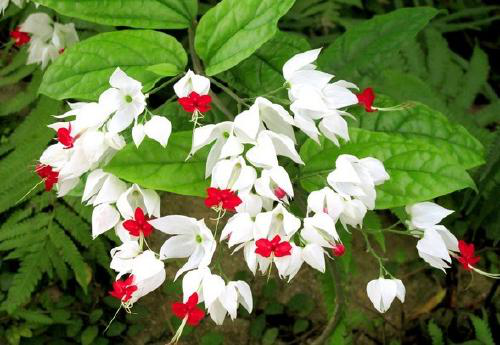
That is all for the introduction to how to grow Bleeding Glory-Bower. Have you learned it? Bleeding Glory-Bower is an ideal choice for beautifying the home. Bringing the attractive and novel Bleeding Glory-Bower into your own home, does it not make life more enjoyable? If you like it, bookmark Four Seasons Plants Network~
Key points for propagating Bleeding Glory-Bower
Bleeding Glory-Bower is a semi-climbing vine, so pot cultivation will be limited by pruning, which will keep the plant very short. Because Bleeding Glory-Bower has relatively strong adaptability, grows easily, and produces many flowers, if it is pruned promptly after the flowers fade in summer, it may even bloom a second time before the end of the year. Generally, Bleeding Glory-Bower can be propagated by cuttings, division, and sowing.
Bleeding Glory-Bower
1. Cutting propagation:
Stem cuttings, bud cuttings, and root cuttings can all be used. For stem cuttings, choose the tender top shoots of healthy, disease-free branches, or cut the lower old branches into 8-10 cm stem sections as cuttings. For bud grafting, take the lateral buds on the branches with a portion of xylem as cuttings. For root cuttings, cut the root-like stolon into 8-10 cm lengths as cuttings. The cutting bed can use substrates such as peat, perlite, leaf mold, river sand, and vermiculite. Spring and autumn are the best times for cuttings. The suitable temperature for cuttings is 21°C, and the cutting bed temperature is 26°C, which is very favorable for rooting. They can root 3 weeks after insertion. If the base of the cuttings is treated with a 0.5%-0.8% indolebutyric acid solution for 1-2 seconds, rooting will be faster and more abundant.
2. Division propagation:
After flowering, dig out the new shoots sprouting from the underground stolons, pot them directly with roots, and place them in a semi-shaded place for care.
3. Seed propagation:
Carry out from March to April. The seeds are relatively large. Use indoor seed trays, keep the room temperature at 24°C, and they will germinate successively about 10 days after sowing. When the seedlings are 10 cm tall, transplant them into small pots for care, and they can bloom the next year.
What are the propagation methods for Bleeding Glory-Bower
One of the propagation methods for Bleeding Glory-Bower: sowing
Although seedlings grown from seed bloom relatively slowly, seedlings grown from seed are relatively healthy and robust, and look more reassuring. However, the sowing method is not easy to succeed with. In places where sowing conditions are not very good, flower lovers can use the cutting method for propagation. Still, when there is no mother plant, the only option is to buy seeds and sow them!
Sowing is mostly done in spring. The seeds of Bleeding Glory-Bower are relatively large. Before sowing, the seeds can be soaked in warm water for 12 hours. Use the spot sowing method, with a plant spacing of 3 x 5 cm. Under a 20-25°C environment, seedlings can emerge in 10 days. Transplant once when there are 3-4 leaves. When the seedlings are 10 cm tall, put them in pots, with 1-3 plants per pot, and they can bloom the next year.
Sowing can be done by broadcasting in a shallow pot from March to April each year. Keep the temperature at 24°C, and seedlings can emerge in 10 days. When the seedlings are 10 cm tall, change pots and transplant them, and they can bloom the second year.
The second propagation method for Bleeding Glory-Bower: cuttings
Cuttings are generally taken in spring and autumn. For cuttings, stem cuttings, leaf-bud cuttings, and root cuttings can all be used.
Stem cuttings: choose healthy one-year-old branches and cut them into sections of 2-3 nodes, keep the top leaves and cut off 1/2, insert them into plain sandy soil, care for them in a shaded place, maintain humidity, and they can root in 20 days. After 35 days, put them in pots for planting.
Leaf-bud cuttings: take the lateral buds on the branches as cuttings. When cutting, take a small section of branch, then insert it into the substrate with the bud exposed outside the substrate. Care for them in the shade, and they can root in 20-25 days. After the leaf buds sprout, put them in pots.
Root cuttings: this can be done together with repotting. Cut the root-like stolons on the soil into 8-10 cm sections as cuttings. The substrate should use peat, vermiculite, perlite, leaf mold, or sand with good permeability, but slightly acidic is preferable.
Cuttings are generally taken from May to June each year. You can choose the tender top shoots of healthy, disease-free branches, or cut the lower old branches into 8-10 cm stem sections as cuttings. For bud grafting, take the lateral buds on the branches with a portion of xylem as cuttings. For root cuttings, cut the root-like stolon into 8-10 cm lengths as cuttings. The cutting bed can use substrates such as peat, perlite, leaf mold, river sand, and vermiculite. Spring and autumn are the best times for cuttings. The suitable temperature for cuttings is 21°C, and the cutting bed temperature is 26°C, which is very favorable for rooting. They can root 3 weeks after insertion. If the base of the cuttings is treated with a 0.5%-0.8% indolebutyric acid solution for 1-2 seconds, rooting will be faster and more abundant.