What are the methods for preventing and controlling pests and diseases in the lipstick plant?
1. Diseases.
The lipstick plant is a robust plant and relatively rarely suffers from pests and diseases. However, in summer, when the weather is hot and stuffy, if the temperature is not lowered in time, the lipstick plant can develop anthracnose. The main sign is that many small spots appear on the leaves, and then the spots expand into yellow-brown round patches. In severe stages of the disease, large areas of leaves turn black, wither and die, and sometimes black spots are also found on the flower stems.
Control methods: When caring for the lipstick plant, care should be strengthened, good indoor ventilation and air movement should be maintained, air humidity should be reduced during the hot summer, and calcium fertilizer should be added to the fertilizer application. This can effectively prevent the occurrence of anthracnose. For lipstick plants that have already developed the disease, 50% carbendazim diluted 500 times can be sprayed.
2. Pests.
The pests that occur on the lipstick plant are mainly red spider mites, scale insects and so on.
Control methods: To control red spider mites, specialized acaricides such as propargite and bromopropylate can be used for spray insecticide treatment. To control scale insects, a 1000-times dilution of methomyl can be used for spray killing.
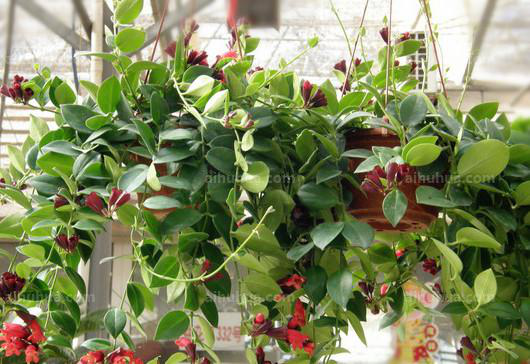
Common pests and diseases of the lipstick plant and their control methods
Lipstick plant anthracnose
Symptoms: In summer, when the weather is hot and stuffy, the lipstick plant is highly prone to anthracnose. When the disease occurs, many small spots appear on the leaves and gradually expand to form yellow-brown round patches. When the disease is severe, more than half of the leaves turn black and die, and sometimes black spots also appear on the stems.
Control methods: Practices such as strengthening care, maintaining good ventilation conditions, reducing air humidity, reducing nitrogen fertilizer and increasing calcium fertilizer can effectively prevent the occurrence of this disease. In addition, chemical control can also be used. At the early stage of the disease, 50% carbendazim 500-times solution or 65% zineb 500-times solution can also be used for prevention.
Are newly purchased lipstick plants prone to disease?
In fact, the lipstick plant is truly not easily troubled by diseases; it is the tender yet tough heroine of the hanging plant family. But why is the lipstick plant you bring home so prone to disease? It is because you did not choose well when purchasing. You should choose one with evenly growing branches, lush foliage, and many densely packed flowers. Lipstick plants sold outside are usually sold hanging in the air. After buying one and bringing it home, roll the drooping branches and leaves upward and wrap them in newspaper or a bag; otherwise the drooping branches or flowers will be bruised and damaged, affecting the ornamental effect. Moreover, if the plant has wounds, it is also very easy to become infected with various pests and diseases.
Common pests and diseases of the lipstick plant, and their control methods
When it comes to the lipstick plant, the name is very interesting, because it resembles lipstick, hence the name. It is suitable for potted ornamental display and is deeply loved by many flower enthusiasts, who all like to grow lipstick plants. But during the cultivation of the lipstick plant, what common pests and diseases will be encountered, and what control methods are there?
Anthracnose
Symptoms: In summer, when the weather is hot and stuffy, the lipstick plant is highly prone to anthracnose. When the disease occurs, many small spots appear on the leaves and gradually expand to form yellow-brown round patches. When the disease is severe, more than half of the leaves turn black and die, and sometimes black spots also appear on the stems.
Control methods
Practices such as strengthening care, maintaining good ventilation conditions, reducing air humidity, reducing nitrogen fertilizer and increasing calcium fertilizer can effectively prevent the occurrence of this disease. In addition, chemical control can also be used. At the early stage of the disease, 50% carbendazim 500-times solution or 65% zineb 500-times solution can also be used for prevention.
Corynespora
The pathogen spores mostly grow on the leaf surface and can also be produced on the underside, but less so. The conidiophores are mostly solitary, slender, and unbranched.
Control methods
At the early stage of the disease, 50% carbendazim 500-times solution or 65% zineb 500-times solution can also be used for prevention. In addition, during the cultivation of the lipstick plant, if calcium fertilizer is lacking, the terminal buds will necrose, so superphosphate and the like should be supplemented during cultivation.
The above is the content about the lipstick plant that I have introduced to you. If you want to learn more information, please continue to follow Duorou Huapu, and we will provide you with more information.