How to grow coral vine? A detailed guide to care precautions
Full sunlight
During the hot summer period, remember to place the coral vine under tree shade for care, but still ensure three to four hours of direct sunlight each day. Only in this way will the coral vine avoid leggy growth. If growing it as a potted plant at home, try to place the pot on a south- or west-facing balcony to ensure sufficient light.
Promote branching
To ensure a full, well-shaped coral vine plant, pinch back the tips several times in the early growth stage to encourage more branching, so that the grown coral vine has an overall beautiful appearance.
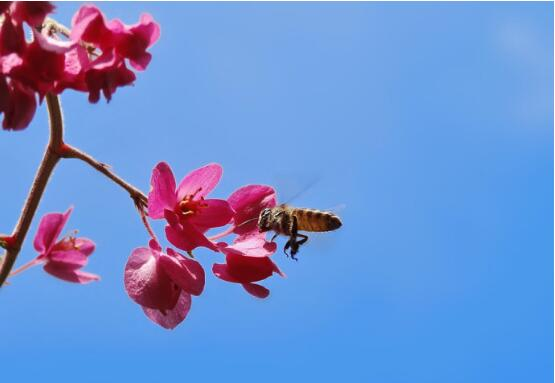
The above is the coral vine growing method and the points to note during cultivation that we have prepared for you. We hope it is useful to you if you want to grow coral vine!
Coral vine growing methods and precautions
Chinese scientific name: Coral vineLatin scientific name: Antigonon leptopus Hook. & Arn.Also known as: Purple bract vine, Asahi vine, Rising sun vineKingdom: PlantaeFamily: PolygonaceaeGenus: AntigononSpecies: Antigonon leptopusDistribution: Native to Mexico and Central AmericaCoral vine is also known as phoenix crown and phoenix gem. Polygonaceae, Antigonon genus, evergreen woody vine. Propagation can be done by seed or cuttings. Its roots are thick and fleshy, and its stems can climb more than 10 m. The flowers are mostly densely clustered in racemes; the flowering period is March to December; the fruit is conical. It is native to Central America. It is now cultivated in Taiwan, China, Hainan, Guangzhou and other places. The coral vine is eye-catching and spectacular, a good plant for gardens and vertical greening, and also one of the ornamental flowers. It is known as the "queen of vines."1. Morphological characteristics
Characteristics of Polygonaceae:A family in the class Dicotyledoneae. Annual or perennial herbs, rarely shrubs or small trees. Stems usually with swollen nodes. Leaves simple, alternate, with ochreate stipules. Flowers bisexual, rarely unisexual, actinomorphic; the inflorescence consists of several small cymes arranged in racemes, spikes, or panicles, sometimes flowers solitary; tepals 3-6; stamens 6-9, very rarely 16, with a disc; pistil 1, ovary superior, 1-loculed. Achenes ovate, 3-angled or flattened, usually enclosed in the persistent perianth; embryo curved or erect, endosperm abundant. About 40 genera and 800 species, mainly distributed in the North Temperate Zone, a few in the tropics. China has 11 genera and more than 200 species. Polygonum is distributed throughout the country; Rheum is distributed in the mountainous areas of the northwest, southwest, and north China; Calligonum and Atraphaxis are distributed in the desert and semi-desert areas of the northwest; Koenigia is distributed in the high mountain areas of the northwest and the Qinghai-Tibet Plateau; Pteroxygonum and Parapteropyrum are endemic genera of China. About 30 genera and more than 800 species, mainly distributed in the North Temperate Zone. China has 15 genera and more than 200 species, distributed throughout the country. There are 123 known medicinal species in 8 genera.Coral vine is a semi-deciduous vine. Its underground root is tuberous, and the stem tip is tendril-like. Leaves simple, alternate, ovate-cordate, with acute tips and cordate bases; leaf margins entire but slightly wavy. Leaves papery, with leaf sheaths. Panicles opposite the leaves; flowers composed of five petal-like bracts. Fruit brown, triangular-rhombic, hidden in the persistent calyx. Inflorescence racemose, terminal or axillary; the axis extends and becomes a tendril; flowers pale red or white, 7-10 mm long, with the three outer tepals larger. Flowering period: April to August. Fruit brown, triangular-rhombic, hidden in the persistent calyx.
Flowers climbing, slightly woody; perennial vine arising from a thick tuberous root, up to 10 m tall, with tendrils. Leaves opposite, ovate to oblong-ovate, 6-14 cm long, apex acuminate, base deeply cordate, with obvious reticulate veins, nearly glabrous on both surfaces. Racemes terminal or in the axils of upper leaves; flowers numerous, pale red, sometimes white, 8-10 mm long, clustered, tepals persistent. Achene conical, upper part 3-angled, about 10 mm long. Flowering period March to December. There are double-flowered horticultural varieties.
2. Growing environment
It prefers sunny, moist, fertile acidic soil. After spring warms up, it sprouts and grows leaves; when the winter temperature is below 10°C, the leaf color turns dark green and sometimes slightly withered. In the cool season of the tropics or the southern subtropics, it grows luxuriantly. Open-ground cultivation of coral vine is mainly in South China; choose a location with fertile soil. Because the branches and vines are relatively long, planting should not be too dense. It is generally used as a hedge or wall for vertical greening, with a plant spacing of 4 m. In other areas it is mostly grown in pots and requires a high-temperature greenhouse to overwinter. Few pests and diseases. In the cool season of the tropics or the southern subtropics, it grows luxuriantly. After spring warms up, it sprouts and grows leaves; when the winter temperature is below 10°C, the leaf color turns dark green and sometimes slightly withered. Few pests and diseases. It likes high temperatures, with an optimum growing temperature of about 22-30 degrees. It likes moisture and grows better in bright light. It likes fertilizer and is slightly cold-tolerant. In winter, it can generally overwinter safely at above 5°C. It likes to grow in loam that is well drained and rich in humus.3. Distribution
Native to Mexico; commonly cultivated in Taiwan, China, Hainan, Guangzhou, and Xiamen, and also distributed in the tropics or the southern subtropics.4. Cultivation techniques
It can be propagated by sowing or cuttings, but sowing is mainly used. Spring to summer is the suitable period, and the optimum germination temperature is about 22-28 degrees. Before sowing, soak the seeds in water for 4-6 hours to allow them to absorb enough water, then bury them shallowly about one centimeter in soil, keep moist, and roots can develop after about 30 days. Because it does not tolerate transplanting, direct sowing or sowing in pots is best. Spring is the suitable period for coral vine cuttings. Cut well-developed branches, each about 15-20 cm. Remove the lower leaves, leaving only 2-3 leaves at the top, insert into a growing medium mixed with equal parts peat soil and coarse sand, water thoroughly, then cover the pot with a plastic bag, place in half shade, and roots will form in 15-20 days. After new leaves grow, it can be transplanted, but the rooting rate and growth are not as ideal as with sowing.The best cultivation soil is fertile loam or humus-rich loam, with good drainage and sunlight. If sunlight is insufficient, flowering is sparse and the color is pale. After the stems and vines of young plants elongate, supports need to be set up for climbing. If there are many branches, select and keep 2-3 as main branches and prune the rest. After they climb onto the trellis, pinch back the tips to encourage more branching. During the spring-to-summer growing period, water supply must be sufficient. Fertilization can use various organic fertilizers or NPK. Apply a small amount once every 1-2 months. In the north, leaf drop occurs in winter; take this opportunity to prune and shape, cutting the branches shorter; for aged plants, use heavy pruning. It likes high temperatures, with an optimum growing temperature of about 22-30 degrees.
Coral flower likes moisture, so during the growth period it should be watered thoroughly, keeping the pot soil moist regularly, and in the hot summer season spray water on the leaves. During the dormant period, water less, as long as the pot soil does not dry out completely. In summer, potted plants grown outdoors are best placed under tree shade, but there must still be at least 3-4 hours of direct sunlight each day. If the growing environment is too shady and humid, it easily causes leggy growth, sparse flowering, and pale, small flowers. During the growth period, it needs more fertilizer; apply 25% decomposed cake fertilizer once every 7-10 days. When flower buds appear, apply more phosphorus and potassium fertilizer. This can make the stems firm. The flower color will also be more vivid. If you want coral flower to grow into a bushy shape, then in the early growth stage you must pinch back the tips several times to encourage more branching, thereby making the plant shape fuller.
5. Main value
The coral vine has delicate flower shapes, an extremely long flowering period, brilliant colors, and branches full of blooms, exceptionally beautiful. Coral vine flowers are abundant and slightly fragrant, a rare famous flower in summer.The coral vine is called the queen of vines. It can be planted in flower beds and is also a good material for potted displays on both sides of windows in hotels and assembly halls. It is suitable for flower stands and shaded trellises, and can be used as a trellis plant. As a good material for vertical greening, there are double-flowered horticultural varieties. It can also be used as cut flowers for flower arrangements and baskets. The tuberous roots are edible.
6. Plant culture
The chain of loveAccording to legend, in Western mythology, there was a beautiful goddess who attracted the pursuit of many gods, but no one could win her heart.
The mother of the mountain god wanted to win the beauty for her son. One day, this mother went into the mountains and gathered many vines and grasses, wove them into a vine garment and a necklace, and asked the mountain god to wear them when he went to the goddess's dwelling again. When the goddess opened the door, the sunlight happened to shine on the vine garment and the vine necklace. In an instant, thousands of pink, brilliant, coral-like small flowers bloomed, along with heart-shaped small leaves representing countless true hearts. The goddess could not help blurting out: "What beautiful coral vine!" So the mountain god put the vine necklace around the goddess's fair neck and from then on won her heart.
Therefore, coral vine is also called the "Lover's Chain"
How to grow coral vine
Soil and pot requirements
Coral vine likes a warm and humid environment. The optimum growing temperature is between 22°C and 30°C. Mature coral vine has some cold tolerance, but seedlings absolutely must not experience cold weather such as frost. The most suitable soil environment for growing coral vine should be moist, fertile, well-drained, and rich in humus. Coral vine should also be watered frequently to keep the pot soil always moist. In addition, the choice of pot is also important; the flower pot should have a certain depth, which can promote root growth.
Timely pruning
When growing coral vine as a potted plant at home, attention should be paid to setting up stakes and supports. The supports can be tied into various shapes, as long as the overall appearance is beautiful and convenient for coral vine growth. As a vine plant, coral vine has strong spreading ability, so pay attention to timely pruning of branches to prevent its free growth from damaging the overall appearance.
More water and more fertilizer
Coral vine likes a humid environment, so during the growth period it should be watered sufficiently. Keep the soil moist. In hot summer, water can also be sprayed on the leaves. At other times, just keep the soil from drying out. Coral vine needs more fertilizer during the growth period, and should be fertilized about once every week. After flower buds appear, more phosphorus and potassium fertilizer should be applied.
After sharing the growing methods for coral vine, some people will surely want to ask, so what precautions should be taken when growing coral vine? Please join us in learning more about it!