How to grow moonflower? A step-by-step guide to the growing methods
Timely transplanting
The moonflower can be said to be a plant that is not very easy to grow. For many flower lovers, growing a moonflower is a luxury, and the reason for the luxury is that the survival rate after each transplanting is very low. In fact, the important reason for unsuccessful transplanting is that the timing of transplanting is wrong. The best time to transplant is in spring and summer, when the temperature is just right for the moonflower's growth. Transplanting at this time can greatly reduce the mortality rate.
Weed management
The moonflower is beautiful, but it cannot withstand damage from weeds, so it must be weeded regularly. When its growth is not vigorous, it is best to disinfect its soil to remove weed seeds within it, so that when the weather warms up again, weeds will not grow unchecked.
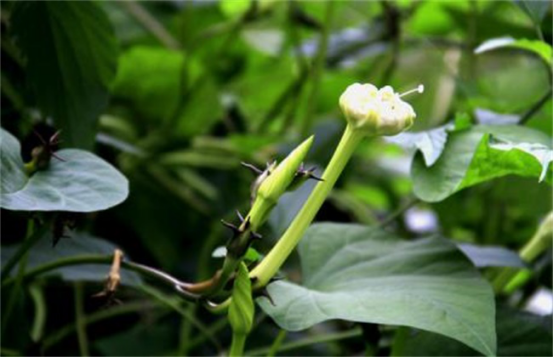
Light and temperature requirements
Among the growth characteristics of the moonflower, we have already learned that the moonflower likes sunlight and is not cold-tolerant, so there is not much to say about light. It is best to let the moonflower receive more than eight hours of sunlight a day. Of course, this sunlight is mild and suitable sunlight, not long-term exposure under the scorching sun. As for temperature, based on the moonflower's characteristic of not being cold-tolerant, you can know that when the outside temperature is too low, it must be grown in a greenhouse to grow normally.
From this point of view, as long as you pay more attention to these few points and keep an eye on changes in season, weeds, and sunlight, it is not difficult to grow bright and beautiful moonflowers! All right, then let us also learn together about the flower language of such a beautiful moonflower!
The flower language of the moonflower and the growing methods of the moonflower
The moonflower belongs to the genus Moonflower in the Convolvulaceae family. It is an annual twining herb that can grow up to 10 m long. Today we will talk about the flower language of the moonflower and the growing methods of the moonflower.
The flower language of the moonflower:
The flower language of the moonflower: eternal love, fragile and fleeting beauty.
A face that never fades in the twilight, a warmth that is never lost in life.
The moonflower is native to the tropical and temperate regions of the New World, including the entire territory of South America, Central America, Mexico, and the U.S. state of Florida. It is distributed throughout the tropics, tropical America, and in China's Guangxi, Shaanxi, Jiangxi, Zhejiang, Yunnan, Guangdong, Sichuan, Jiangsu, and other places. It often grows in the wild and has now been widely cultivated artificially. The white flowers of the moonflower resemble a full moon, large and beautiful, and it gets its name because it blooms at night.
Growing methods of the moonflower:
1. Crop rotation selection and land preparation
Choose flat land and low-lying land with good drainage and fertile soil, as well as hilly land with irrigation conditions. Avoid continuous cropping or back-to-back cropping with melons such as watermelon. Land preparation: form ridges when the soil is moist, and press promptly to preserve soil moisture. The transplanting ridges are long-opening ridges. The ridge width is 9-13 cm, and the 7-8 empty ridges in between should also be ridged to help suppress weeds;
2. Seed soaking and germination
For the variety, choose Japanese green-skinned gourd. Soak the seeds in 40°C warm water for 12-24 hours, remove them, wrap them in gauze, spin dry, and crack open the soaked sweet gourd seeds. Use a wooden trough or an ordinary basin, lay down a layer of sterilized sawdust or sand, then lay down a layer of gauze, place the soaked seeds evenly on the gauze, cover with a wrung-out new towel, cover with a lid, and cover with a cotton quilt to germinate. Use a new brush broom to sprinkle water twice a day. The germination temperature is generally 25-28°C. Pick out the germinated seeds every day, place them in another basin, and put them in a cool place indoors to control sprout growth;
3. Sowing in the seedbed
①Seedbed preparation
Place 8-10 cm of horse manure or chopped grass at the bottom of the seedbed, spread a layer of soil on top, and tread it flat. At the same time, disinfect with 70% Dexon wettable powder at 0.3-0.6 g/sq m, and also set up a shed. After sowing the seeds, set up a small shed over the seedbed.
②Nutrient soil preparation
Choose soil that has not used herbicides such as Pursuit or chlorimuron-ethyl, sift it well, and mix it with sifted decomposed farmyard manure at a ratio of 7:2.
③Bagging and sowing
Put the nutrient soil into 10 cm x 15 cm plastic bags, and place 20-30 granules of diammonium phosphate as base fertilizer at one-third of the depth from the bottom of the plastic bag. Fill it full and compact it, and cut open the bottom corners of the nutrient bag or poke 2-4 holes with a diameter of 8-10 mm at the bottom to allow water to pass through. The sowing time should be based on the local season. Use a wooden stick to poke a 3-4 cm deep hole in the middle of the nutrient bag, place the germinated seeds with the sprout eye facing down, cover with soil, and then water once;
Growing methods of the moonflower
The moonflower is also known as Tianqie'er, Xiyan, Chang'e Flying to the Moon, Tianqie'er, and so on. It is an annual twining herbaceous plant in the genus Sweet Potato in the Convolvulaceae family. Its white flowers resemble a full moon, are large and beautiful, and it gets its name because it blooms at night. It has high ornamental value and is often used as an eye-catching fence landscape. Now let us take a look at the growing methods of the moonflower!
Growth habits of the moonflower
The moonflower is native to the tropical and temperate regions of the New World, including the entire territory of South America, Central America, Mexico, and the U.S. state of Florida. It has been introduced and cultivated in many places across China and is relatively common. It likes sufficient sunlight and warmth, is not cold-tolerant, and freezes to death when exposed to frost and cold. It is not strict about soil requirements and grows well under sunny and moist conditions. Large seedlings are not tolerant of transplanting.
Propagation methods of the moonflower
The moonflower can be propagated by seeds. Collect seeds in late autumn, dry them, and store them. Sow in March-April of the following year. When direct sowing in the open field, the seedlings should be transplanted and set out after true leaves grow. Sow in the seedbed in early spring, and when the seedlings grow 3-5 true leaves, they can be planted in front of a flower trellis or fence and allowed to climb and grow. In addition, the moonflower easily produces adventitious roots at its vine nodes, so it can also be propagated by cuttings and layering.
Growing methods of the moonflower
1. Soil: The moonflower likes a slightly moist but somewhat dry soil environment. The high-temperature period in summer is its vigorous growth stage, and at this time the water supply should be ensured.
2. Fertilization: The moonflower has a relatively high demand for fertilizer. In addition to applying base fertilizer at planting, during the vigorous growth stage it can be top-dressed once every 2-3 weeks with a dilute liquid fertilizer.
3. Light: The moonflower likes an environment with sufficient sunlight, and daily sunlight exposure should not be less than 4 hours.
4. Temperature: The moonflower likes warmth and is not cold-tolerant. It grows better within a temperature range of 18-28°C.
5. Trellising: Supports should be set up for the moonflower in time to ensure that the seedlings have something to cling to after they grow larger and can climb onto the trellis smoothly.
6. Diseases: The moonflower is often harmed by powdery mildew, aphids, and the like. If these occur, measures should be taken promptly to deal with them.