Sowing Methods and Key Technical Points for Asparagus cochinchinensis
Sowing Time
Asparagus cochinchinensis can be sown in either spring or autumn, and each has its own advantages. For autumn sowing, generally in September-October, the seed germination rate at this time is relatively high, but germination takes a bit long, so you need a certain amount of patience to wait for it, and during this period you must carefully care for it. If you want to shorten the time, you can choose to sow in spring, which also saves you from worrying about the seedlings overwintering, making it very worry-free.
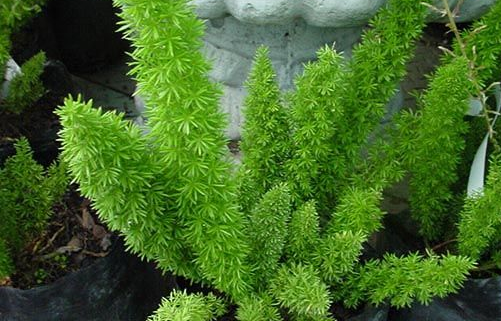
Sowing Methods
1. Choose soil with good drainage and fairly good aeration, level it before sowing, remove impurities such as large stones and weeds, and carry out sterilization treatment.
2. Make horizontal furrows about 22 cm apart and 7 cm deep for sowing, with the seeds at a depth of 6 cm, and adjacent seed holes spaced two to three cm apart. If you are unsure about the amount of seed to use, you can base it on a rate of 20 jin per mu.
3. After the seeds are planted, spray water, cover with base fertilizer or plant ash, then cover with finer soil until it is level with the furrow surface, and finally cover with straw mats on top to reduce the loss of moisture and temperature.
4. Keep the temperature at around 18 degrees, watch the dry and wet condition of the soil, and replenish water in time. After about 20 days the seeds will sprout into seedlings; once the seedlings are visible to the naked eye, remove the straw mats on top and carry out later-stage management.
The above is an introduction to how to sow Asparagus cochinchinensis. Below, let us look at how to care for Asparagus cochinchinensis after sowing.
The Effects and Functions of Tian Dong, Tian Dong Pictures, Tian Dong Price, Tian Dong Planting Techniques, The Difference Between Tian Dong and Mai Dong
Tian Dong
Tian Dong, a traditional Chinese medicine name. It is the dried tuberous root of the lily family plant Tian Dong Asparagus cochinchinensis (Lour.) Merr. It is distributed from the southern parts of Hebei, Shanxi, Shaanxi and Gansu provinces to all provinces and regions of East China, Central South and Southwest China. It has the effects of nourishing yin and moistening dryness, and clearing the lungs and promoting fluid production. It is often used for dry cough due to lung dryness, paroxysmal cough with sticky phlegm, soreness and pain of the waist and knees, steaming bone and tidal fever, internal heat and wasting-thirst, damage to body fluids from febrile disease, dry throat and thirst, and constipation due to intestinal dryness.Tian Dong Pictures
Tian Dong has particularly many medicinal effects and functions, and has certain effects and functions on the human digestive system and immune system. In addition, it also has a considerable effect on resisting cancer. There are also many ways to consume Tian Dong: it can be decocted together with various medicinal materials, or added to ingredients to make soup, porridge, and so on. However, Tian Dong is still a Chinese herbal medicinal plant, so it inevitably has some toxicity or side effects, and everyone must pay close attention to the dosage when taking it.
The Effects and Functions of Tian Dong
1. The tuberous root of Tian Dong is a commonly used traditional Chinese medicine. Its taste is sweet, bitter and cold, and it is non-toxic. It has effects such as nourishing yin and moistening dryness, nourishing yin and promoting fluid production, moistening the lungs and clearing the heart, and clearing fire and relieving cough. Precisely because of these good effects, the tuberous root of Tian Dong is often used to treat conditions such as dry cough due to lung dryness, cough from consumptive disease, thirst due to damaged body fluids, restlessness and insomnia, internal heat and wasting-thirst, constipation due to intestinal dryness, and diphtheria.
2. The tuberous root of Tian Dong contains 33% starch, 4% sucrose and various other nutrients extremely beneficial to the human body. The medicinal value of Tian Dong is recorded in many famous medical texts. The tuberous root of Tian Dong is often used for colds and fever, bronchitis, bruises and injuries, pulmonary tuberculosis, pneumonia, stomachache, acid regurgitation, anemia, postpartum wind, emaciation in children, infertility, and so on, with remarkable curative effects.
Tian Dong Price
The price of Tian Dong is about 42 yuan/kg for the large ones and 35 yuan/kg for the small ones.
Tian Dong Planting Techniques
[Site Selection and Land Preparation]: Select soil according to its biological characteristics. Choose land with deep soil layers, fertile soil and good drainage, either sandy loam or land rich in humus, as the cultivation site. Deeply plow the land, and after raking it level, make high beds 130 cm wide. Deeply plow about 30 cm, remove miscellaneous tree branches and so on, and apply 2500-3500 kg of decomposed barnyard manure, 100 kg of cake fertilizer and 50 kg of superphosphate per mu. After leveling and raking fine, make high beds 150 cm wide and 20 cm high.
[Propagation Methods]: There are two propagation methods for Tian Dong: seed propagation and division propagation. Division propagation is mostly used, as the survival rate will be higher.
1. Seed propagation:
Every year in September-October, harvest when the fruit turns from green to red. After piling and fermenting, select large and plump seeds as seeds. The sowing period is divided into spring sowing and autumn sowing. Autumn sowing is from early September to early October; autumn sowing has a high germination rate but occupies the land for a long time and requires labor for management; spring sowing is in late March, occupies the land for a short time, and is convenient to manage.
The Difference Between Tian Dong and Mai Dong
First, from the appearance, we can see that Tian Dong is generally a climbing plant, and many branches will hang down, generally growing to about one meter. The leaves of Tian Dong are flat, very much like pine needles, and are green and glossy. On the branches and leaves of Tian Dong you will see clustered leaf-like branches, generally shaped like sickles, and there are also a few small hard thorns on the stems. But Mai Dong grows in clumps, can grow to more than thirty cm, and its leaves are slender and dark green, just like those of chives.
Distinguished by flower color, after Tian Dong blooms, the flowers are generally white or pale green, but the flowers of Mai Dong are pale purple.
Tian Dong and Mai Dong can also be distinguished by their berries. After the berries of Tian Dong mature, they are red, but after the berries of Mai Dong mature, they are dark green or blackish-blue.
Related Encyclopedia
Pocket scale non-woven bag lamp rush bamboo shoot crab claw Redmi Note 3 YKK zipper YBS zipper large mountain cherry climbing rose wild senna winter plum green pine wristwatch Omega Longines famous watch children's building blocks flint coral orchid curling iron sugar apple
How to Grow Tian Dong: Planting Methods and Precautions for Tian Dong
Speaking of Tian Dong, I believe everyone is very familiar with it; it is especially common in our lives. Tian Dong looks inconspicuous, but its effects and functions are great, and it has extremely high medicinal value, has good curative effects on treating some diseases, and is widely cultivated. So how should Tian Dong be grown well? Let us discuss the cultivation techniques of Tian Dong below!
How to Grow Tian Dong
1. Choose soil with good drainage and fairly good aeration, level it before sowing, remove impurities such as large stones and weeds, and carry out sterilization treatment.
2. Make horizontal furrows about 22 cm apart and 7 cm deep for sowing, with the seeds at a depth of 6 cm, and adjacent seed holes spaced two to three cm apart. If you are unsure about the amount of seed to use, you can base it on a rate of 20 jin per mu.
3. After the seeds are planted, spray water, cover with base fertilizer or plant ash, then cover with finer soil until it is level with the furrow surface, and finally cover with straw mats on top to reduce the loss of moisture and temperature.
4. Keep the temperature at around 18 degrees, watch the dry and wet condition of the soil, and replenish water in time. After about 20 days the seeds will sprout into seedlings; once the seedlings are visible to the naked eye, remove the straw mats on top and carry out later-stage management.
Planting Methods and Precautions for Tian Dong
1. Soil Requirements
It likes a warm and humid environment, likes sunlight, tolerates partial shade, and fears direct strong light. It is suitable for loose, fertile, well-drained sandy loam. When cultivating Tian Dong in the north, repotting is mostly done in mid-to-late April. When repotting, cut off some old roots and add culture soil mixed evenly from 4 parts leaf mold, 4 parts garden soil and 2 parts river sand.
2. Watering Method
In spring, water thoroughly once every 2-3 days. At this time, if the air is dry, you need to spray water on the plants every day and sprinkle water on the ground around the cultivation site; in summer, spray water every day and water once every 2-3 days to increase air humidity. Tian Dong has fleshy roots and fears waterlogging, so it should not be watered too much at ordinary times; in summer, water thoroughly once a day.
3. Fertilizing Method
May to September is its vigorous growth period, and it can be given decomposed cake fertilizer water once every 15-20 days. If indoor light is insufficient, it is advisable to place it outdoors for a period of care in spring and autumn; in winter, place it in a spot with sufficient light indoors, and the room temperature must be kept above 5°C, water once every 10-15 days, and spray and wash the branches and leaves once every 3-5 days.
4. Propagation Method
Tian Dong is mostly propagated by division, which can be done in conjunction with repotting in spring. The mother plant should be a plant more than 3 years old. When dividing, take the mother plant out of the pot and, according to the size of the clump, divide it into several pots, water thoroughly, and place in partial shade for 10—15 days. The seeds mature at the end of December; after harvesting, soak them in water, rub off the fruit skin, and dry them in the sun. For spring sowing, the indoor temperature should not be lower than 15°C, and they will germinate in one month. When the seedlings are about 4—5 cm long, divide and plant them, several plants per pot.
What to Do If the Stems and Leaves of Tian Dong Turn Yellow
1. Lack of Nutrients
The phenomenon of yellowing leaves in Tian Dong may be caused by a lack of nutrients. When Tian Dong is grown in one pot, after it grows and develops, the tuberous roots in the pot become numerous and tangled together, which leads to insufficient nutrients in the pot. At this time we need to divide or repot it. After dividing or repotting Tian Dong, appropriately apply some thin fertilizer, and the leaves will gradually turn green again.
2. Improper Fertilization
During the growth period of Tian Dong, if some un-decomposed organic fertilizer is applied, it will easily cause the phenomenon of "root burn", which will lead to a large number of yellow leaves and dead branches on Tian Dong. Therefore, when fertilizing Tian Dong, we must apply decomposed liquid fertilizer, applying a small amount each time and applying it several more times to ensure that Tian Dong has sufficient fertilizer and absorbs it well.
3. Excessive Light
If young Tian Dong plants are placed directly under strong sunlight, it is very easy to cause the stems and leaves of Tian Dong to turn yellow. When planting Tian Dong, we must pay attention not to let strong sunlight shine on the Tian Dong plants. In summer, set up a shade shed to prevent exposure to the sun. Tian Dong is more suitable for growing in partial shade.
Pest Control for Tian Dong
1. Red Spider Mites
Red spider mites damage the leaves from May to June. Control methods: (1) Pay attention to clearing the garden in winter, and bury deeply or burn the dead branches and fallen leaves; (2) Spray 0.2-0.3 Baume degrees lime-sulfur mixture or use 25% chlordimeform aqueous solution diluted 500-1000 times for spraying, once a week, for 2-3 times in a row.
2. Aphids
Aphids will damage the tender vines and bud cores, causing the entire vine to wither. In the early stage of aphid damage, you can use 40% dimethoate diluted 1000-1500 times or mieyaling diluted 1000-1500 times for spraying and killing. For plants with severe pest damage, you can cut off all their vines and apply fertilizer, and in about 20 days they will send out new buds and vines.
Through the above content, I believe everyone has gained a certain understanding of the planting techniques of Tian Dong. In fact, Tian Dong also has very high ornamental value, and many people like to grow potted Tian Dong at home to decorate their rooms!