How to grow columbine? Keep these cultivation tips in mind
Pests and diseases
The main pest of columbine is aphids, which cause considerable damage and can also lead to mosaic virus; besides this, there is the threat of powdery mildew, which requires timely and appropriate treatment.
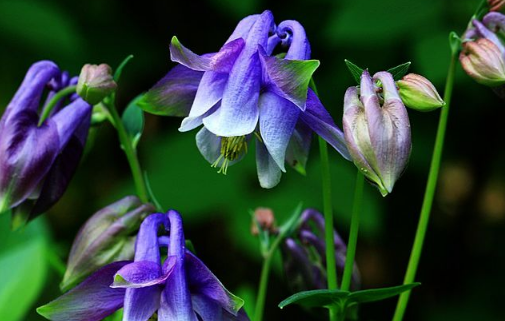
That is the introduction to columbine above; I hope this article can help flower lovers who are growing columbine.
Columbine cultivation methods and precautions
Columbine cultivation methods
Choosing pots and soil
For potted columbine, choose a slightly larger flower pot and fill it with soil; this can be sandy soil with good drainage, or leaf mold rich in humus. A little base fertilizer needs to be added to the soil.
Light and temperature
Columbine likes a cool climate, tolerates cold but dislikes high temperatures, and needs plenty of light. When caring for columbine, keep the growing temperature between 15°C and 35°C and provide moderate light, avoiding summer heat and scorching sun; at this time, provide shade or place the potted columbine in a semi-shaded spot for care.
Watering and fertilizing
Columbine needs strengthened management with reasonable watering and fertilizing. During the vigorous growth period, columbine needs plenty of water; decide the amount and frequency of watering based on how dry or moist the potting soil is, but avoid waterlogging. In dry weather, drain promptly, and after rain, drain water promptly and pay attention to maintaining a certain level of air humidity. For fertilizing, moderate fertility is enough; fertilizer can be applied once a week, but be careful not to make the concentration too high. Note that fertilizing should stop after early autumn; in addition, before columbine blooms, apply some phosphorus and potassium fertilizer to make the flowers more vivid.
Columbine cultivation precautions
Propagation methods
Columbine is basically propagated by division or sowing. Sowing propagation can be done in spring or autumn, while division propagation is mainly done in autumn.
Pinching
During the growth period, columbine needs timely pinching to control plant height. After columbine finishes blooming, the spent flowers can be cut off, so that columbine can be cared for as a foliage plant.
Pests and diseases
The main pest of columbine is aphids, which cause considerable damage and can also lead to mosaic virus; besides this, there is the threat of powdery mildew, which requires timely and appropriate treatment.
Paraquilegia cultivation methods and precautions
Chinese name: Paraquilegia
Alternative names: false columbine, Yumodewujin, Yimuningjing
Latin scientific name: Paraquilegia microphylla
Family and genus: Ranunculaceae, Paraquilegia
Origin and distribution: Tibet, northwestern Yunnan, western Sichuan, Gansu, and other places
Paraquilegia microphylla has a slender cylindrical to nearly spindle-shaped rhizome, and many leaves, usually biternate compound leaves, hairless; the leaf blade outline is triangular-ovate, the central leaflet is broadly rhombic to reniform-broadly rhombic, green on the surface and light green on the underside; the scape is upright and longer than the leaves, the sepals are pale violet or pale purplish red, occasionally white, obovate to elliptic-obovate; the petals are obovate to obovate-oblong; the follicles are upright, and the seeds are narrowly ovoid, brown, with a narrow wing on one side, smooth. It blooms from June to August and fruits from August to September. It has medicinal value.