How to Grow Pitcher Plants? A Complete Guide to Detailed Cultivation Methods
Temperature
Pitcher plants are tropical plants that love high temperatures and cannot tolerate cold. The suitable temperature for their growth is 20 to 30 degrees. Pitcher plants are extremely intolerant of cold; if the temperature is too low, they will stop growing. Therefore, in winter, to prevent pitcher plants from freezing, protective measures must be taken to ensure the indoor temperature does not drop below 10°C.
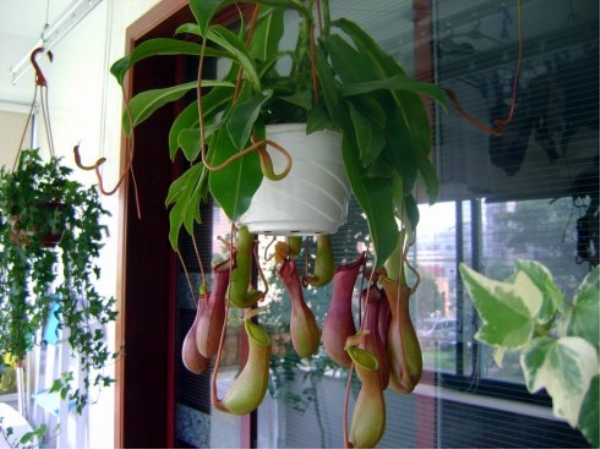
Light
Pitcher plants love light and can grow in sunlight, but they fear strong light. In the scorching summer, pay attention to sun protection and avoid direct sunlight. The usual practice is to set up a shade net.
Watering
Pitcher plants need a large amount of water for growth. In the hotter summer, water 2-3 times a day. Spray water on the branches and leaves as much as possible. When the temperature is lower, appropriately reduce the frequency of watering and keep the soil moist.
That's the introduction to the price of pitcher plants! The price of pitcher plants is not high. Flower lovers who are interested should plant one at home right away!
Pitcher Plant Care Methods
In order to maintain a high level of environmental humidity, in addition to watering to retain moisture, you should also regularly or irregularly sprinkle or mist water around it, raising the air humidity as much as possible. Moreover, the hotter the season, the more a high-humidity environment is needed for pitcher plants to grow vigorously and produce lovely pitcher traps. Pitcher plants have rather special lighting needs: they like environments with abundant light but fear direct strong light. Insufficient light causes the plant to grow weak and small, with leaves and pitcher traps becoming smaller, or even failing to grow pitcher traps at all. As for how much light intensity is appropriate, it varies greatly among different species and can be judged by the surface color of the pitcher traps. Generally, pitcher traps grown under strong light turn red in color, while those grown under weak light, besides being slender, are mostly dark green or lusterless on the surface.
In summer, avoid direct strong light, or use a shade net for shading, or grow them in a shaded spot to prevent intense sunlight from scorching the leaves. In autumn and winter, place them in a spot with abundant sunlight, which is beneficial for the growth and development of the leaf traps. Pitcher plants have relatively strict fertilizer requirements. Generally, during the vigorous growing period from late spring to mid-autumn each year, apply 1-2 times per month a dilute organic liquid fertilizer or a highly diluted commercial liquid fertilizer. Osmocote, Huabao, Shida, Duomu, Xishuo, and others all have good effects. Both over-fertilizing and under-fertilizing are bad. If fertilization is insufficient and nutrients are lacking, in mild cases the pitcher traps grown are few and small with dull colors, reducing ornamental value; in severe cases, no pitcher traps grow at all, losing ornamental value. But if too much fertilizer is applied and the plant grows excessively, it is also prone to the phenomenon of not producing pitcher traps for a long time due to excessive nutrients. This is because in the wild natural state, the purpose of pitcher plants producing pitcher traps is to hunt fallen insects and decompose them into nutrients needed for growth and absorption.
Pay attention to the following six points:
First: Pitcher plants like environments with relatively high humidity and bright light. If your environment is too dry or too drafty, pitcher plants may have difficulty forming traps.
Second: Pitcher plants should be watered every day; do not let the medium get too dry. It is not recommended to use the "waist water" method ("waist water" means placing a tray with water that constantly soaks the pot), because the medium in waist water tends to rot and become airless.
Third: Do not let the pitchers of pitcher plants dry out. If the digestive fluid in the pitcher dries up, you can pour some water in, with the water level reaching one-third of the pitcher, as the pitcher is less likely to wither when there is water in it.
Fourth: If the weather is very hot, it is best to spray water on it at night to cool it down. A larger temperature difference between day and night seems to be quite beneficial for the growth of pitcher plants.
Fifth: Do not frequently change the environment for your pitcher plant. Even if your current environment is not very ideal, as long as you patiently wait for it to adapt to the surrounding environment, it will still continuously form traps.
Sixth: You can spray leaf fertilizer on pitcher plants once every two to three weeks, but do not put solid fertilizer into the pot
Pitcher Plant Care Methods
In order to maintain a high level of environmental humidity, in addition to watering to retain moisture, you should also regularly or irregularly sprinkle or mist water around it, raising the air humidity as much as possible. Moreover, the hotter the season, the more a high-humidity environment is needed for pitcher plants to grow vigorously and produce lovely pitcher traps. Pitcher plants have rather special lighting needs: they like environments with abundant light but fear direct strong light. Insufficient light causes the plant to grow weak and small, with leaves and pitcher traps becoming smaller, or even failing to grow pitcher traps at all. As for how much light intensity is appropriate, it varies greatly among different species and can be judged by the surface color of the pitcher traps. Generally, pitcher traps grown under strong light turn red in color, while those grown under weak light, besides being slender, are mostly dark green or lusterless on the surface.In summer, avoid direct strong light, or use a shade net for shading, or grow them in a shaded spot to prevent intense sunlight from scorching the leaves. In autumn and winter, place them in a spot with abundant sunlight, which is beneficial for the growth and development of the leaf traps. Pitcher plants have relatively strict fertilizer requirements. Generally, during the vigorous growing period from late spring to mid-autumn each year, apply 1-2 times per month a dilute organic liquid fertilizer or a highly diluted commercial liquid fertilizer. Osmocote, Huabao, Shida, Duomu, Xishuo, and others all have good effects. Both over-fertilizing and under-fertilizing are bad. If fertilization is insufficient and nutrients are lacking, in mild cases the pitcher traps grown are few and small with dull colors, reducing ornamental value; in severe cases, no pitcher traps grow at all, losing ornamental value. But if too much fertilizer is applied and the plant grows excessively, it is also prone to the phenomenon of not producing pitcher traps for a long time due to excessive nutrients. This is because in the wild natural state, the purpose of pitcher plants producing pitcher traps is to hunt fallen insects and decompose them into nutrients needed for growth and absorption.
Pay attention to the following six points:
First: Pitcher plants like environments with relatively high humidity and bright light. If your environment is too dry or too drafty, pitcher plants may have difficulty forming traps.
Second: Pitcher plants should be watered every day; do not let the medium get too dry. It is not recommended to use the "waist water" method ("waist water" means placing a tray with water that constantly soaks the pot), because the medium in waist water tends to rot and become airless.
Third: Do not let the pitchers of pitcher plants dry out. If the digestive fluid in the pitcher dries up, you can pour some water in, with the water level reaching one-third of the pitcher, as the pitcher is less likely to wither when there is water in it.
Fourth: If the weather is very hot, it is best to spray water on it at night to cool it down. A larger temperature difference between day and night seems to be quite beneficial for the growth of pitcher plants.
Fifth: Do not frequently change the environment for your pitcher plant. Even if your current environment is not very ideal, as long as you patiently wait for it to adapt to the surrounding environment, it will still continuously form traps.
Sixth: You can spray leaf fertilizer on pitcher plants once every two to three weeks, but do not put solid fertilizer into the pot
Through the detailed introduction in this article, we hope everyone can gain something from it! Welcome to continue following Zuihua Web to learn more of the latest information about carnivorous plants!