How to propagate the moonflower? A detailed guide to common propagation methods
The moonflower has two propagation methods: sowing and transplanting. The main method is propagation by sowing, which has a high survival rate and is highly practical, so whenever moonflowers are propagated, people have always chosen the seed-sowing method. For the specific steps, see the detailed introduction to moonflower propagation on this site.
We hope the above introduction helps you further understand the moonflower!
How to grow the moonflower
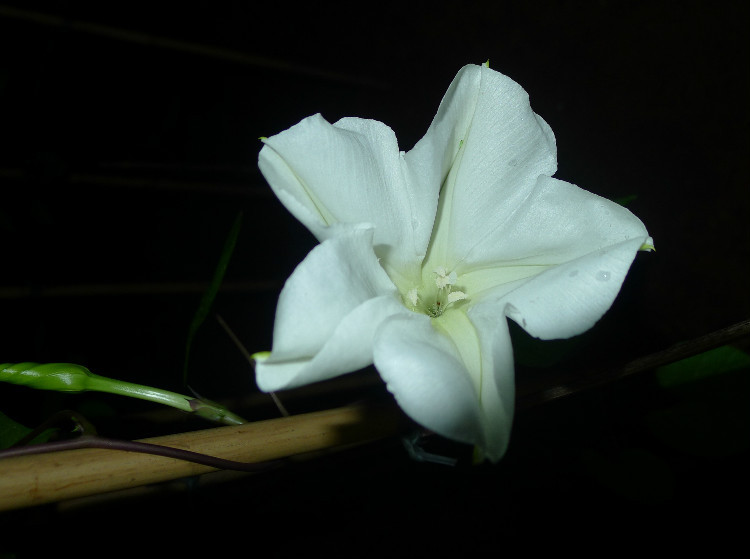
The moonflower, also known as Tianqie'er, Xiyan, Chang'e Flying to the Moon, and Tianqie'er, among other names, is an annual twining herbaceous plant in the genus Ipomoea of the family Convolvulaceae (morning glory family). Its white flowers resemble a full moon, are large and beautiful, and it is named for opening at night. It has high ornamental value and is often used as an eye-catching hedge or fence display. Let's take a look at how to grow the moonflower!
The moonflower's growth habits
The moonflower is native to the tropical and temperate regions of the New World, including the entire territory of South America, Central America, Mexico and the US state of Florida. It has been introduced and cultivated in many places across China and is fairly common. It likes full sunlight and warmth, is not cold-tolerant, and freezes to death when frost hits. It has no strict requirements for soil, grows well in sunny and moist conditions, and large seedlings do not transplant well.
The moonflower's propagation methods
The moonflower can be propagated from seed. Collect seeds in late autumn, dry and store them, and sow in March to April of the following year. When direct-sown in the open ground, seedlings should be transplanted and set in place after true leaves emerge. If sown in a seedbed in early spring, the seedlings can be planted out at a flower frame or fence to climb and grow once they have 3 to 5 true leaves. In addition, the moonflower easily produces adventitious roots at its vine nodes, so it can also be propagated by cuttings and layering.
How to grow the moonflower
1. Soil: The moonflower likes a slightly moist but more on the dry side soil environment. The hot summer period is its vigorous growth stage, and at this time the water supply should be ensured.
2. Fertilizing: The moonflower has a relatively high demand for fertilizer. Besides applying a base fertilizer at planting, during the vigorous growth stage a dilute liquid fertilizer can be applied every 2 to 3 weeks.
3. Light: The moonflower likes an environment with plenty of sunlight, and should receive no less than 4 hours of sunlight per day.
4. Temperature: The moonflower likes warmth and is not cold-tolerant. It grows better within a temperature range of 18 to 28°C.
5. Trellising: A support should be set up for the moonflower in good time, to ensure that once the seedlings grow larger they have something to cling to and can climb the trellis smoothly.
6. Diseases: The moonflower is often harmed by powdery mildew, aphids and the like. If these occur, measures should be taken promptly to deal with them.
The moonflower's propagation methods
The moonflower's propagation requirements
Since we are going to discuss the moonflower's propagation methods, let's first talk about its propagation requirements. After all, only by accurately grasping the moonflower's characteristics and understanding the optimal state for its growth can the moonflower's survival rate be greatly increased.
The moonflower's propagation has no very high requirements for soil; as long as the soil is not extremely poor, it can basically survive. However, when propagating the moonflower, the requirements for temperature, sunlight and humidity are still relatively high. The temperature should be kept above 15 degrees and below 30 degrees as much as possible, and the air humidity should be kept between 50% and 65%.
Propagating the moonflower by sowing
Overview of sowing
The moonflower's main propagation method is propagation by sowing, which has a high survival rate and is highly practical, so whenever it is propagated, people have always chosen the seed-sowing method. Now, let's introduce the specific steps of sowing in detail.
Preparation before sowing
Before sowing, prepare the soil and the seeds. Although the moonflower's sowing and propagation have no high requirements for soil, it is still best to use somewhat fertile soil. In addition, the soil can contain some humus and should have good drainage and good aeration. Before sowing the seeds, it is best to sterilize and disinfect the soil; besides removing weed seeds in the soil, this can also remove hidden insect eggs. The seeds selected should be intact, plump and mature seeds.
The sowing process
Evenly spread the seeds you have selected on the treated, well-mixed, loose and airy soil, then gently cover them with a thin layer of soil to protect the seeds. Gently press the soil in the pot with your hand, or tap the flower pot on the ground a few times, then water the seeds thoroughly and place them in a sunny spot to grow. Generally, they should be watered once every one to two days, and after one to three weeks they will sprout.