A detailed guide to heartleaf philodendron propagation methods, easy for beginners to master
Cuttings propagation of heartleaf philodendron
Cuttings of heartleaf philodendron are best taken from May to September. Cut healthy stems with 2-3 nodes and insert them directly into coarse sand or sphagnum moss, keeping the medium moist and the temperature at around 22-24°C. Roots will form about 20-25 days after insertion.
Seed propagation of heartleaf philodendron
Seed propagation of heartleaf philodendron uses indoor seedling trays. The suitable germination temperature is around 25-30°C, and germination occurs about 10-15 days after sowing. Transplant when the seedlings reach 5-6 cm in height.
Division propagation of heartleaf philodendron
When the heartleaf philodendron plant grows tall, you can cut off side branches with aerial roots from the plant and pot them directly, or first pinch off the growing tips to encourage more branching. When the side branches grow to around 15-20 cm, they can be cut off together with their aerial roots for potting.
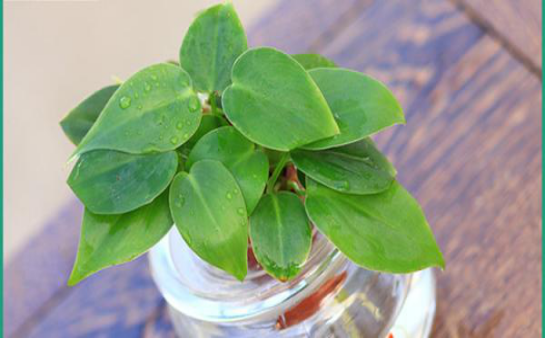
Placement of heartleaf philodendron is very particular. Heartleaf philodendron actually cannot be placed in a study, as this is a feng shui taboo in the study. Because heartleaf philodendron itself is a climbing vine plant belonging to the yin nature, it will absorb all the positive energy in the study, easily causing unnecessary disputes and also making people's thinking particularly confused, which will hinder people's career and academic development. Therefore, this plant must never be placed in a study. For your own future, please be sure to remember this.
Do not let heartleaf philodendron grow clinging to walls! Plants like heartleaf philodendron belong to the yin nature, so if you put it outside and let it wrap around your house, or even cover the entire wall, then it becomes a cold and gloomy house. Over time, health and fortune will inexplicably encounter obstacles.
If heartleaf philodendron grows some dead branches or withered leaves, and it is placed in a room at this time, it will cause people's fortune to decline accordingly. All things prefer vitality and abundance. If there are dead branches and withered leaves, it is not good and not attractive. So when we notice this phenomenon, we must promptly cut off those branches and leaves.
Propagation methods of heartleaf philodendron
Cuttings propagation of heartleaf philodendron
Cuttings of heartleaf philodendron are best taken from May to September. Cut healthy stems with 2-3 nodes and insert them directly into coarse sand or sphagnum moss, keeping the medium moist and the temperature at around 22-24°C. Roots will form about 20-25 days after insertion.Seed propagation of heartleaf philodendron
Seed propagation of heartleaf philodendron uses indoor seedling trays. The suitable germination temperature is around 25-30°C, and germination occurs about 10-15 days after sowing. Transplant when the seedlings reach 5-6 cm in height.
Division propagation of heartleaf philodendron
When the heartleaf philodendron plant grows tall, you can cut off side branches with aerial roots from the plant and pot them directly, or first pinch off the growing tips to encourage more branching. When the side branches grow to around 15-20 cm, they can be cut off together with their aerial roots for potting.
Propagation methods of heartleaf philodendron, and four-season care and management of heartleaf philodendron
Heartleaf philodendron is a common indoor potted green plant, very similar in appearance to golden pothos (Epipremnum aureum), and is often mistaken for pothos. Heartleaf philodendron is not only similar in appearance to pothos, but its propagation methods are also very similar to those of pothos. Let's learn about the propagation methods and four-season care and management of heartleaf philodendron together.
Propagation methods of heartleaf philodendronHeartleaf philodendron is commonly propagated by cuttings, seeds, division and tissue culture.
1. Cuttings propagation method of heartleaf philodendronFor heartleaf philodendron, May to September is best. Cut healthy stems with 2-3 nodes and insert them directly into coarse sand or sphagnum moss, keeping them moist at a temperature of 22-24°C. Roots form 20-25 days after insertion. Seed propagation: sow in indoor seedling trays. The suitable germination temperature is 25%-30%, and germination occurs 10-15 days after sowing. When the seedlings reach 5-6 cm in height, move them into 8 cm pots. Division propagation: when the plant grows tall, you can cut off side branches with aerial roots and pot them directly, or first pinch off the growing tips to encourage more branching. When the side branches reach 15-20 cm, cut them off together with their aerial roots for potting.
2. Tissue culture propagation method of heartleaf philodendronAt present, in countries such as the United States, Israel and Australia, Philodendron is widely mass-propagated by tissue culture. Stem tips or axillary buds are used as explants. After routine sterilization, they are inoculated onto MS medium supplemented with 6-benzylaminopurine at 4 mg/L and indoleacetic acid at 2 mg/L. After 6-8 weeks, callus and adventitious buds grow. The adventitious buds are then transferred to 1/2 MS medium supplemented with indoleacetic acid at 2 mg/L, and new roots are induced in about 3-4 weeks, forming complete small plantlets.
Four-season management of heartleaf philodendron: 1. Spring managementHeartleaf philodendron is extremely shade-tolerant and can grow well even under weak indoor light. It can be displayed year-round indoors in locations with scattered light.
In spring, heartleaf philodendron begins to grow, so the soil should be kept moist, and top-dressing should begin after new leaves emerge. Increase indoor ventilation. Because indoor air humidity is relatively low and cannot meet its air humidity requirements, spray water on its surroundings and leaves several times a day.
2. Summer managementSummer is the peak growing season for heartleaf philodendron, so attention should be paid to fertilizing. Because heartleaf philodendron has large and numerous leaves, water evaporation is high when temperatures are high, so water promptly to keep the potting soil moist. Also pay attention to supplementing indoor air humidity and to indoor ventilation. If an air conditioner is used in the room, be careful not to let the air conditioning blow directly onto the leaves.
3. Autumn managementAfter the weather turns cool in autumn, reduce the frequency of watering, keep the potting soil moist, and stop fertilizing. After temperatures drop in late autumn, pay attention to maintaining indoor temperature, and gradually move the potted plant to a location with morning and evening light for cultivation.
4. Winter managementHeartleaf philodendron is not cold-tolerant. In winter, the temperature should be kept above 8°C, and the indoor temperature is best kept at around 10°C. In winter, appropriate light is beneficial to the growth of heartleaf philodendron, so it should be placed in a location with ample light for cultivation, and the potting soil can just be kept on the dry side. When temperatures are higher at noon, spray water on its surroundings several times. Keep the indoor minimum temperature above 15°C; management can refer to spring, but do not fertilize. If an air conditioner is used in the room, be careful not to let the air conditioning blow directly onto the leaves, and at the same time spray water on its surroundings frequently to increase air humidity.