What are the precautions for growing ornamental peppers?
1. When growing ornamental peppers in pots, generally choose a pot of appropriate size, and the pot must have drainage holes at the bottom; otherwise, poor drainage will hinder root respiration.
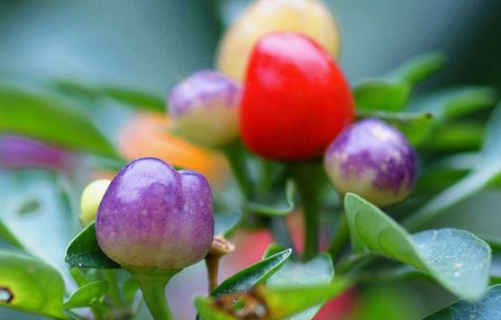
2. Ornamental peppers are relatively easy to grow; find some fertile soil and you will not even need to fertilize. But if you apply more urea at the early flowering stage and spray fertilizers such as Yemianbao, they will grow more robustly.
3. At ordinary times, make sure they do not lack water, keep the potting soil moist, and place them in a sunny spot on the balcony; a place with light is enough.
I believe that after understanding the growing methods and precautions for ornamental peppers, everyone can better grow healthy and beautiful ornamental peppers.
How to grow ornamental peppers on a balcony
How to plant ornamental peppers on a balcony
Preparing materials
Prepare a flowerpot of suitable size; the bottom of the pot needs drainage holes so that excess water can be drained in time, which is good for the plant's root respiration. Fertile substrate soil is also indispensable; for potting, a mix of leaf mold, compost soil and fine sandy soil can generally be used.
Seed selection
You can buy ornamental pepper seeds on the market; of course, you can also open an existing ornamental pepper fruit, take out the seeds, dry them in the sun, and then sow them.
Sowing
Just scatter the prepared seeds directly in the soil; the germination rate is still relatively high.
Daily care of ornamental peppers
Ornamental peppers are relatively easy to grow; just follow their growth habits. Ornamental peppers like a growing environment with plenty of sunlight, warmth and moisture, and are not cold-tolerant or drought-tolerant. The most suitable growing temperature is between 15-32°C.
Light
Place them in a sunny spot and give them a certain amount of light; in midsummer, shade them properly to avoid exposure to strong sunlight.
Watering
Be careful to keep the potting soil moist, but avoid water accumulation; do not water when the soil is not dry, and water thoroughly when it is dry. Note that watering should be controlled during the flowering period; do not water too much or too frequently, otherwise it can easily cause flower drop and reduce the fruit-setting rate. During the fruit ripening period, the soil needs to be kept moist; otherwise, the fruits will be dry, yellow and lusterless.
Fertilizing
During the growth period of ornamental peppers, topdressing is needed about once every half a month. To make them grow more robustly, you can apply more urea at the early flowering stage of ornamental peppers and spray some fertilizer appropriately.
Pest and disease control
Leaf spot disease is common; when it occurs, spray with a 500-fold dilution of 50% thiophanate-methyl wettable powder.
Pests include aphids, thrips and other damage; spray with a 1500-fold dilution of 50% fenitrothion emulsifiable concentrate to kill them.
Growing methods and precautions for ornamental peppers
Chinese scientific name: Wuse JiaoLatin scientific name: CapsicumannuumL.var.conoides(Mill.)IrishAlso known as: Chaotian Jiao, Wucai Lajiao, Guanshang Jiao, Foshou Jiao, Guanshang Lajiao, Yingtao Jiao, Zhenzhu JiaoKingdom: PlantaePhylum: AngiospermsClass: DicotyledoneaeSubclass: SympetalaeOrder: TubifloraeFamily: SolanaceaeSubfamily: SolanoideaeGenus: CapsicumSpecies: CapsicumSubspecies: Wuse JiaoDistribution area: native to tropical America, now widely cultivated in various countries.Wuse Jiao, also known as Chaotian Jiao and Wucai Lajiao, is a variety of pepper and has an astringent taste. It is a perennial semi-woody plant of the Solanaceae family and is often cultivated as an annual; there are quite a few flower farmers growing it in the Shuyang area of Jiangsu. Its plant height is 30 cm-60 cm, with many branches and upright stems, and single leaves alternate; the flowers are white, and the flowering period is from early May to the end of July, with fruits clustered at the branch tips. Fruits on the same plant can be red, yellow, purple, white and other colors, with luster; potted ornamental display is very lovable, and it can also be eaten, with a flavor similar to green peppers. The pepper fruits are brightly colored and dotted among the green leaves, delicate and lovely. A single plant can be grown in a small pot or several plants can be planted together in a slightly larger pot, and placed in the living room, bedroom or kitchen; the decorative effect is very good. The whole plant is used as medicine; the rhizome is warm in nature and sweet in taste, can dispel wind and disperse cold, relax muscles and activate collaterals, and also has insecticidal and anti-itching effects. The plant has a certain ability to absorb and resist toxic gases such as sulfur dioxide and sulfur trioxide in the air.1. Species information
Cultivation history
It was already cultivated in South America 2000 years ago. Autumn is the fruit-viewing period, and because the fruit has a spicy taste, it was long used by local people as a condiment. Later, Wuse Jiao was quickly and widely planted as an ornamental plant, and crossed the oceans to spread all over the world, being introduced to Europe from Colombia. The earliest record in Chinese texts is seen in "Hua Jing" (1688).Family category
A perennial semi-woody plant of the Solanaceae family2. Morphological characteristics
Perennial herb, often cultivated as an annual. Plant height 40-60 cm. Stem semi-lignified or subshrub-like, stem upright, with many branches; it is a variety of hot pepper. Single leaves alternate, ovate-lanceolate or oblong, similar to edible peppers. Flowers small, white, solitary in leaf axils or clustered at the tips of branches, with pedicels. Calyx short, enlarged when fruiting. Flowering period from July to frost. Berries upright, small and pointed, finger-shaped, conical or spherical; during ripening, they change from green to white, yellow, orange, red, purple and other colors, with luster. Fruit ripening period August-October. Natural hybridization often produces new variations.