Is Philodendron scandens suitable for growing at home? Analysis of the pros and cons of keeping it indoors
Philodendron scandens is suitable for growing at home, because whether in terms of appearance or its performance and effects, Philodendron scandens is very well suited to being grown at home. In appearance, its dense, rich green leaves can make a household full of life; in terms of effects, Philodendron scandens has the functions of cleaning dust, removing impurities from the air, purifying the air and providing oxygen. And Philodendron scandens has quite vigorous growth ability: as long as it is in a cool, damp place, Philodendron scandens can grow. Therefore, Philodendron scandens could not be more suitable for growing at home.
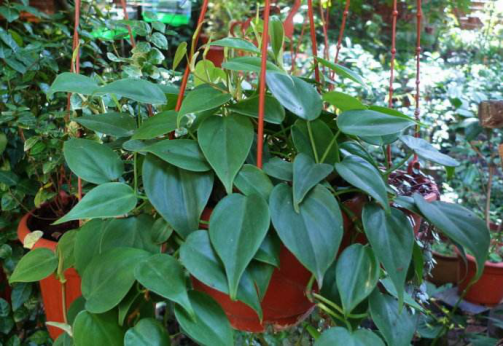
So, is there anything to pay attention to when growing Philodendron scandens at home?
1. Light
Philodendron scandens does not have high requirements for sunlight; in daily care it is enough to maintain four or five hours of light, and it can also be exposed under the sun for a long time, but note that the sunlight must not be too intense. Philodendron scandens is rather prone to frostbite, so in the cold winter you need to pay attention to preventing frostbite at night and take appropriate measures to keep it warm.
2. Humidity
Because the humidity in different regions and different seasons is not the same, and Philodendron scandens's requirements for humidity also differ. In summer, when the sunlight duration is relatively long, dryness is prone to occur, so at this time you need to water appropriately more. In winter, however, water evaporates more slowly, so you can reduce the frequency and amount of watering, and at the same time be careful not to water at noon.
3. Temperature
Philodendron scandens likes to grow in an environment with a temperature of around 10°C, so its demand for temperature is relatively high. In daily growing you need to pay attention to temperature control; in summer prevent excessively strong ultraviolet rays from affecting the growth of Philodendron scandens, and in winter do a good job of heat preservation.
Actually, Philodendron scandens is a kind of green plant that is very suitable for growing at home, and it is easy to keep alive, so why not place a pot of Philodendron scandens at home!
The value of Philodendron scandens
Ornamental value
There is no need to say much about the origin of Philodendron scandens's other name "Emerald", right? Since it is named after a gemstone, its ornamental value will not be poor either! The leaves of Philodendron scandens are dark green, evergreen all year round, and have a special leaf shape, very much like a heart. It is a very elegant foliage plant, and its ornamental value is extremely high!
Purifying effect
Philodendron scandens is very suitable for decorating and accenting indoor occasions. Besides playing the role of beautifying the environment and greening the decor, it can also purify the air and absorb harmful gases, which is very beneficial to human health. Placing a pot of Philodendron scandens in the house is both pleasing to the eye and greatly beneficial to the body, so why not do it?
The above is an introduction to pruning Philodendron scandens. Did it solve your problem? Thank you for reading!
How to grow Philodendron scandens
1. Supplement fertilizer:
During the growing season, Philodendron scandens needs to be given additional water-soluble fertilizer as a top dressing, which is beneficial to the early growth of Philodendron scandens; you can fertilize once or twice a month. In autumn and winter it is the opposite: fertilization needs to be stopped, because in autumn and winter Philodendron scandens almost stops growing.
2. Water requirements:
Philodendron scandens likes semi-shade and a warm, humid climate, so it is obvious that its potting soil should be kept moist, especially in the hot summer. Note that when spraying water you should spray it toward the leaf surface, and prevent water accumulation in the potting soil, otherwise Philodendron scandens will not live long. In summer, once a day; in autumn, once every three to five days; in winter, just try to keep it from drying out completely.
3. Daily care:
Cutting, sowing, division and tissue-culture propagation are commonly used. Cutting is the most popular. May to September is suitable; take a healthy stem with 2 to 3 nodes, insert it into coarse sand, keep the environment moist, at a temperature of 22 to 24°C, and roots will form 20 to 25 days after insertion. For propagation by sowing, use an indoor seedling tray for sowing; the suitable germination temperature is 25% to 30%; sprouts appear 10 to 15 days after sowing, and when the seedlings are 5 to 6 cm tall they are moved into 8 cm pots. For propagation by division, when the plant has grown fairly tall, take side branches with aerial roots and pot them directly, or first pinch off the growing tip to help produce more branches; when the side branches are 15 to 20 cm long, cut them off and pot them.