How to Grow Mucuna Birdwoodiana? A Step-by-Step Guide to Its Cultivation
Temperature
Mucuna birdwoodiana is not cold-tolerant and needs to be moved indoors in winter. During normal care, it is best to keep the temperature above 8°C, because growth stops when the temperature is too low. It is highly dependent on temperature.
Light
Mucuna birdwoodiana loves light and needs sufficient light to grow better. If we are caring for it indoors, it is best to move it outdoors every day and give it no less than two hours of light.
Fertilizing
Mucuna birdwoodiana is highly dependent on fertilizer. Before potting, however, it is necessary to spread fully decomposed organic fertilizer at the bottom of the pot as a base fertilizer for Mucuna birdwoodiana, then cover it with soil so that the roots of Mucuna birdwoodiana are separated from the fertilizer and root burn is avoided. After filling the soil, cover it well and water.
Pruning
Mucuna birdwoodiana grows rapidly, so pruning during its growth process is especially important. Pruning is generally done in winter. By cutting off weak, diseased, pest-infested, dead and overly dense branches, we prevent infection by pathogens and ensure growth in the coming year.
In the process of growing Mucuna birdwoodiana, what other precautions should we pay attention to?
Cultivation Methods of Mucuna Birdwoodiana
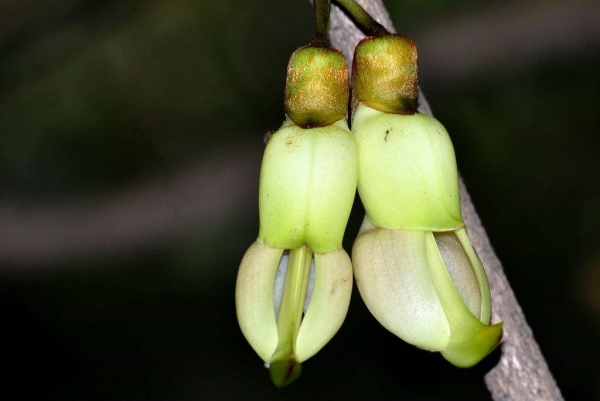
Mucuna birdwoodiana, also called què'er flower or zhūquè flower. There are usually several kinds, such as the white-flowered Mucuna birdwoodiana with white flowers; the beautiful-leaved Mucuna birdwoodiana with purple flowers; and the evergreen Mucuna birdwoodiana with dark purple flowers. It is a woody vine in the genus Mucuna of the Fabaceae (Papilionaceae) family.Mucuna birdwoodiana has an extremely strong ability to climb upward and can coil like a giant python around large trees, with clustered spikes of flowers growing directly on the vines. Its flower shape closely resembles a bird, hanging in strings like sparrows in flight. The flowers have five petals and are mostly white, but also pink, purple, and even purplish black; each flower looks like a little bird. The flowers bloom on the vines, hanging in strings, with each string varying from twenty to thirty blossoms, hanging down one after another like ten thousand birds perched on branches, alike in spirit and form, which is breathtaking. It blooms from March to late April each year. The petals are light green, and two petals curl together into a wing shape, exceedingly charming and very ornamental. It is mainly distributed in the tropical and subtropical regions of Asia. In China, it is mainly distributed in Jiangmen, Zhaoqing, Qingyuan, Guangzhou, Shaoguan and other places in Guangdong.
Seed Selection
Before sowing, the seeds must first be selected. Whether the seeds are well chosen directly affects whether sowing succeeds.
1. It is best to use seeds harvested in the current year. The longer the seeds are stored, the lower their germination rate.
2. Choose seeds that are plump and free of damage or deformity.
3. Choose seeds free of pests and diseases.
Disinfection
Disinfection includes two concepts: one refers to disinfecting the seeds, and the other refers to disinfecting the sowing medium.
For household seed disinfection, it is common to soak the seeds in hot water at about 60°C for a quarter of an hour, then use warm hot water to promote germination for 12 to 24 hours.
To disinfect the sowing medium, the best method is to put it in a pot and heat it by stirring until hot; any pests or diseases will be scalded to death.
Promoting Germination
Soak the seeds in warm hot water (at a temperature similar to face-washing water) for 12 to 24 hours, until the seeds absorb water and swell. For very common seeds that germinate easily, this step can be skipped.
Sowing
For tiny seeds that are difficult to pick up with hands or other tools, you can dip one end of a toothpick in water and stick the seeds one by one onto the surface of the medium, cover with 1 cm of medium, then place the sowing pot into water with the water depth at 1/2 to 2/3 of the pot's height, and let the water slowly soak upward (this method is called the "pot immersion method");
For larger seeds that can be picked up with hands or other tools, place the seeds directly into the medium and sow them in spots at a spacing of 3 x 5 cm. After sowing, cover with medium to a thickness of 2 to 3 times the size of the seeds. After sowing, use a sprayer or a fine-holed watering can to moisten the sowing medium. Later, when the potting soil is slightly dry, water again. Still be careful not to water too forcefully, so as not to wash the seeds out;
Management After Sowing
After sowing in late autumn, early spring or winter, when encountering a cold wave and low temperatures, you can wrap the flower pot in plastic film to help keep it warm and moist; after the seedlings emerge, promptly uncover the film, and let the seedlings receive sunlight before 9:30 every morning or after 3:30 in the afternoon, otherwise the seedlings will grow very weak and spindly; after most of the seeds have emerged, appropriate thinning is needed: pull out the diseased and unhealthy seedlings so that the remaining seedlings have a certain amount of space between them; when most of the seedlings have grown 3 or more leaves, they can be transplanted.
Cuttage
Softwood cuttings are often taken in late spring and early autumn using branches of the current year, or hardwood cuttings are taken in early spring using branches from the previous year.
Cutting Medium
This refers to nutrient soil, river sand, peat soil and other materials used for cuttings. For home cuttings, ideal cutting media are hard to obtain due to limited conditions. Medium-coarse river sand can also be used, but it should be rinsed several times with clean water before use. Sea sand and river sand from saline-alkali areas should not be used, as they are not suitable for the growth of flowering plants.
Cutting Branches
When doing softwood cuttings, during the period of vigorous growth from late spring to early autumn, choose robust branches of the current year as cuttings. After cutting off the branches, select the sturdy parts and cut them into sections 5 to 15 cm long, each section bearing more than 3 leaf nodes. When cutting the cuttings, note that the upper cut should be made flat about 1 cm above the topmost leaf node, and the lower cut should be made at an angle about 0.5 cm below the bottommost leaf node. Both the upper and lower cuts should be smooth (the knife must be sharp). When doing hardwood cuttings, after the temperature rises in early spring, choose healthy and robust branches from the previous year as cuttings. Each cutting usually retains 3 to 4 nodes, and the cutting method is the same as for softwood cuttings.
Cultivation Environment Temperature
The optimum temperature for rooting of cuttings is 20°C to 30°C. Below 20°C, rooting of cuttings is difficult and slow; above 30°C, the upper and lower cuts of the cuttings are easily infected by pathogens and rot, and the higher the temperature, the greater the proportion of rot. When low temperatures are encountered after cutting, the main measure for keeping warm is to wrap the pot or container used for cuttings in film; when the temperature is too high after cutting, the main cooling measure is to shade the cuttings, blocking 50 to 80% of sunlight, and at the same time spray the cuttings 3 to 5 times a day. On sunny days with higher temperatures, spray more often; on cloudy and rainy days with lower temperatures and higher humidity, spray less often or not at all.
Humidity
After cutting, the relative air humidity must be kept at 75 to 85%. The basic requirement for rooting of cuttings is that before the cuttings root, they must be kept fresh and tender enough to carry out photosynthesis to produce rooting substances. However, cuttings that have not rooted cannot absorb enough water to maintain their internal water balance. Therefore, spraying must be used to reduce water evaporation from the cuttings: under shaded conditions, spray the cuttings 3 to 5 times a day. The higher the temperature on sunny days, the more frequent the spraying; the lower the temperature on cloudy and rainy days, the less frequent the spraying or no spraying at all. But excessive spraying makes cuttings susceptible to infection by pathogens and rot, because many kinds of pathogens exist in water.
Light
Cutting propagation cannot do without sunlight, because the cuttings still need to continue photosynthesis to produce nutrients and rooting substances to supply their rooting needs. However, the stronger the light, the higher the temperature inside the cuttings, the more vigorous the transpiration of the cuttings, and the more water they consume, which is unfavorable for the survival of the cuttings. Therefore, after cutting, 50 to 80% of sunlight must be blocked. After the root system grows out, gradually remove the shade net: on sunny days, remove the shade net at 4:00 every afternoon, and cover it again before 9:00 the next morning.
Management Humidity Management
It likes a humid or semi-dry climate environment and requires the relative air temperature of the growing environment to be 50 to 70%. When the relative air humidity is too low, the lower leaves turn yellow and fall off, and the upper leaves lose their luster.
Temperature Management
Because it originated in subtropical regions, it has very strict temperature requirements for winter, and growth stops when the ambient temperature is below 8°C.
Light Management
It has a strong ability to adapt to light. When placed indoors for care, try to place it in a place with bright light, such as a well-lit living room, bedroom, study, and other places. After caring for it indoors for a period (about one month), it should be moved to an outdoor place with shade (and warmth-retaining conditions in winter) for care for a period (about one month), and alternated back and forth in this way.
Layering Propagation
Select a robust branch and peel off a ring of bark about 15 to 30 cm below the top tip. The width of the wound after peeling should be about 1 cm, and the depth should be just enough to peel off the outer bark. Cut a piece of film 10 to 20 cm long and 5 to 8 cm wide, put some moistened garden soil on it, and wrap the girdled part as if bandaging a wound. Tie the upper and lower ends of the film tightly, with the middle bulging. Roots will form in about four to six weeks. After rooting, cut off the branch together with its roots, and it becomes a new plant.
Potting and Transplanting
When potting small seedlings or repotting large plants that have been grown for several years, first place 2 to 3 cm of coarse-grained medium at the bottom of the pot as a drainage layer, spread a layer of fully decomposed organic fertilizer on top as a base fertilizer about 1 to 2 cm thick, then cover with a thin layer of medium about 1 to 2 cm thick, and then place the plant in, so as to separate the fertilizer from the root system and avoid root burn. The medium used for potting can be one of the following: vegetable garden soil: cinder = 3:1; or garden soil: medium-coarse river sand: sawdust (mushroom residue) = 4:1:2; or one of paddy soil, pond mud, or leaf mold. After potting, water thoroughly once and place it in a shaded environment for one week of care. When transplanting small seedlings, first dig the planting hole, spread a layer of organic fertilizer at the bottom of the planting hole as a base fertilizer about 4 to 6 cm thick, then cover with a layer of soil and place in theseedling, so as to separate the fertilizer from the root system and avoid root burn. After placing the seedling in, backfill the soil to cover the root system, press the soil firm with your foot, and water thoroughly once.
Fertilizer and Water Management
For potted plants, in addition to adding organic fertilizer when potting, appropriate fertilizer and water management should also be carried out during normal care.
Spring, Summer and AutumnThese three seasons are its peak growing seasons. Fertilizer and water management follows the cycle of "Hua Bao" - clear water - "Hua Bao" - clear water, with an interval of about 1 to 4 days. On sunny days or during high temperatures, the interval is shorter; on cloudy and rainy days or during low temperatures, the interval is longer or no watering is done.
WinterDuring the winter dormant period, the main task is to control fertilizer and water well. Fertilizer and water management follows the cycle of "Hua Bao" - clear water - clear water - "Hua Bao" - clear water - clear water, with an interval of about 3 to 7 days. On sunny days or during high temperatures, the interval is shorter; on cloudy and rainy days or during low temperatures, the interval is longer or no watering is done. For field-planted plants, in spring and summer, according to drought conditions, apply fertilizer and water 2 to 4 times: first open a small circular trench 30 to 100 cm outside the root crown (the larger the plant, the farther from the root crown), with the trench 20 cm wide and 20 cm deep. Scatter 25 to 50 jin of organic fertilizer, or 1 to 5 liang of granular compound fertilizer (chemical fertilizer), into the trench, then water thoroughly. After winter begins and before spring begins, apply fertilizer once more in the above manner, but do not water.
Pruning Potted Plant Pruning
In winter, when the plant enters dormancy or semi-dormancy, cut off weak, diseased, pest-infested, dead and overly dense branches. Branch organization can also be combined with cutting propagation.
Repotting
As long as it is cared for properly, it will grow very quickly. When it grows to a certain size, consider giving it a larger pot so that it can continue to grow vigorously. The culture soil and component ratio used for repotting can be one of the following: vegetable garden soil: cinder = 3:1; or garden soil: medium-coarse river sand: sawdust (mushroom residue) = 4:1:2; or one of paddy soil, pond mud, or leaf mold.
Removing from the Pot
Place the flower to be repotted on the ground, first pat the sides of the pot lightly with your palm so that the root system is shaken and separates from the pot wall, then turn the pot upside down on your left hand, gently hold the plant between the index and middle fingers of your left hand, brace your wrist and fingertips against the rim of the pot, pat the bottom of the pot with your right hand, and then use your thumb to push the root soil downward from the bottom hole so that the plant comes out. After it comes out, pat the potting soil gently with both palms so that excess soil falls off.
Preparing the Flower Pot
Choose a flower pot of appropriate size. Cover the bottom hole of the pot with two pieces of tile or thin foam pieces, ensuring both that the potting soil is not washed out by water and that excess water can drain out in time. On top of the tile or foam, place a layer of expanded clay or crushed red brick as a drainage layer about 2 to 3 cm thick. On the drainage layer, place organic fertilizer about 1 to 3 cm thick, and on the fertilizer place a thin layer of medium about 2 cm thick to separate the root system from the fertilizer. Finally, place the plant in, fill with nutrient soil, and leave about 2 to 3 cm from the pot rim.
Cultivation Methods of Mucuna Birdwoodiana and Its Effects and Functions
Mucuna birdwoodiana, also called què'er flower or oil vine, is relatively rare in China and is a national second-class protected plant. The flower color of Mucuna birdwoodiana is variable, and the colors of the flower vines also differ, making it highly ornamental. So what are the cultivation methods of Mucuna birdwoodiana? What effects and functions does it have? Let's take a look at the cultivation methods of Mucuna birdwoodiana and its effects and functions.
.I. Cultivation Methods of Mucuna Birdwoodiana
1. Humidity: Mucuna birdwoodiana likes a humid or semi-dry climate environment and requires the relative air temperature of the growing environment to be 50 to 70%. When the relative air humidity is too low, the lower leaves turn yellow and fall off, and the upper leaves lose their luster.
2. Temperature: Because Mucuna birdwoodiana originated in subtropical regions, it has very strict temperature requirements for winter, and growth stops when the ambient temperature is below 8°C.
3. Light: Mucuna birdwoodiana has a strong ability to adapt to light. When placed indoors for care, try to place it in a place with bright light, such as a well-lit living room, bedroom, study, and other places. After caring for it indoors for a period (about one month), it should be moved to an outdoor place with shade (and warmth-retaining conditions in winter) for care for a period (about one month), and alternated back and forth in this way.
4. Fertilizer and Water: For potted plants of Mucuna birdwoodiana, in addition to adding organic fertilizer when potting, appropriate fertilizer and water management should also be carried out during normal care.
Spring, summer and autumn: These three seasons are its peak growing seasons. Fertilizer and water management follows the cycle of "Hua Bao" - clear water - "Hua Bao" - clear water, with an interval of about 1 to 4 days. On sunny days or during high temperatures, the interval is shorter; on cloudy and rainy days or during low temperatures, the interval is longer or no watering is done.
Winter: During the winter dormant period, the main task is to control fertilizer and water well. Fertilizer and water management follows the cycle of "Hua Bao" - clear water - clear water - "Hua Bao" - clear water - clear water, with an interval of about 3 to 7 days. On sunny days or during high temperatures, the interval is shorter; on cloudy and rainy days or during low temperatures, the interval is longer or no watering is done. For field-planted plants, in spring and summer, according to drought conditions, apply fertilizer and water 2 to 4 times: first open a small circular trench 30 to 100 cm outside the root crown (the larger the plant, the farther from the root crown), with the trench 20 cm wide and 20 cm deep. Scatter 25 to 50 jin of organic fertilizer, or 1 to 5 liang of granular compound fertilizer (chemical fertilizer), into the trench, then water thoroughly. After winter begins and before spring begins, apply fertilizer once more in the above manner, but do not water.
5. Pruning: In winter, when the plant enters dormancy or semi-dormancy, cut off weak, diseased, pest-infested, dead and overly dense branches. Branch organization can also be combined with cutting propagation.
II. Effects and Functions of Mucuna Birdwoodiana
1. Ornamental value: Being ornamental is one of the most important functions of Mucuna birdwoodiana. This plant stays evergreen all year round and blooms around Qingming Festival every year. When in bloom, the flowers hang in strings, and from a distance they look like strings of Mucuna birdwoodiana flowers fluttering, making the scenery especially beautiful with high ornamental value. It can usually be used for pergolas or green corridors in parks and gardens, and in some areas it is also used as a canopy for open-air places; its lush green appearance especially attracts guests' attention.
2. Edible benefits: Mucuna birdwoodiana is a distinctive edible plant. In southern regions, there has long been a custom of eating Mucuna birdwoodiana. Local people like to harvest the tender fresh Mucuna birdwoodiana flowers and use them as a side ingredient in some dishes; their taste is sweet and pleasant, making the dishes more appetizing. In addition, Mucuna birdwoodiana can also be stewed into soup with meat dishes; after eating, it not only allows one to absorb various nutrients but also helps clear heat and reduce internal fire.
3. Medicinal effects: The vine of Mucuna birdwoodiana can be used as medicine. Promoting blood circulation and relaxing the sinews are its main medicinal effects. It is bitter and sweet in taste and warm in nature. It is usually used to treat adverse symptoms such as waist and leg pain and numbness of the limbs in humans, and can sometimes be used to treat irregular menstruation and scanty menstruation in women. During treatment, 10 to 15 grams of the vine of Mucuna birdwoodiana can be decocted with clear water and taken, and the therapeutic effect is relatively obvious.
The above isthe cultivation methods of Mucuna birdwoodianaandthe effects and functions of Mucuna birdwoodianashared. Mucuna birdwoodiana not only has good ornamental value but also has high edible and medicinal value. We hope it is helpful to everyone.