How to Grow and Care for Tuberous Begonias: Methods and Precautions
Light and Temperature
Temperature and light: Tuberous begonias like a warm, fairly humid growing environment. They dislike the intense heat of summer and cannot withstand the severe cold of winter, so semi-shade is best. The most suitable temperature for tuberous begonia growth is 16°C-21°C. If the temperature is above 30°C, the flower stems and branches and leaves are very likely to wilt, and in more serious cases the underground stem may even die. The minimum growing temperature should also not drop below 10°C, and care should be taken to keep them warm when overwintering. In addition, tuberous begonias also love light. Good long-day sunlight is the basic guarantee for brilliant blooms. In summer, you must ensure sufficient light while also making sure they are not exposed to strong direct sunlight. In winter, when sunlight is scarce, even more attention should be paid to providing enough sunshine.
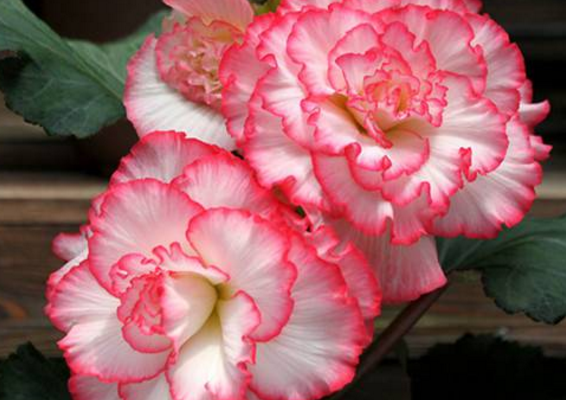
Soil
The soil for planting tuberous begonias also needs attention. It should be nutrient-rich, loose, airy, and rich in humus; slightly acidic soil is also acceptable. Generally, we can add river sand to garden soil, or mix up leaf mold. In addition, adding some base fertilizer to the pot can increase fertility.
Watering
Tuberous begonias like a moist growing environment, but they are also afraid of waterlogging, so it is best not to let water accumulate. In summer, when the weather is dry, increase air humidity by misting and other methods. In autumn and winter, when they are in the dormant period, reduce watering. Watering should also be reduced during the sprouting period and flowering period of tuberous begonias.
Fertilizing
Tuberous begonias relatively like water and fertilizer; when fertilizing, apply light but frequent feedings. During the plant's growing period, apply some rotted, diluted fertilizer solution every ten days. During the flowering period, apply some fertilizer that promotes flowering. Take special care not to fertilize in winter and summer.
How to Grow Tuberous Begonias
Tuberous begonias need winter dormancy. During the growing period they bloom continuously. Their flowers are very large, their centers are very high, and their petals are orderly. The plants grow vigorously. The price is slightly high.During the growing period of tuberous begonias, pay attention to the following key points:
1. Watering: Do not water directly onto the soil above the tuber. You can press a "water channel" into the edge of the pot with your finger. Carefully pour water into the channel. If the weather is hot, avoid being rained on.
2. Light: Outdoors, they can receive direct light before 11 o'clock. At other times, shade them. They must not be exposed to the blazing sun in summer. Indoors, place them on a windowsill and adjust the light according to the environment.
3. Environment and temperature: The temperature difference between day and night is very helpful for tuberous begonia growth. Unlike tulips, daffodils, and ranunculus, tuberous begonias do not need cool conditions. They bloom continuously from spring to summer to autumn. They are very beautiful. In addition, they are perennials and bloom year after year. Pay attention to planting them shallowly at first; you will see that the new shoots are pink. They are very tender, as fragile as cream, so do not touch them. Then you can add soil. Their tubers are also different from those of cyclamen. Tuberous begonia tubers send out a great many roots on top. Therefore, they only need to be buried 5 cm deep in the soil. Fortunately, they do not require the depth that lilies do. So they are very suitable for pot cultivation.
What Is the Difference Between Tuberous Begonias and Couple Begonias? How to Grow Tuberous Begonias
Tuberous begonias are a fairly well-known ornamental flowering plant. Their flowers are brilliantly and richly colored, large and abundant, with graceful form, making them one of everyone's favorite flowering plants to grow at home. Many friends have discovered that couple begonias and tuberous begonias look almost exactly the same, so what exactly are the differences between the two? Let's learn about them together with the editor below!
What Is the Difference Between Tuberous Begonias and Couple Begonias?
There is no difference between couple begonias and tuberous begonias, because the two are the same plant, just with different names. The tuberous begonia flower is a plant in the Begoniaceae family, genus Begonia. It is large and abundant, with brilliant colors and graceful form; it combines the form, color, and fragrance of famous flowers such as camellias, peonies, and roses, making it the crown of begonias. It likes a warm, humid, and well-ventilated semi-shady environment. The optimum growing temperature is 16-21°C, the relative humidity is 70%-80%, and it requires soil that is loose, fertile, well-drained, and slightly acidic.
How to Grow Tuberous Begonias
1. Soil
To grow tuberous begonias, the soil needs to be fertile, loose, and airy, rich in humus, and may be acidic. Generally, garden soil can be mixed with river sand and leaf mold. To increase fertility, some base fertilizer can be added.
2. Light and Temperature
Tuberous begonias like a warm growing environment, with semi-shade being best, and they are fairly afraid of the intense heat of summer. The suitable growing temperature is between 16°C-21°C, and they are not cold-tolerant. Basically, if the temperature exceeds 30°C, it may cause the stems and leaves to wilt, and in severe cases it can lead to the death of the underground stem. A certain temperature must also be maintained in winter; the overwintering temperature should preferably not be lower than 10°C. Tuberous begonias need long-day conditions to bloom well. In summer, sufficient light must be maintained, but be careful not to let strong direct sunlight hit them and provide shade in time. In winter, the daylight hours are shorter, so sufficient light needs to be ensured.
3. Watering and Fertilizing
Tuberous begonias like water and fertilizer, and their growing environment needs to be moist, but there should be no standing water, because they are afraid of waterlogging. During the sprouting period and flowering period of tuberous begonias, watering needs to be reduced. In summer, air humidity needs to be increased by misting. In autumn and winter, tuberous begonias gradually enter dormancy, so watering should be reduced. Fertilizing should be light but frequent; during the growing period, apply some rotted, diluted fertilizer solution every 10 days. During the flowering period, apply some fertilizer that promotes flowering. Note that no fertilizing is needed in summer and winter.
Pest and Disease Control Methods
1. At the places where larvae are damaging the plant, apply dichlorvos kerosene emulsion (that is, add 200 grams of kerosene to each kilogram of dichlorvos) to kill the larvae.
2. Manually dig out the larvae and kill them, apply "Miefulling" to the scars, or gently scrape away the rough bark and frass at the damaged area to expose the insect holes, then apply 20 times diluted omethoate or methamidophos to kill the larvae. This should generally be done in spring.
3. During the peak emergence period of adults, spray pesticides to kill the adults. You can spray 1000 times diluted malathion, 1000 times diluted dichlorvos, 2000 times diluted Niansaoli, etc., to kill the adults.
4. In autumn, winter, and early spring, in conjunction with scraping treatment for rot disease, scrape off the insect scars or apply dichlorvos to the insect scars to poison and kill the larvae. During the adult occurrence period, insecticides such as trichlorfon can be sprayed for control.
Are Tuberous Begonias Harmful to Humans?
The tuberous begonia flower is a plant with a large form and especially vivid colors. Unlike other plants, it simultaneously combines the form, color, and fragrance of many precious flowers, and it is also the world's most famous potted flower. People use it to decorate their living rooms and windowsills. This plant looks charming and lovely, not only very beautiful, but also with a drifting fragrance that makes people feel relaxed and happy when they smell it. Moreover, the flowers they produce will not harm us; you can absolutely rest assured!
Through the above content, I believe everyone has gained a certain understanding of tuberous begonias and couple begonias. Although the two have different names, they are actually the same plant! Those who like them can grow one or two pots at home; using them to decorate a room is absolutely a highlight!