Sea Buckthorn Cutting Propagation Methods and Key Technical Points
Cuttings are classified into categories. For sea buckthorn, cuttings can be divided into green branch cuttings and hard branch cuttings, and both cutting methods have their own advantages.
For green branch cuttings, the best time is around June, when both temperature and humidity are very suitable. Green branch cuttings focus mainly on rooting, so the requirements for temperature and humidity are very high. Hard branch cuttings do not have strict requirements for a fixed time, but it is best to take cuttings in spring.
Sea buckthorn cuttings require loose, fertile soil with good aeration, so that the soil does not easily become compacted. The cuttings are cut from the most robust mother branches. Each cutting should have 3-5 young buds, and the length of the cutting must be kept at 5-8 cm. After the cuttings are completed, be sure to water thoroughly for care and maintenance.
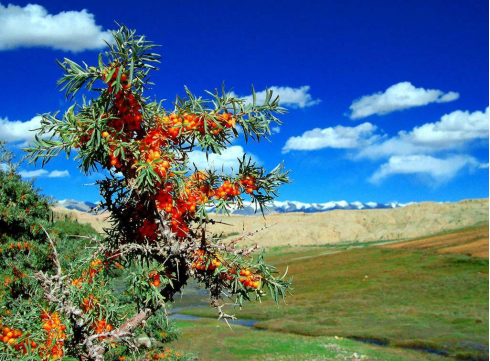
That is the end of today's introduction to sea buckthorn. How was it, did it solve your problem? Thank you for reading!
How to Take Sea Buckthorn Cuttings
Classification of Sea Buckthorn Cuttings
You may all have heard about cuttings, but cuttings also have classifications, which may leave you feeling a bit confused. That's right, for sea buckthorn, cuttings can be divided into two types: green branch cuttings and hard branch cuttings, and both cutting methods have their own advantages.
The Best Time for Sea Buckthorn Cuttings
For green branch cuttings, the best time to take cuttings is around June. At this time, the temperature and humidity are both relatively suitable for green branch cuttings. This type of cutting method focuses mainly on rooting, so the requirements for temperature and humidity are very high. Hard branch cuttings do not have high requirements for timing, but it is still best to take cuttings in warm spring weather.
Preparation Before Taking Sea Buckthorn Cuttings
Before taking sea buckthorn cuttings, three things need to be prepared: first, soil; second, cuttings; third, water.
First, let's talk about soil. Sea buckthorn cuttings require loose, fertile soil with good aeration, and the soil should not easily become compacted. If conditions allow, the soil should be disinfected before taking cuttings. On one hand, this can remove weed seeds contained in the soil; on the other hand, it can eliminate insect eggs in the soil. In this way, the chance of sea buckthorn being infected by pests and diseases after it grows up can be greatly reduced.
The second is the selection of cuttings. The cuttings are cut from robust mother branches of sea buckthorn. Generally, each cutting should contain three to five young buds, and the length of each cutting should be kept between five and eight cm.
The last is water. Needless to say, after the cuttings are completed, water thoroughly for care and maintenance.
The Specific Steps for Taking Sea Buckthorn Cuttings
Insert the selected cuttings into the prepared soil, letting the soil cover about one third of the cuttings. Gently pat the potting soil with your hand, then water thoroughly and tend carefully. Generally, roots will form in one week.
The Main Producing Areas of Sea Buckthorn
In China, sea buckthorn is mainly concentrated in the Qinghai-Tibet Plateau and the Inner Mongolia Plateau. In China, sea buckthorn mainly grows in eleven provinces and regions across North China, Northwest China, Southwest China and other areas.
The genus Hippophae currently has four species in total, and all of them grow in China. For places like the Loess Plateau, sea buckthorn is an excellent treasure plant for treating soil erosion. Here, sea buckthorn is generally propagated by cuttings.
The seed planting method for sea buckthorn is very simple. As long as its growing conditions are met, sea buckthorn can grow. If you are someone who owns a piece of land, you can plant some sea buckthorn. Sea buckthorn is very nutritious, can be eaten in many ways, and is a wonderful fruit plant.