How to propagate downy jasmine? A detailed introduction to common propagation methods
Propagation is mainly by cuttings, but layering can also be used. For cuttings, in June-July, select a 1-year-old plump branch with 3 nodes, keep 2 leaves, insert it in sand, shade it and keep it moist; it roots in about 30 days. Layering also roots and survives easily, using the same method as general layering.
However, it is worth noting that the floral fragrance of downy jasmine is very strong, so during the flowering period it is best not to place it anywhere with poor air circulation; it is best to grow it outdoors.
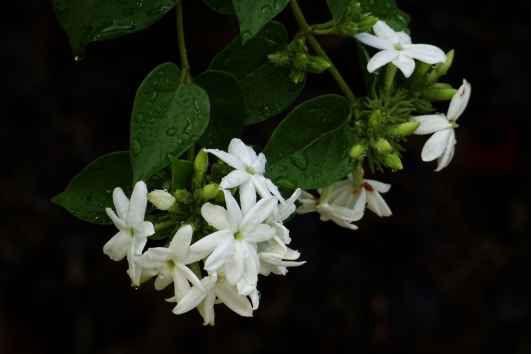
Downy jasmine is not only fragrant but can also decorate and beautify our courtyards. The above is an introduction to the differences between downy jasmine and jasmine. I hope the downy jasmine cultivation methods I have added can also help everyone. If you like it, save the Four Seasons Plants website~
How to grow downy jasmine, the cultivation methods for downy jasmine
Downy jasmine belongs to a type of jasmine. Downy jasmine can treat dysentery and abdominal pain, red and swollen eyes with pain, sores and swelling and toxic swellings and other conditions. It can also be used as an ornamental plant. The flowers of downy jasmine are white, giving a simple and elegant feeling. Downy jasmine flowers give off a faint fragrance that can adjust a person's mood. So how is downy jasmine cultivated? Let us take a look below at how to grow downy jasmine, the cultivation methods for downy jasmine.
1. The growing environment of downy jasmine
Downy jasmine likes a warm, sunny environment and loose, fertile soil; it likes fertilizer and fears cold. It grows in areas at an altitude of 1,000 m. In cold regions it needs to overwinter in a greenhouse. The stems are erect or climbing, the plant height is 2-5 m, and the whole plant is covered with yellow-brown soft hairs. The leaves are opposite, ovate, thinly leathery. The terminal compound umbel-like inflorescence has white flowers, salverform, fragrant, with the flowering period from winter to early spring. After the flowers fade, the sepals remain. It is mainly propagated by cuttings. In spring and summer, select 1-year-old plump and sturdy young branches as cuttings, use plain sand as the substrate, and keep the bed soil moist after cuttings; they root in 20-30 days. Layering propagates even more easily and the plant takes shape faster. During the growing season, apply a topdressing about once every 10 days, and stop fertilizing after the Start of Autumn. In winter, place it in a sunny spot in a greenhouse; as long as the required temperature is maintained, it can also bloom. Move it out of the greenhouse in April, and after pruning, repot and change the soil, place it in a shaded spot, and after about 30 days transfer it to normal care.
2. How to grow downy jasmine, the cultivation methods for downy jasmine
For potted downy jasmine, every 2-3 years it should be repotted in March or after flowering. The potting soil can be mixed with 2 parts garden soil, 1 part compost, and 1 part sand.
Fertilizing: apply 20% cake fertilizer water once a week, and in summer apply phosphorus and potassium 2 additional times to promote the plumpness of new shoots and flower bud differentiation.
Watering: water to the extent of keeping the potting soil moist. When the air is dry, spray water around noon to increase humidity. In early November, move it into a sunny spot in a greenhouse or inside a sealed balcony, and water as appropriate so the soil does not become too dry. In this way, it can bloom around the Spring Festival, filling the holiday period with fragrance.
Temperature and light: during the growing season, except for shading around noon in midsummer, give sufficient light at other times.
Shaping and pruning: in conjunction with repotting, properly thin out weak branches, dead branches, diseased branches, and old roots, and shorten branches that have already flowered to stimulate the sprouting and growth of new shoots.
Propagation: propagation is mainly by cuttings, but layering can also be used. For cuttings, in June-July, select a 1-year-old plump branch with 3 nodes, keep 2 leaves, insert it in sand, shade it and keep it moist; it roots in about 30 days. Layering also roots and survives easily, using the same method as general layering.
How to grow downy jasmine, the cultivation methods for downy jasmine may seem simple, but careful attention is needed when cultivating it. To learn more about downy jasmine, please follow Hot Agricultural Materials News.
Cultivation methods and precautions for downy jasmine
Chinese scientific name: downy jasmineLatin scientific name: Jasminum multiflorum (Burm. f.) Andr.Alternative names: downy-sepaled jasmine, many-flowered jasmineBinomial name: Jasminum multiflorumKingdom: PlantaePhylum: AngiospermsClass: DicotyledoneaeSubclass: SympetalaeOrder: ScrophularialesSuborder: OleineaeFamily: OleaceaeSubfamily: JasminoideaeTribe: JasmineaeGenus: JasminumSpecies: downy jasmineDistribution area: India, Southeast Asia, and China.Growing location: grows in areas at an altitude of 1,000 mNational flower: the national flower of IndonesiaDowny jasmine (scientific name: Jasminum multiflorum (Burm. f.) Andr.) is native to India. The flowers of downy jasmine are pure white and fragrant, with a scent like jasmine, a long flowering period, and it blooms in the flower-scarce seasons of winter and spring, so it is suitable for potted indoor decoration. Downy jasmine is the national flower of Indonesia. It is distributed in India, Southeast Asia, and mainland China, and grows in areas at an altitude of 1,000 m. It mainly treats dysentery and abdominal pain, red and swollen eyes with pain, sores and swelling and toxic swellings and other conditions; the flowers are white and fragrant and can be used as an ornamental plant.1. Morphological characteristics
Climbing shrub, 1-6 m tall. Branchlets slender, curved, cylindrical, densely covered with yellow-brown tomentum, later gradually falling off. Leaves opposite or nearly opposite, simple, leaf blade papery, ovate or cordate, 3-8.5 cm long, 1.5-5 cm wide, apex acuminate, acute or obtuse, base cordate or truncate, upper surface smooth or pubescent, lower surface sparsely pubescent to densely tomentose, veins sometimes sunken on the upper surface and raised on the lower surface, lateral veins 3-6 pairs; petiole 5-10 mm long, with a joint near the base, tomentose.Capitulum or dense paniculate cyme, terminal or axillary, densely covered with yellow-brown tomentum; pedicels short or absent; flowers fragrant; calyx tomentose, lobes 6-9, conical, 2-6 mm long; corolla white, salverform, corolla tube 1-1.7 cm long, 2-3 mm in diameter, lobes 8, oblong or narrowly elliptic, 1-1.4 cm long, 4-6 mm wide. Fruit elliptic, brown. Flowering period from October to April of the following year.
2. Growth habits
It likes a warm, sunny environment and loose, fertile soil; it likes fertilizer and fears cold. It grows in areas at an altitude of 1,000 m. In cold regions it needs to overwinter in a greenhouse. The stems are erect or climbing, the plant height is 2-5 m, and the whole plant is covered with yellow-brown soft hairs. The leaves are opposite, ovate, thinly leathery. The terminal compound umbel-like inflorescence has white flowers, salverform, fragrant, with the flowering period from winter to early spring. After the flowers fade, the sepals remain. It is mainly propagated by cuttings. In spring and summer, select 1-year-old plump and sturdy young branches as cuttings, use plain sand as the substrate, and keep the bed soil moist after cuttings; they root in 20-30 days. Layering propagates even more easily and the plant takes shape faster. During the growing season, apply a topdressing about once every 10 days, and stop fertilizing after the Start of Autumn. In winter, place it in a sunny spot in a greenhouse; as long as the required temperature is maintained, it can also bloom. Move it out of the greenhouse in April, and after pruning, repot and change the soil, place it in a shaded spot, and after about 30 days transfer it to normal care.3. Distribution
It is distributed in India, Southeast Asia, and various places throughout mainland China, and is widely cultivated in China and around the world.