Why Won't Yucca gloriosa Bloom? An Analysis of the Causes
In the north, especially in the Northeast and Northwest regions, many Yucca gloriosa plants grown in the ground show a phenomenon of only growing leaves without blooming. The reason why Yucca gloriosa fails to bloom is actually related to the climate and other conditions in these regions.
Due to the influence of temperature and other conditions, Yucca gloriosa grown in northern regions will be in a dormant state for at least about 5 months after one year. Yucca gloriosa is itself an evergreen plant that grows in all four seasons and basically has no dormancy period, which is how it accumulates enough nutrients to meet its needs for growth and blooming. However, in these regions, the dormancy period of Yucca gloriosa is too long, and the growth period is only a short 6 to 7 months. Therefore, it cannot accumulate enough nutrients, and naturally it is very difficult for it to bloom.
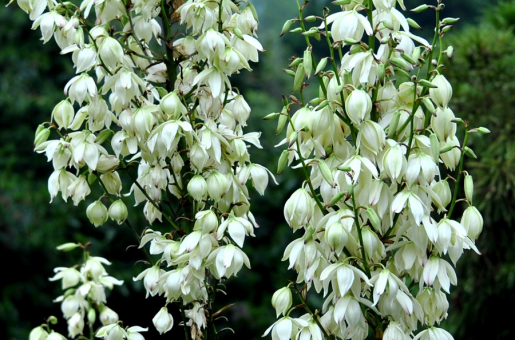
Now that you understand the reasons why Yucca gloriosa won't bloom and the correct way to water it, do you feel more confident about caring for your Yucca gloriosa?
What to Do If Yucca gloriosa Won't Bloom
Why Yucca gloriosa Won't Bloom
In the northern regions of China, especially in the Northeast and Northwest regions, many Yucca gloriosa plants grown in the ground show a phenomenon of only growing leaves without blooming. This situation is very common.
The reason why Yucca gloriosa fails to bloom is actually related to the climate and other conditions in these regions.
Due to the influence of temperature and other conditions, Yucca gloriosa grown in northern regions will be in dormancy for at least about 5 months after one year. Yucca gloriosa is itself an evergreen plant that grows in all four seasons and basically has no dormancy period, which is how it accumulates enough nutrients to meet its needs for growth and blooming. However, in these regions, the dormancy period of Yucca gloriosa is too long, and the growth time is only a very short 6/7 months, so it cannot accumulate enough nutrients, and naturally it is difficult for it to bloom.
What to Do If Yucca gloriosa Won't Bloom
Actually, in these regions, it is not impossible to get Yucca gloriosa to bloom, because the main problem is temperature, so the temperature conditions need to be changed. There are three methods.
The first is to grow it in a pot. The potted form is quite flexible. When the weather turns cold, the potted Yucca gloriosa can be moved to a bright place indoors, and the room temperature should be kept relatively high.
The second is still to grow Yucca gloriosa in the ground, but before Frost's Descent it can be dug up and put into a pot to be moved indoors, and in the spring of the following year it can be removed from the pot and planted in the ground. Generally, it can bloom before National Day.
The third is to plant it on the south side of a house, which can extend the growth time of Yucca gloriosa. If it is to overwinter in the open ground, good insulation measures need to be taken. Generally, it can also bloom in October of the following year.
Yucca gloriosa L. Yucca gloriosa Profile: How to Grow Yucca gloriosa / How to Propagate Yucca gloriosa
Yucca gloriosa ProfileYucca gloriosa L.
How to Grow and Care for Yucca gloriosa: An Introduction to Yucca gloriosa
Yucca gloriosa, also known as Yucca gloriosa, belongs to the Agavaceae family, genus Yucca, and is a shrub or small tree. The plant height is 50-150 cm, with stems, sometimes branched, leaves dense, spirally arranged at the stem tip, hard in texture, with white powder, sword-shaped, 40-70 cm long, with a hard sharp tip, smooth edges, and old leaves sometimes having loose fibers. The panicle is more than 1 m tall, with large drooping flowers, milky white, often with a reddish tinge. The capsule is dry, drooping, elliptic-ovoid, and does not split open. The flowering period is June to October. It is native to eastern and southeastern North America, and is cultivated in all areas south of North China in our country. It has strong adaptability and tolerates waterlogging. Yucca gloriosa has large flowers, a beautiful tree form, and green leaves, making it a good ornamental garden tree.
Yucca gloriosa is native to eastern and southeastern North America and is now commonly planted throughout the Yangtze River Basin. It has strong adaptability and tolerates waterlogging. It is propagated by cuttings or division. The aboveground stem can be cut into slices and grown in water in a shallow pot, where buds can develop to make a stump bonsai.
Yucca gloriosa has large flowers, a beautiful tree form, and green leaves, making it a good ornamental garden tree. It is often planted in the center of flower beds, in front of buildings, in lawns, along roadsides, and in hedges. The leaf fiber is strong and tough and can be used to make cables.
Yucca gloriosa has both beautiful flowers and leaves, requires minimal management, and can be planted both indoors and outdoors. It is a flower with relatively high ornamental value.
Yucca gloriosa has dark green leaves with a waxy layer on the surface, hard as a sword; ground-planted plants have leaves 40 to 70 cm long and 3 to 6 cm wide, densely clustered and spirally arranged on short stems, spreading out in a radial pattern. In summer and autumn, thick flower stems emerge from the leaf base, more than 1 m tall, with panicles, each inflorescence bearing 200 to 400 flowers, opening gradually from bottom to top, milky white, cup-shaped, drooping. Yucca gloriosa likes sunlight and tolerates shade, and can be placed in an entrance hall with sufficient scattered light for viewing. It has no strict requirements for soil, with fertile, loose sandy loam being best.
Yucca gloriosa is also not demanding about the type and amount of fertilizer. When potted, applying nitrogen-phosphorus-potassium compound fertilizer once or twice each in spring and autumn is sufficient, and no fertilizer is applied in winter and summer.
Yucca gloriosa can be propagated by division. Yucca gloriosa plants that have been grown for many years will produce small offsets from the roots. When the small offsets have grown a little, cut them away from the mother plant. Those with roots can be planted directly, while those without roots can be used as cuttings; apply sulfur powder to the cut surface, then plant in sterilized plain sandy soil and place in a shady area. They will take root after about 50 days, then move them to a sunny place for cultivation.
Yucca gloriosa is robust by nature, rarely suffers from pests and diseases, and has strong resistance. It has strong resistance to sulfur dioxide, hydrogen fluoride, chlorine gas, ammonia gas, and others, and it can also absorb harmful gases. Yucca gloriosa is suitable for planting in flower beds, lawns, or beside rockeries; for home cultivation, a relatively large pot can be used; small clustered offsets can also be cut from the roots and planted in a small flower pot and placed on a small table.
Flower Meaning: Blooming Hope
Origin: Native to eastern and southeastern North America. Widely cultivated in the open ground in warm regions.
Morphological Characteristics: Yucca gloriosa is dark green year-round, with several plants forming clumps at varying heights. When blooming, the flower stems stand tall and upright, with numerous white flowers drooping, creating a graceful posture.
Distribution and Habits: Native to eastern and southeastern North America. It likes warm, humid, and sunny environments, tolerates cold, shade, drought, and is also relatively tolerant of moisture. It has no strict requirements for soil.
Application: Can be arranged in the center of flower beds, by ponds, on terraced slopes, and near buildings.
Yucca gloriosa is the national flower of Seychelles.
Morphological Characteristics of Yucca gloriosa
Yucca gloriosa, also known as Yucca gloriosa, belongs to the Agavaceae family, genus Yucca, and is a shrub or small tree. The plant height is 50-150 cm, with stems, sometimes branched, leaves dense, spirally arranged at the stem tip, hard in texture, with white powder, sword-shaped, 40-70 cm long, with a hard sharp tip, smooth edges, and old leaves sometimes having loose fibers. The panicle is more than 1 m tall, with large drooping flowers, milky white, often with a reddish tinge. The capsule is dry, drooping, elliptic-ovoid, and does not split open. The flowering period is June to October. It is native to eastern and southeastern North America, and is cultivated in all areas south of North China in our country. It has strong adaptability and tolerates waterlogging.
Tree Form
The plant is clustered. The stem is pendulous, up to 50 cm long, with internodes 1.5-2 cm long. Leaves are distichous, borne along the entire length of the stem, slightly fleshy, narrowly lanceolate, 7-10 cm long, 1.2-1.5 cm wide, acute at the apex, with a stem-clasping sheath at the base. The raceme is very short, borne opposite the leaves at each node along the stem, with 3-6 flowers, the peduncle about 3-6 mm long; the floral bracts are broadly triangular, about 2 mm long;
Flower Type
The pedicel and ovary are about 5.5 mm long; the flowers are white and spreading; the dorsal sepal is oblong, 7 mm long, 2.5 mm wide, acute at the apex; the lateral sepals are obliquely ovate, 6 mm long, 4 mm wide, acute at the apex, narrowed at the base; the petals are falcate-oblanceolate, 7 mm long, 2 mm wide, slightly acute at the apex; the lip is thick and fleshy, 3-lobed; the lateral lobes are purple, upright, triangular, very small, obtuse at the apex; the mid-lobe is white with a purple apex, broadly ovate, curved upward, about 1 mm long, about 2.5 mm wide, obtuse at the apex, with 1 tongue-shaped hairy fleshy protrusion at the base (in front between the two lateral lobes); the spur is conical, about 2.5 mm long, with 1 tongue-shaped appendage on the inner dorsal wall.
Yucca gloriosa has dark green leaves with a waxy layer on the surface, hard as a sword; ground-planted plants have leaves 40 to 70 cm long and 3 to 6 cm wide, densely clustered and spirally arranged on short stems, spreading out in a radial pattern. In summer and autumn, thick flower stems emerge from the leaf base, more than 1 m tall, with panicles, each inflorescence bearing 200 to 400 flowers, opening gradually from bottom to top, milky white, cup-shaped, drooping.
Ecological Habits of Yucca gloriosa
Yucca gloriosa likes warm, humid, and sunny environments, tolerates cold, shade, drought, and is also relatively tolerant of moisture. It has no strict requirements for soil. It has strong resistance and absorption capacity for harmful gases such as SO2, HCl, HF, and others. Tests have shown that in an environment with a daily average sulfur dioxide concentration of 0.15 mL/cubic meter, many trees such as pines and cypresses, Photinia, winter jasmine, and Paulownia all show severe symptoms of damage, while Yucca remains upright and robust. Yucca also has a relatively strong ability to absorb hydrogen fluoride. According to measurements, 1 kg of dry leaves can absorb 266 mg of fluorine.
Yucca gloriosa is robust by nature, tolerating cold, drought, moisture, and poor soil. It does not have high requirements for soil or fertilizer. It prefers well-drained sandy loam and can also adapt to poor, gravelly piled waste land. It has a relatively wide range of adaptability to pH and can grow in all soils except saline-alkali land.
It likes light. It is pollution-resistant, has strong sprouting ability, and strong adaptability. After flowering, the tip stops growing, and lateral buds emerge from the leaf scars beside it. It grows robustly, has thick fleshy roots, and the stem easily produces adventitious buds. It readily grows suckers, expands the plant, and has very strong renewal ability.
Yucca gloriosa likes sunlight and tolerates shade, and can be placed in an entrance hall with sufficient scattered light for viewing. It has no strict requirements for soil, with fertile, loose sandy loam being best.
Yucca gloriosa is also not demanding about the type and amount of fertilizer. When potted, applying nitrogen-phosphorus-potassium compound fertilizer once or twice each in spring and autumn is sufficient, and no fertilizer is applied in winter and summer.
Cultivation Techniques of Yucca gloriosa: Planting
Because Yucca gloriosa has densely growing, widely spreading leaves with sharp tips, they should be tied up first when digging them up. They can be planted bare-rooted or with native soil. Apply sufficient base fertilizer before planting, water thoroughly after planting, remove the binding material, and let the leaves spread out. Maintenance and management are extremely simple; only pruning of dead branches and residual leaves is needed, and the flower stalks should be cut off promptly after flowering.
Management
For plants propagated by cuttings and division, dig them up and plant them with native soil. As long as they are watered a few times, they will survive. In daily management, attention should be paid to appropriate earthing up and fertilizing to promote the emergence of inflorescences; when dead leaves and residual stalks are found, they should be pruned promptly to maintain a neat and attractive appearance. Pests of Yucca include bagworm moths that damage the leaves, and attention should be paid to their control.
Management Techniques: For plants propagated by cuttings and division, dig them up and plant them with native soil. As long as they are watered a few times, they will survive. After planting, management is simple; only removal of dead branches and residual leaves is needed, and the flower stalks should be cut off promptly after flowering, and the plants should be straightened after wind and rain. In daily management, attention should be paid to appropriate earthing up and fertilizing to promote the emergence of inflorescences; when dead leaves and residual stalks are found, they should be pruned promptly to maintain a neat and attractive appearance. When the plant grows too tall or its growth vigor weakens, it can be replanted and renewed.
Propagation Methods of Yucca gloriosa
Yucca gloriosa can be propagated by sowing, division, and cuttings.
Division
Yucca gloriosa can be divided and replanted in spring from February to March when the root sucker buds emerge from the ground. When dividing and replanting, it is best for each bud to carry some fleshy roots. First dig a hole and apply fertilizer, then bury the separated sucker buds in it. Do not bury them too deep; just slightly cover the top. You can also cut off the part of the stem tip with clustered leaves, with a section of stem 9-12 cm long, remove part of the leaves, leaving about 7 leaves, and bury it in a hole 12-15 cm deep, then water after burying. Because Yucca gloriosa has densely growing, widely spreading leaves with sharp tips, tie them up when lifting the seedlings. Bare-rooted or with native soil are both acceptable.
Yucca gloriosa plants that have been grown for many years will produce small offsets from the roots. When the small offsets have grown a little, cut them away from the mother plant. Those with roots can be planted directly, while those without roots can be used as cuttings; apply sulfur powder to the cut surface, then plant in sterilized plain sandy soil and place in a shady area. They will take root after about 50 days, then move them to a sunny place for cultivation.
Cuttings
For cuttings, in spring or early summer, dig up the stem, strip off the leaves, cut into 10 cm lengths. Thick stems can be split lengthwise into 2-4 pieces, placed flat in a trench with the longitudinal cut facing down, covered with 5 cm of soil, and kept moist. They will sprout 20-30 days after cutting. For division, dig up leaf-bearing stems in spring or autumn and plant them directly.
Sowing
For Yucca gloriosa, seed propagation can only be achieved through artificial pollination. Artificial pollination is best done in May. About 70 days after pollination, the seeds mature. Sow in late September of that year, and seedlings emerge after one month, with an emergence rate of about 40% or more. The seeds can also be stored dry until spring sowing. Cuttings root easily. In spring or early summer, take stems and remove the leaves, saw them into 10 cm segments; thick ones can be split lengthwise into 2 or 4 pieces, place them flat in a trench with the longitudinal cut facing down, cover with 5-10 cm of soil, and after cutting, be careful that the soil is not too wet to prevent the stem pieces from rotting. Using fleshy roots as cutting material is even better. Yucca gloriosa can overwinter in the open ground in the lower reaches of the Yellow River and areas to the south. Because Yucca gloriosa has densely growing, widely spreading leaves with sharp tips, they should be tied up first when digging them up. Bare-rooted or with native soil are both acceptable. Apply sufficient base fertilizer before planting, water thoroughly after planting, remove the binding material, and let the leaves spread out. Maintenance and management are extremely simple; only pruning of dead branches and residual leaves is needed, and the flower stalks should be cut off promptly after flowering. After many years of growth, if the stem is too tall or leaning toward the ground, it can be cut back for renewal. In autumn, dig a ring-shaped trench around the plant and apply some organic fertilizer.
Pest and Disease Control of Yucca gloriosa
Yucca gloriosa often suffers from brown spot disease and leaf spot disease, which can be sprayed with 70% thiophanate-methyl wettable powder at 1000 times dilution. Pests include scale insects, whiteflies, and noctuid moths, which can be killed by spraying with 40% omethoate emulsifiable concentrate at 1000 times dilution.
How to Prevent and Control Anthracnose in Yucca gloriosa
Anthracnose in Yucca gloriosa is a frequently occurring disease of Yucca gloriosa, and it spreads very quickly. If not controlled in time after onset, it will not only affect the ornamental effect, but severe cases can also lead to plant death. The symptoms, occurrence patterns, and control methods are introduced as follows:
Symptoms
It first occurs at the leaf tip, initially as brown spots, then expanding outward in a round or irregular shape. The center of the lesion is grayish brown, surrounded by a yellow halo, with black granular bodies scattered on the surface. After the entire leaf is infected, it turns black.
Occurrence Patterns
This disease is caused by infection by Colletotrichum agaves. The peak incidence period is from mid-May to early October. The pathogen overwinters on diseased leaves as mycelium, conidia, and sclerotia, and spreads through wind and rain. It is prone to occur under conditions of high temperature, high humidity, and poor ventilation.
Control Methods
1. Strengthen water and fertilizer management, enhance tree vigor, and improve the plant's disease resistance;
2. When planting initially, pay attention to choosing the planting environment, and the cultivation site must have good ventilation;
3. Remove diseased leaves promptly and burn them in a centralized manner to reduce sources of infection;
4. When the disease occurs, spray with 50% thiram anthracnose formulation at 300 times dilution or 75% chlorothalonil wettable powder at 1000 times dilution, spraying once a week for 3-4 consecutive times, which can effectively control the condition.
Distribution Area of Yucca gloriosa
Yucca gloriosa is native to eastern and southeastern North America. It is widely cultivated in the open ground in warm regions. Yucca gloriosa can be planted in the open ground in the middle and lower reaches of the Yellow River and areas to the south, and is widely cultivated in the open ground in warm regions.
It has been introduced in the Yangtze River Basin and areas to the south in China, as well as in Shandong and Henan. It is commonly planted throughout the Yangtze River Basin in China, and has been widely cultivated and produced in Yanling County.
From southern North China to the mid-subtropical evergreen and deciduous broad-leaved forest region of South China (major cities: Wuhan, Shashi, Huangshi, Yichang, Nanchang, Jingdezhen, Jiujiang, Ji'an, Jinggangshan, Ganzhou, Shanghai, Changsha, Zhuzhou, Yueyang, Huaihua, Jishou, Changde, Xiangtan, Hengyang, Shaoyang, Guilin, Wenzhou, Jinhua, Ningbo, Chongqing, Chengdu, Dujiangyan, Mianyang, Neijiang, Leshan, Zigong, Panzhihua, Guiyang, Zunyi, Liupanshui, Anshun, Kunming, Dali), and the south subtropical evergreen broad-leaved forest region (major cities: Fuzhou, Xiamen, Quanzhou, Zhangzhou, Guangzhou, Foshan, Shunde, Dongguan, Huizhou, Shantou, Taipei, Taiwan, China, Liuzhou, Guiping, Gejiu).
Uses of Yucca gloriosa: Ornamental Value
Yucca gloriosa has dark green leaves year-round, with several plants forming clumps at varying heights. The sword-shaped leaves are arranged neatly in a radial pattern. It can be planted in the center of flower beds, beside rocks or terraced slopes, and near modern buildings. Its sharp leaf tips can also be used as a fence, or it can be planted under walls and trellises. Yucca gloriosa has strong resistance to harmful gases and can be used as a landscaping and beautification material in industrial and mining areas.
Flower Bed Application
It can be arranged in the center of flower beds, by ponds, on terraced slopes, and near buildings.
Yucca gloriosa is robust by nature, rarely suffers from pests and diseases, and has strong resistance. It has strong resistance to sulfur dioxide, hydrogen fluoride, chlorine gas, ammonia gas, and others, and it can also absorb harmful gases. Yucca gloriosa is suitable for planting in flower beds, lawns, or beside rockeries; for home cultivation, a relatively large pot can be used; small clustered offsets can also be cut from the roots and planted in a small flower pot and placed on a small table.
Landscape Uses of Yucca gloriosa
Yucca gloriosa has large flowers, a beautiful tree form, and green leaves, making it a good ornamental garden tree. It is often planted in the center of flower beds, in front of buildings, in lawns, along roadsides, and in hedges. The leaf fiber is strong and tough and can be used to make cables.
Yucca gloriosa is dark green year-round, with both beautiful flowers and leaves, and a peculiar tree form. Several plants form clumps at varying heights, with sword-shaped leaves. When blooming, the flower stems stand tall and upright, the flowers are pure white, and numerous white flowers droop like bells. The posture is graceful, the flowering period is long-lasting, and the delicate fragrance is pleasant. It is a good ornamental garden tree and also a good fresh-cut flower material. It is often planted in the center of flower beds, in front of buildings, in lawns, by ponds, on terraced slopes, near buildings, along roadsides, and in hedges.
The leaf fiber is white, strong and tough, and resistant to moisture, and is called "white hemp palm," and can be used for cables. The leaves can also be used to extract steroid hormones.
Medicinal or Dietary Therapeutic Value of Yucca gloriosa
The medical information and health dietary therapy information on Huahua.com is for reference only and cannot be used as a basis for diagnosis or medical treatment. Any health issues should be consulted with professional medical personnel, and the treatment of any disease should follow a doctor's advice.
Ultimate Flower Care Mission: Love yourself, start from reality, and follow a doctor's advice. For illness, do not be careless, do not delay, do not give up hope, face it bravely, warm the silent world with love, and care for the flower field in your heart with your heart.
Medicinal Value
Chemical Constituents of the Flowers
Yucca gloriosa contains smilagenin, tigogenin, gitogenin, tigogenin 3-O-β-D-xylopyranosyl-β-lycotetraoside, gitogenin 3-O-β-D-xylopyranosyl-β-lycotetraoside, gitogenin 3-O-α-L-rhamnopyranosyl-β-lycotetraoside, cis-9-nonadecene and cis-8-heptadecene [2] [5]
Nature and Flavor: Pungent; slightly bitter; neutral
Functions and Indications: Relieve cough and calm asthma. Mainly for bronchial asthma; cough
Usage and Dosage: Oral administration: decocted in water, 3-9 g.
Cultural Background and Legends of Yucca gloriosa
Yucca gloriosa, a very, very, very ancient magical plant. Its history is said to be that after a phoenix failed in nirvana once, because it had no new body, it attached itself to a nearby plant. Then, they broke through the soil and bloomed into Yucca gloriosa, swaying in dance to welcome the phoenix.
National Flower and City Flower of Yucca gloriosa
Yucca gloriosa is the national flower of Seychelles.
Yucca gloriosa is a type of orchid, mainly growing in Seychelles. The endangered Yucca gloriosa orchid has been designated as the national flower, and in 1971 it was stipulated that it must not be taken out of the country.
Flower Language of Yucca gloriosa
The flower language and symbolic meaning of Yucca gloriosa: Blooming Hope
Yucca gloriosa Pictures