What are the care precautions for tuberous begonias?
Propagation
There are mainly three ways to propagate tuberous begonias: seed propagation, cutting propagation, and propagation by cutting the tubers. Seed propagation can be done in spring or autumn. Cutting propagation is most suitable in late spring and early summer.
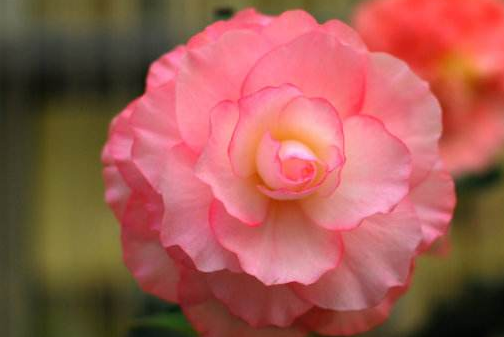
Pest and disease control
The main insect pests of tuberous begonias are thrips, aphids, and leaf-rolling moths, and the main diseases are root rot and stem rot. To prevent pests and diseases in tuberous begonias, pesticides need to be sprayed promptly, and sometimes the growing environment of tuberous begonias needs to be improved appropriately.
After reading this, do you have a certain understanding of tuberous begonias? Do you feel more confident about how to grow a pot of beautiful and colorful tuberous begonias?
How to grow tuberous begonias and precautions
How to grow tuberous begonias
Soil
To grow tuberous begonias, the soil needs to be fertile, loose, and breathable, rich in humus, and can be acidic. Generally, garden soil mixed with river sand and leaf mold can be used. To increase fertility, some base fertilizer can be added.
Light and temperature
Tuberous begonias like a warm growing environment, with partial shade being best, and they are relatively afraid of the intense summer heat. The suitable temperature for growth is between 16°C and 21°C, and they are not cold-tolerant. Basically, if the temperature exceeds 30°C, the stems and leaves may wither, and in severe cases, the underground stems may die. A certain temperature should also be maintained in winter, and the overwintering temperature should preferably not be lower than 10°C. Tuberous begonias need long-day conditions to bloom well. In summer, sufficient light should be maintained, but care should be taken to avoid direct strong light and to provide shade in time. In winter, the sunshine duration is shorter, so sufficient light needs to be ensured.
Watering and fertilizing
Tuberous begonias like water and fertilizer, and the growing environment should be moist, but there should be no water accumulation, because they are afraid of waterlogging. During the germination period and flowering period of tuberous begonias, watering should be reduced. In summer, water should be sprayed to increase air humidity. In autumn and winter, tuberous begonias gradually enter dormancy, so watering should be reduced. Fertilizing should be done lightly and frequently. During the growing period, some fully decomposed dilute fertilizer water can be applied every 10 days. During the flowering period, some fertilizer that promotes flowering should be applied. Note that no fertilizer is needed in summer and winter.
Precautions for growing tuberous begonias
Propagation methods
The propagation of tuberous begonias is mainly seed propagation, cutting propagation, and propagation by cutting the tubers. Seed propagation can be done in spring or autumn, and cutting is mainly done in late spring and early summer.
Pests and diseases
Tuberous begonias need prevention of pests and diseases. The main diseases are root rot and stem rot, and the main insect pests are thrips, aphids, and leaf-rolling moths. The growing environment of tuberous begonias needs to be improved, and pesticides need to be sprayed promptly.
How to grow tuberous begonias
Light and temperature
Temperature and light Tuberous begonias like warm and relatively humid growing environments, do not like the intense summer heat, and cannot withstand the severe cold of winter. Partial shade is best. The most suitable temperature for the growth of tuberous begonias is 16°C to 21°C. If the temperature is above 30°C, the flower stems and branches and leaves are very likely to wither, and in worse cases they may even face the death of the underground stems. The minimum temperature for growing them should not be below 10°C, and attention should be paid to keeping them warm during overwintering. In addition, tuberous begonias also like light. Good long-day sunlight is the basic guarantee for brilliant flowering. In summer, it is necessary both to ensure sufficient light and to avoid direct exposure to strong sunlight. In winter, when sunlight is lacking, even more attention should be paid to sufficient sunshine.
Soil
The soil for planting tuberous begonias should also be given attention. It needs to be nutrient-rich, loose, breathable, and rich in humus. Slightly acidic soil is also acceptable. Generally, we can add river sand to garden soil, or prepare leaf mold. In addition, adding some base fertilizer to the pot can increase fertility.
Watering
Tuberous begonias like a moist growing environment, but they are also afraid of waterlogging, so it is best not to have water accumulation. In summer, when the weather is dry, air humidity should be increased by means such as spraying water. In autumn and winter, when they are in dormancy, watering should be reduced. During the germination period and flowering period of tuberous begonias, watering should also be reduced.
Fertilizing
Tuberous begonias relatively like water and fertilizer. When fertilizing, be careful to apply light fertilizer frequently. During the plant's growing period, some fully decomposed dilute fertilizer water can be applied every ten days. During the flowering period, some fertilizer with the function of promoting flowering should be applied. In winter and summer, be especially careful not to fertilize.