How to Propagate Star Jasmine (Trachelospermum jasminoides 'Variegatum') from Cuttings? Detailed Method and Steps
1. Season selection.
Variegated star jasmine can be propagated from cuttings in all four seasons, but rooting and survival rates are highest when cuttings are taken in spring and autumn.
3. Cutting bed.
For the cutting bed medium when propagating variegated star jasmine, vermiculite powder can be mixed with peat soil and perlite at a ratio of 2:5:3, then placed into plug trays. If nutrient pots are used directly as the cutting medium, simply add one part fine sand to the medium. If conditions do not allow, fine sand can also be used directly as the seedbed for cuttings.
2. Selection and treatment of cuttings.
Select robust growing branches and vines, then cut them into segments about 10 cm long, keeping one bud point on each segment. After treating the cut cuttings with a rooting agent, they must be inserted into the cutting bed immediately, then watered thoroughly.
3. Post-cutting management.
After cutting, check the cutting bed frequently, keep the cutting bed moist with a content exceeding 50%, and maintain the temperature within 38 degrees. If the temperature is high, spray water to cool it down. At the same time, from after cutting until rooting and sprouting, shade treatment must be maintained continuously to avoid direct sunlight. Generally, cuttings root within one week.
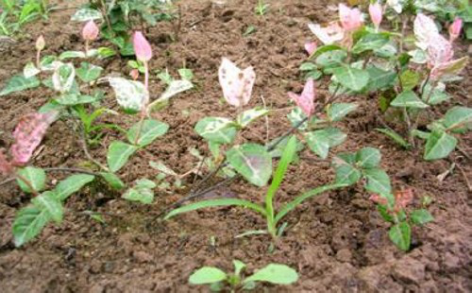
How to care for variegated star jasmine, variegated star jasmine cuttings, is variegated star jasmine toxic, variegated star jasmine flowering period, variegated star jasmine price
Variegated star jasmine
Variegated star jasmine (Trachelospermum jasminoides 'Variegatum') is an evergreen woody vine with inconspicuous lenticels on the stems. Young branches, young petioles and the underside of leaves are covered with short soft hairs, while old branches and leaves are hairless. It is a light-loving, strongly shade-tolerant plant that prefers environments with higher air humidity. It can be used as a year-round "flowering" plant for various flower border arrangements, and it is also an excellent material for potted plants.How to care for variegated star jasmine
It loves light and is slightly shade-tolerant, prefers environments with higher air humidity, and is suitable for growing in well-drained acidic and neutral soils. It is robust with strong disease resistance and vigorous growth, similar to the native Chinese star jasmine. At the same time, it has relatively strong drought tolerance, resistance to short-term flooding, and cold resistance. It can be cultivated in the open air south of the Yangtze River basin. For safe overwintering, appropriate protective measures can be taken, such as increasing light; from March to August, apply mainly nitrogen fertilizer to promote plant growth, and in September and early October, apply appropriate amounts of phosphorus and potassium fertilizer to promote plant robustness; from October, pruning should be prohibited. If grown as an indoor potted ornamental, it can be used in any region, especially in areas with better lighting conditions.
Variegated star jasmine cuttings
Summer cuttings of some branches that are too tender are prone to rot, but branches that have reached semi-lignification can all root and survive. In addition, variegated star jasmine can also be propagated by layering. Generally, old branch layering is done in early spring, and young branch layering in summer, burying about 3 cm of soil, and both nodes and internodes can root to form a new plant. However, layering propagation is rather slow and labor-intensive, making it difficult to apply in most large-scale production.
The tissue culture method for rapid propagation of variegated star jasmine has been completed. Our tissue culture laboratory has established a corresponding rapid propagation tissue culture system. Variegation can appear during the tissue culture process, and the ornamental traits are stable. Based on dual considerations of growth and ornamental value in variegated star jasmine cultivation, seedling production, plant cultivation and finished seedling cultivation can be appropriately separated, that is, mass propagation and early-stage plant cultivation under the most suitable environmental conditions such as semi-shade and loose, fertile cultivation substrate, and when the plants reach 20 cm in length with many branches, they are moved to stronger light conditions for cultivation to achieve brilliant leaf color.
Is variegated star jasmine toxic
No, variegated star jasmine (Trachelospermum jasminoides 'Variegatum') is an evergreen woody vine with inconspicuous lenticels on the stems. Young branches, young petioles and the underside of leaves are covered with short soft hairs, while old branches and leaves are hairless. It is a light-loving, strongly shade-tolerant plant that prefers environments with higher air humidity. It can be used as a year-round "flowering" plant for various flower border arrangements, and it is also an excellent material for potted plants.
Variegated star jasmine flowering period
The ornamental value of variegated star jasmine is reflected in three levels of leaf color, namely the color group composed of red leaves, pink-red leaves, pure white leaves, variegated leaves and green leaves, which greatly resembles a cluster of blooming fresh flowers, extremely brilliant and colorful. Variegated star jasmine blooms throughout the year and never fades in all four seasons, but viewing is best in spring, summer and autumn. To achieve the best color effect, intensive pruning is needed in spring to promote sprouting branches, increase ornamental branches, and at the same time form dense plant clumps.
Variegated star jasmine price
Height: 25cm Crown width 25cm Reference price: 0.55 yuan/plant;
Height: 20cm Crown width 15cm Reference price: 0.45 yuan/plant;
Height: 30cm Crown width 20cm Reference price: 0.4 yuan/plant;
Height: 40cm Crown width 20cm Reference price: 0.35 yuan/plant.
Related encyclopedia
Pocket scale non-woven bag rush pith bamboo shoot crab claw Redmi Note 3 YKK zipper YBS zipper Prunus sargentii climbing rose Senna nomame wintersweet green pine wristwatch Omega Longines famous watch children's building blocks flint Cremastra appendiculata curling iron soursop
Cutting propagation of variegated star jasmine
Variegated star jasmine can be propagated from cuttings in any season of the year. The rooting rate in both spring and autumn can reach over 98%. Summer cuttings of some branches that are too tender are prone to rot, but branches that have reached semi-lignification can all root and survive.In addition, variegated star jasmine can also be propagated by layering. Generally, old branch layering is done in early spring, and young branch layering in summer, burying about 3 cm of soil, and both nodes and internodes can root to form a new plant. However, layering propagation is rather slow and labor-intensive, making it difficult to apply in most large-scale production.
The tissue culture method for rapid propagation of variegated star jasmine has been completed. Our tissue culture laboratory has established a corresponding rapid propagation tissue culture system (see another article). Variegation can appear during the tissue culture process, and the ornamental traits are stable.
Based on dual considerations of growth and ornamental value in variegated star jasmine cultivation, seedling production, plant cultivation and finished seedling cultivation can be appropriately separated, that is, mass propagation and early-stage plant cultivation under the most suitable environmental conditions such as semi-shade and loose, fertile cultivation substrate, and when the plants reach 20 cm in length with many branches, they are moved to stronger light conditions for cultivation to achieve brilliant leaf color.