How do you care for a flame vine? What are the precautions for growing a flame vine?
Flame vine loves light and is not cold-tolerant, so when propagating we choose spring, when the temperature is relatively stable, and a soil temperature in the seedbed about 3-5°C higher than the air temperature is more favorable for rooting. In summer, when it is hot, we should use a double layer of shade netting for shading, and about 2 weeks after inserting the cuttings one layer of netting can be removed.
Has everyone learned the propagation methods for flame vine? Flame vine grows relatively fast, so it is also relatively easy to propagate! As long as we use the right methods, we can certainly grow vigorous flame vines!
Precautions for growing flame vine
Because flame vine grows relatively fast, in order to improve the ornamental effect we need to prune and shape it in time. When the flame vine plant has grown to a certain height, a trellis can be set up to guide it to climb and form a unique shape. If you find that the flame vine has pests or diseases, we can spray omethoate emulsifiable concentrate for treatment.
The above is an introduction to the cultivation methods for flame vine. I hope reading this article can be helpful to you! If you want to learn more, please follow Four Seasons Plants Network!
Flame vine cultivation and planting methods, precautions for growing flame vine
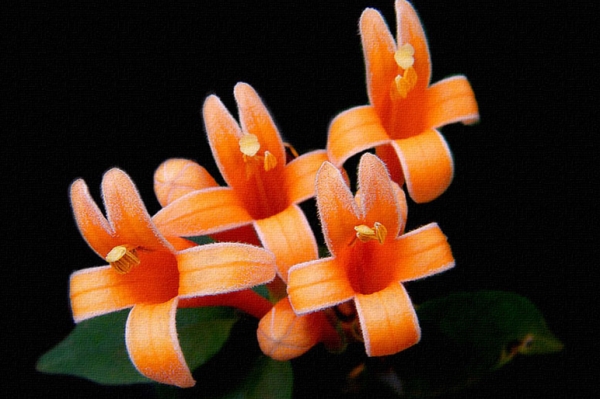
Flame vine is named because it resembles firecrackers. Whenever spring arrives and flowers bloom, brilliant little golden flowers dot walls of various colors, like strings of firecrackers and also like blossoming fireworks. They add all kinds of festive colors to walls and gardens. If you think your wall needs some decoration, the following introduces the cultivation methods for flame vine.
Flame vine cultivation and planting methods 1. Flame vine cultivation: soilFlame vine is not strict about soil, but when cultivated in fertile soil rich in organic matter, well drained and with a deep soil layer, it grows more vigorously. For the growing medium, mainly choose leaf mold, garden soil, mountain soil, etc., and apply an appropriate amount of thoroughly decomposed compost, soybean cake, bone meal and other organic fertilizers as a base fertilizer.
2. Flame vine cultivation: wateringWatering should follow the principle of watering when dry and stopping when wet, and never allow water to accumulate in the pot. In summer, when the temperature is high, watering should be sufficient, and at the same time water should be sprinkled on the ground near the flower pot to increase air humidity. In autumn, the flower bud differentiation stage begins, and at this time watering should be appropriately reduced in order to control vegetative growth and promote flower bud differentiation.
3. Flame vine cultivation: temperatureFlame vine is not cold-tolerant, and in northern regions it needs to be moved indoors to overwinter. During overwintering, place it in a spot indoors with plenty of sunlight, and watering should be controlled, fertilization stopped, and the room temperature kept above 10°C.
4. Flame vine cultivation: fertilizingFertilization should shift to being mainly phosphorus fertilizer. During the growing season, generally apply a dilute liquid fertilizer combining nitrogen and phosphorus about once every 2 weeks. During the bud stage, apply a liquid fertilizer mainly based on nitrogen once to benefit flowering and plant growth.
5. Flame vine cultivation: diseasesCommon diseases of flame vine are leaf spot and powdery mildew; spray with 50% carbendazim wettable powder at 1500 times dilution.
6. Flame vine cultivation: pestsPests of flame vine include whiteflies and scale insects, which can be killed by spraying with 40% omethoate emulsifiable concentrate at 1200 times dilution.
7. Flame vine cultivation: pinchingWhen flame vine seedlings have grown to about 70 cm tall, a trellis should be set up, their branches guided onto the trellis, and pinching should be done to encourage side branches to sprout, which helps produce more flowers.
Precautions for growing flame vine1. Flame vine grows fast, flowers abundantly and has a long flowering period, so fertilizer and water must be sufficient. During the growing period, apply a topdressing once a month. For topdressing, it is best to use decomposed dilute soybean cake water or compound chemical fertilizer, to promote luxuriant branches and leaves and flowers all over the branches.
2. Keep the soil moist. The frequency of watering should depend on the moisture condition of the soil. In hot summer, besides watering, also spray water on the branches and leaves 2-3 times a day and sprinkle water on the surrounding ground to increase air humidity.
3. Flame vine is a perennial evergreen climbing vine, with tendrils, and can climb upward with the help of other objects. When growing it at home, in order to improve the ornamental effect, a large and deep flower pot can be chosen when planting. When the seedling has grown to a certain height, set up a trellis in the pot, tie its stems and vines to the trellis, and pay attention to even distribution, placing it on a balcony with plenty of sunlight for care. It can also be planted in a large pot, with a trellis set up on the balcony to let it climb upward. When the branches have grown to a certain height on the supporting object, pinching is needed to encourage new shoots to sprout, so as to produce more flowers. Branches that have already flowered will not flower again the next year, while newly grown branches need to form buds, so some old branches and weak branches should be pruned in time to avoid consuming nutrients and affecting flowering the next year.
4. In winter, transplant it with soil to the center of a lawn or an open area in front of the door, and support it with bamboo to prevent lodging. This species relies on tendrils to attach and grow. During the growing period, never turn the vines or break the tendrils, otherwise it will affect its absorption of water and nutrients, causing poor flowering or even no flowering.