How to grow yucca? Detailed guide to cultivation methods and tips
1. Yucca does not have high demands on the growing environment. You can choose a relatively loose, well-draining, nutrient-rich soil for cultivation, which ensures the nutrients needed for its growth; you can also choose soil with a slight amount of humus.
2. During its growth period, yucca loves a sunny, warm environment. In summer, be careful not to let sunlight shine directly on the yucca, and in winter also make sure the temperature does not get too low; keeping it at 10°C is most suitable.
3. Yucca loves to grow in an environment with plenty of moisture. Therefore, in daily care, water it frequently and never let the soil dry out. While ensuring sufficient moisture, also be careful not to let the soil become too wet, as this affects the plant's roots, causes root rot, and harms the growth of the yucca.
4. Yucca rarely suffers from pests and diseases in daily care, but prevention is still important. If pests or diseases are found, take timely chemical treatment.
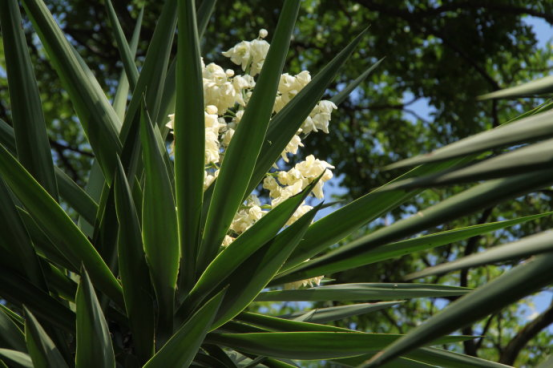
Yucca is a flowering plant that is very easy to grow yet also very beautiful, and it holds a very high status in the hearts of the people of Seychelles. It is evergreen all year round, has strong vitality, and has a unique form. Therefore, many flower lovers in China also like to grow yucca, and it can also grow in the severe cold regions of the north.
How to grow yucca: cultivation methods and precautions for yucca
Yucca has a well-developed root system and strong vitality. Its leaves have a relatively thick cuticle and waxy coating, which can reduce evaporation, so its drought resistance is especially strong. How do you grow yucca? In this article, the editor will share with you the cultivation methods and precautions for yucca.
Cultivation methods for yucca
Propagate by division and cuttings, which makes it easy to survive and the method is simple. In spring and autumn, cut off the aboveground part, remove the leaves from the base 10-15 cm section, and it can be used directly for planting and greening in the garden. You can also dig up the entire yucca plant and use a sharp knife to divide it into several plants for planting.
If mass propagation is needed, the stem burial method can be used. First cut off the perennial old stems, strip off the leaves, cut them into 5-6 cm long stem sections, and insert them for cuttings, burying them upright with the top slightly exposed, placing them in sunlight and keeping the soil moist. In hot weather, they can take root in about two weeks and sprout young stems. After they grow a complete root system, transplant and set them in place.
How to grow yucca
You can also insert the stem sections into water, changing the water frequently to keep it clean, and pot them promptly after they root.
Precautions for growing yucca
(1) Use root suckers for propagation; when dividing and planting, each sucker bud must carry some fleshy roots.
(2) For pot cultivation, use a large pot with a diameter of more than 35 cm, and the pot depth should be more than 25 cm. It is not particular about potting soil and can grow well in all of them.
(3) During the growth period, water after the potting soil dries. To help the roots sprout and send up flower stalks, loosen the soil and fertilize once in April-May.
(4) In autumn and winter, apply compost around the base of the plant and cut away dead leaves.
How to grow yucca, as well as the cultivation methods and precautions for yucca, are what we are sharing with you today. Yucca also has a certain resistance to ammonia, ethylene, and others, so planting yucca should be vigorously promoted in heavily polluted areas.
Cultivation and management of yucca
1. For cultivation, you can use division, sowing, root cuttings, and stem cuttings, which make it easy to survive and the methods are simple.1) Every spring, when suckers grow from the roots and the sucker buds emerge from the ground, they can be divided and planted, but each bud must have roots and be planted in a sandy loam seedbed.
2) For sowing, sow immediately after the seeds mature, and they can sprout in about 15 days; yucca seeds generally can still germinate after being kept for 3 years, but the survival rate is relatively low.
3) Cut 10 cm long root tips, insert them into sand, and they can take root in one month.
4) In March of spring, cut off the aboveground part, remove the leaves from the base 10-15 cm section, and it can be planted directly for greening. You can also dig up the entire yucca plant and use a sharp knife to divide it into several plants for planting.
2. In daily management, pay attention to the following points: 1. For plants grown from cuttings and division, plant them with the original soil after digging them up; as long as you water them several times, they will survive. In daily management, pay attention to proper earthing up and fertilizing to promote the emergence of flower spikes. 2. It likes loose, well-draining leaf mold or peat soil with relatively high humus content.
3. It likes warmth and brightness, but avoid direct sunlight. It is not cold-tolerant. In North China, it is suitable for pot or box cultivation, overwintering indoors or in a cold room, with the temperature kept at 5-10°C. 4. It likes moisture. In summer, water fully outdoors, but avoid waterlogging. In winter, reduce watering appropriately according to the temperature; if the air humidity is too low, the leaf edges will turn yellow; it is resistant to drought, and in summer there is no need to spray water on the leaves or around the plant.
5. Repot once every 1-2 years, and repotting can be done in spring; during the growth period from March to August, apply liquid fertilizer once every half month; after flowering, all flower spikes can be cut off to maintain the plant shape and allow the terminal bud to continue developing; if dead leaves and remaining stalks are found, prune them promptly to keep it neat and attractive. In winter, prune appropriately, clean up dead branches and fallen leaves thoroughly, which is beneficial for flowering the next year. 6. There are relatively few pests and diseases. If the indoor temperature is too high, too dark, and the air is poorly ventilated in winter, it is prone to pest problems. Improve the environmental conditions immediately and take targeted prevention and control measures.
.