What are the key points for pear tree care? Mastering the management essentials is crucial
During the growth of pear trees, pruning must be carried out in a timely manner, cutting away water sprouts and crossing branches to encourage lower branching, cultivating compact fruiting clusters, and at the same time giving the bonsai a naturally beautiful artistic effect with distinct layers and well-balanced density. Because pear tree leaves are relatively sensitive to water supply, if the water supply is insufficient, the leaves often wilt, and after a slightly longer time they dry up and fall off. Therefore, during cultivation, water as soon as the soil dries, avoiding the soil becoming too dry.
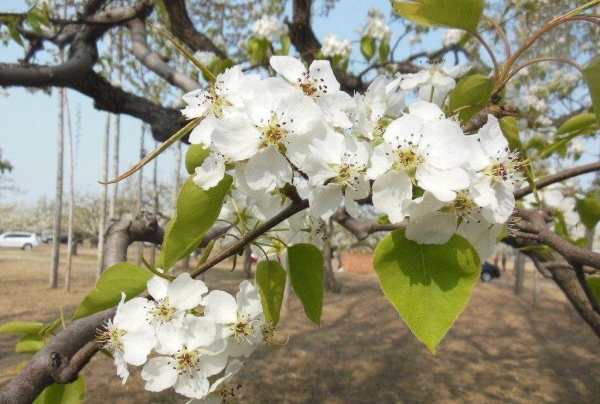
The above is an introduction to the cultivation methods for pear trees. We hope this article has been helpful to you! If you want to learn more, please follow Four Seasons Plants Network!
How to grow a pear tree bonsai: key points for pear tree bonsai care
Floral Bonsai Network introduction: Today the editors of Floral Bonsai Network are sharing with you an article on how to grow a pear tree bonsai and key points for pear tree bonsai care. Let's take a look together.
Pear trees like a warm, humid, and sunny growing environment and have strong adaptability. With good daily care, you can enjoy a beautiful pear tree bonsai. So, how should a pear tree bonsai be grown?
Pear trees like a warm, humid, and sunny environment and have strong adaptability to the environment, tolerating cold and also high temperatures. During the growing season, they can be placed in a well-ventilated, sunny place for care. If the light is insufficient, the branches will grow weakly and the flower buds will not form plumply. In winter, they can be placed in a cold room or outdoors in a wind-sheltered, sunny spot to overwinter, and as long as the potting soil does not freeze, they can overwinter safely.
How to grow a pear tree bonsai
Temperature and light
Pear trees like a warm, humid, and sunny growing environment, have strong adaptability, and tolerate cold and high temperatures. During the growing season of pear trees, it is suitable to place them in a well-ventilated, sunny place for care. If the light is insufficient, the branches will grow weakly and the flower buds will not form plumply. In winter, the bonsai can be placed in a cold room or outdoors in a wind-sheltered, sunny spot, and as long as the potting soil does not freeze, it can overwinter safely.
Water
Pear leaves are relatively sensitive to water. Insufficient water supply easily causes wilting, and after a slightly longer time they dry up and fall off. Insufficient water directly affects the fruit-setting rate and the growth of young fruit. Therefore, in daily care, water as soon as the soil dries, avoiding the soil becoming too dry. Especially in hot, dry summer weather, an appropriate amount of water should also be sprayed on the leaves.
Fertilizer
Pear trees have a relatively high fertilizer demand. In addition to applying sufficient base fertilizer when potting, during the growing season of pear trees, a fully decomposed organic liquid fertilizer generally needs to be applied about every 15-20 days. During the bud-break stage, flower bud differentiation stage, and fruit expansion stage of pear trees, in addition to normal fertilization, phosphorus and potassium fertilizers also need to be applied additionally. A 0.2-0.3 potassium dihydrogen phosphate solution can be sprayed on the leaves about 2-3 times to meet the nutritional requirements for flowering and fruiting.
Potting soil
Repot once every 1-2 years, preferably in spring. The potting soil should preferably be a loose, fertile, well-drained neutral sandy soil, and a pH value in the range of 5.8-8.5 is acceptable.
Pruning
Key points for pear tree bonsai care
Carry out pruning in a timely manner, cutting away water sprouts, crossing branches, overlapping branches, and dead branches, and shortening vigorous branches to encourage lower branching and cultivate compact fruiting clusters. At the same time, give the bonsai a naturally beautiful artistic effect with distinct layers and well-balanced density.
Because pear tree leaves are relatively sensitive to water supply, if the water supply is insufficient, the leaves often wilt, and after a slightly longer time they dry up and fall off. Especially in the early flowering stage, late flowering stage, and rapid fruit growth stage, if there is no sufficient water supply, it can directly affect the fruit-setting rate as well as young fruit growth and later fruit weight gain. Therefore, during cultivation, water as soon as the soil dries, avoiding the soil becoming too dry. In hot, dry summer weather, water should also be sprayed on the leaves as appropriate. Management methods for pear tree bonsai Management methods for pear tree bonsai.
Mid-to-late June is its flower bud differentiation stage, and short-term drought treatment can be carried out to inhibit new shoot growth, increase the proportion of medium and short branches, and promote flower bud differentiation. The method is wilting-watering-wilting-watering, and about 20 days of such treatment is sufficient. In early-to-mid June, ring-barking or scoring the trunk or main branches can also be done to increase the proportion of medium and short fruiting branches. In autumn, watering should be appropriately controlled. In winter, the moisture condition of the potting soil should be checked frequently and water replenished in time to avoid dry freezing. Management methods for pear tree bonsai Article Management methods for pear tree bonsai from
Pear trees have a relatively high fertilizer requirement. When potting, sufficient base fertilizer should be applied, and during the growing season a fully decomposed organic liquid fertilizer should be applied once every 15 to 20 days. During the bud-break stage, flower bud differentiation stage, and fruit expansion stage, when fertilizer demand is relatively high, in addition to normal fertilization, the use of phosphorus and potassium fertilizers should also be increased by spraying a 0.2 to 0.3 potassium dihydrogen phosphate solution on the leaves 2 to 3 times to meet the nutritional needs of flowering and fruiting.
After the tree shape is basically stable, attention should be paid to maintaining vigorous tree growth so that it bears fruit year after year. Combined with pruning and shaping, cut away water sprouts, crossing branches, overlapping branches, and dead branches, and shorten vigorous branches to encourage lower buds to develop into branches, so as to cultivate compact fruiting clusters. Also make the bonsai clear in layers and well-balanced in density, achieving a naturally beautiful artistic effect. Management methods for pear tree bonsai Flower Encyclopedia.
Because the nutrition in the pot is limited, too many fruits should not be retained. Generally, 1 to 2 fruits are retained per inflorescence, and the entire inflorescence can even be removed. Repot once every 1 to 2 years in spring. The potting soil is preferably a loose, fertile, well-drained neutral sandy soil, and a pH value between 5.8 and 8.5 is acceptable.
I. Biological characteristics
The pear root system is very developed and easily sends out new roots after root cutting, and there are two growth peaks within a year. Pear flower buds are mixed flower buds, relatively large and plump in shape, and most are terminal. Fruiting branches can be divided by length into long, medium, and short fruiting branches and short fruiting branch groups. When making a pear tree bonsai, efforts should be made to cultivate and use short fruiting branches and short fruiting branch groups for fruiting, so that its form is compact and full.
Pear is a light-loving tree species. When light is insufficient, branch growth is weak and flower buds do not form plumply. Pear has strong cold resistance during dormancy. Potted pear trees in the central part of Hebei Province can overwinter simply by being placed in a wind-sheltered, sunny spot. Pear likes fertilizer, and the growing medium should be loose and fertile.
II. Material selection and cultivation
There are many rootstocks suitable for pear, such as mountain pear and birchleaf pear, which can be propagated from seed and are also easy to collect in mountainous areas. When collecting in the wild, mountain pear is a better pear rootstock, and it has strong growth vigor and a developed root system. After collection, whether returned to the nursery or directly potted for care, the survival rate is high. Using small trees or large saplings with low branching points from eliminated orchards, moderately heavy pruning and shaping of their branches and roots, and directly potting them for care can all achieve the goal of rapid growth and formation.
III. Potting process
(1) Nutrient soil
Pear can grow normally within a pH value range of 5.8~8.5, and has a relatively wide tolerance range for potting soil acidity, alkalinity, and salt content; it likes fertilizer and is not prone to fertilizer damage; it dislikes heavy clay soil and requires loose, fertile growing medium.
(2) Pot selection
The pear root system is developed and its growth vigor is relatively strong. When first planting, it is advisable to choose a relatively deep unglazed clay pot. After shaping, it can then be transferred into a purple clay pot. The selection of a purple clay pot should be determined according to the shaping requirements of the tree body. In general, shallow pots should be avoided as much as possible. If a shallow pot must be used, after the viewing period it should be moved back into a larger pot for care to meet the tree body's nutrient requirements.
(3) Planting
The suitable potting period for pear is before bud break in spring and after leaf fall in autumn. Before potting, according to shaping requirements, moderately heavy shortening should be done on the aboveground branches and trunk to reduce nutrient consumption and increase the survival rate. The treatment of the root system should follow the principle of retaining as many fibrous roots as possible. Roots with suitable thickness and length can be coiled in the pot to lay the foundation for future root exposure; when cutting thicker large roots, pay attention to keeping the angle of the cut or saw opening facing downward as much as possible, so as to avoid exposed wounds when roots are raised in the future, which would affect the ornamental effect.
(4) Shaping
The shaping of pear tree bonsai can adopt various forms according to its variety characteristics, such as bent trunk, curved trunk, slanted trunk, cliff, forest, low trunk with open center, and high trunk with layers. Because pear trees have relatively strong growth vigor and relatively large annual growth, and the terminal branches develop vigorously, no matter which shaping form is used, vigorous branches should be controlled to form a tree body that is short, compact in fruiting, and naturally beautiful.
Since the 1990s, the author has cultivated more than a thousand pots of pear trees in total, and most of the successful works came from rootstocks collected deep in the Taihang Mountains. Such rootstocks are decades old or more, in a thousand shapes and forms, and convenient for many kinds of shaping. After several years in pots, the whole tree is laden with abundant fruit, and paired with ancient, vigorous, and rustic trunks, it easily forms an excellent ornamental effect. The cultivation of such trunks mainly uses the method of trunk truncation and branch accumulation, so that new branches form above the trunk head, and then a new crown is formed through grafting.
Pear fruits are relatively large. In pear tree bonsai, the fruit is one of the main elements constituting the picture; "without fruit there is no scene." The number, size, and distribution of fruits change every year and even in different seasons. Therefore, in making this kind of bonsai, the early stage should focus on the selection and cultivation of the trunk form, and after entering the fruiting stage, focus on changes in the crown, cultivation of the fruit, and determining the distribution of the fruit, outlining a gorgeous picture of fruit tree bonsai with distinct seasons and rich variation. Specific methods are as follows: (1) Bending and shaping. Bend the main trunk of the bonsai into shape, making it lively and elegant, flexible and varied, like a swimming dragon, achieving an effect of softness with strength, clear and beautiful. This method is mostly used for young trees newly potted or potted trees with a perennial trunk diameter of less than 5 cm, a smooth trunk without scars, and relatively high branching points. (2) Trunk truncation and branch accumulation. This is the main technique for shaping and cultivating pear bonsai. Pear latent buds have a long lifespan and easily send out branches after stimulation. Often when sawed off at a position after more than ten years, the saw cut can still send out good branches from latent buds. Therefore, for pear trunk material, on the basis of preserving the trunk form, its branches can be boldly cut back, or the branches and crown can be recultivated, or the direction of the tree shape can be adjusted, so as to increase the thickness ratio between the upper and lower parts and form the style of a towering giant tree in a relatively small space.
IV. Shaping techniques
Before fruiting, young pear tree bonsai have obvious apical dominance, relatively large annual branch growth, and fewer branches. Measures such as branch pulling, branch twisting, bending, and shortening should be used to adjust the direction of branch growth, increase the number of scaffold branches, control vigorous branches, promote short branches, cultivate robust fruiting branch groups, and form a relatively short crown. For potted trees in the initial fruiting stage, on the basis of continuing shaping work, the focus should be on cultivating fruiting branches and fruiting branch groups close to the inner canopy, so that the branches and leaves inside and outside the potted tree are full, bearing fruit year after year, with balanced growth and development.
Combined with shaping and pruning, for water sprouts, vigorous branches, and branches with moderate growth vigor, if there is space, moderately shorten and flatten them at the middle and lower parts to encourage lower buds to sprout into branches and cultivate compact fruiting branch groups. To prevent the fruiting position from moving outward and the tree shape from becoming chaotic, appropriately retract the front branches whose tree vigor is declining, and thin out overlapping and crossing branches that disrupt the tree shape, so that the layers are clear, the density is moderate, and the overall coordination is orderly, achieving a naturally beautiful form that is vigorous and upright, revealing the large within the small.
V. Care and management
(1) Fertilization
Pear tree bonsai have a relatively high fertilizer demand. During the growing season, generally apply organic fertilizer once every 10~15 days. During the bud-break stage, flower bud differentiation stage, and fruit expansion stage, when fertilizer demand is relatively high, in addition to fully applying 150 times diluted organic liquid fertilizer, phosphorus fertilizer and potassium fertilizer should also be applied additionally to meet the needs of flowering, fruiting, and tree growth.
(2) Watering
Pear trees need a sufficient water supply throughout the growing period, and pear leaves are very sensitive to water. A slight loss of water causes wilting, and after a slightly longer time causes scorching and falling off. During the growing season, such as the early flowering stage, late flowering stage, and rapid fruit growth stage, insufficient water supply can directly affect the fruit-setting rate, young fruit growth, and later fruit weight gain. Therefore, during the growing season, water should be given in a timely manner according to the moisture condition of the potting soil. When the temperature is high and air humidity is low, spray water on the leaves at noon or in the afternoon. During continuous rainy days, pay attention to drainage. In early spring, water in a timely manner according to moisture conditions to prevent branch shriveling.
(3) Promoting flowering
Starting in mid-to-late June, carry out short-term drought treatment, which has the effect of significantly inhibiting new shoot growth, increasing the proportion of medium and short branches, and promoting flower bud formation.
(4) Fruit retention
Most pear varieties have an extremely low self-pollination fruit-setting rate. When the number of potted plants is small or the variety is single, artificial supplementary pollination is needed.
(5) Winter cold protection
Pear has relatively strong cold resistance. In the central and southern parts of North China, a wind-sheltered, sunny location with no obstruction on the south side can be chosen for overwintering in the open ground. However, the moisture condition of the potting soil needs to be checked frequently and water replenished in time.
Key points for growing pear trees
Pear trees love light very much. Sufficient light helps them carry out photosynthesis and form organic matter, which has a huge effect on the growth of all organs of the pear tree. If light is insufficient, pear trees will grow slowly, the whole plant will develop poorly, and the immunity of the pear tree will also be affected. If light is insufficient during the fruiting period of pear trees, it will also affect the quality of the fruit.
The above is an introduction to the seedling-raising methods for pear trees! Before raising seedlings, the choice of terrain is especially important. Be sure to choose a place with fertile soil and sufficient light for care!