Core elements to master in cycad (sago palm) cultivation
1. Keep plenty of sunlight
Cycads love light, but they should not be placed in direct sunlight, especially in summer when the sun is very strong; give the cycad appropriate shade.
2. Suitable temperature
Cycads do not like weather that is too cold, so when winter temperatures are low, move them indoors to prevent cold damage, but when the midday sun is good, let them bask in the sun properly.
3. Choosing potting soil
Every two years, the cycad should be repotted with fresh potting soil; when changing it, remember to fertilize. The requirements for the potting soil are: loose, breathable, slightly acidic. If the cycad has clearly outgrown its pot, replace the pot along with the soil, and be careful not to damage the roots and stems when repotting.
4. Appropriate watering
In summer, water once every evening; in spring and autumn, watering once every 3-5 days is enough; in winter, water once every 5-10 days.
5. Timely pruning
Promptly cut off yellowed leaves so they do not affect the growth of new leaves. As long as the root and stem are alive, cutting off all the cycad's leaves will not cause any problem; it will just look somewhat unattractive for a while.
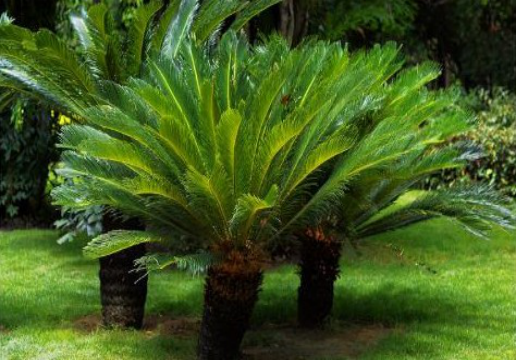
As long as you follow these 5 cultivation essentials above, your cycad will be full of vitality, and perhaps one day it will even bloom, bringing an auspicious omen. By then, you can let it reproduce and add another touch of green to your home.
How do cycads reproduce? Let us introduce a thing or two.
Cycad propagation methods:
There are roughly 2 propagation routes: sexual reproduction, that is, seed propagation, and asexual reproduction, that is, separating the suckers at the base of the plant to propagate.
As for the specific propagation methods, please refer to the introduction to cycad propagation methods on this site.
If you want your cycad to grow well, just refer to the 5 cultivation essentials above and you will be fine!
What are bonsai plants, and how do you care for bonsai plants?
[Common questions] What are bonsai plants, and how do you care for bonsai plants?
[Expert answers]
Question 1: What are bonsai plants?
Plants commonly used for bonsai mainly have the characteristics of slow growth, small leaves, dense branches, and being easy to keep alive under harsh conditions. Traditional ones such as elm, pomelo, boxwood, five-needle pine, yew, bottlebrush, pomegranate, plum, euonymus, and maple can all be used as bonsai plants.
Indoor bonsai that are relatively cold-tolerant woody types are mainly bonsai made from deciduous plants.
Deciduous plants are generally all of the temperate-climate type. Of course, there are also richly green and vigorous, quaint pine and cypress bonsai, which are relatively cold-tolerant and are in a dormant period in winter, making them easy to manage. However, the ornamental feature of deciduous bonsai in winter is the tree form rather than vibrant green, and during the Spring Festival they are not very satisfying. In general, ginkgo, five-lobed maple, Mongolian maple, firethorn, five-needle pine, black pine, Buddhist pine, small-leaved Buddhist pine, lacebark pine, golden larch, true cypress, Chinese juniper, peacock cypress, yingluo pine, dawn redwood, southern Chinese yew, plum, wintersweet, winter jasmine, redbud, Chaenomeles speciosa, Malus halliana, Malus micromalus, crape myrtle, wolfberry, Chinese holly, nandina, pomegranate, serissa, papaya, orange jasmine, Ardisia crenata, Caragana sinica, magnolia, Elaeagnus pungens, hawthorn, apple, pear, peach, finger citron, camellia, Euonymus bungeanus, Daphne odora, osmanthus, Pieris japonica, azalea, golden bullet tree, cycad, banyan, Berberis, boxwood, white ash, Fujian tea, Japanese maple, Mahonia, smoke tree, honeysuckle, ivy, grape, Millettia reticulata, Schisandra, Trachelospermum, Euonymus fortunei, Celastrus, Buddha belly bamboo, phoenix-tail bamboo, black bamboo, palm bamboo, asparagus fern, umbrella bamboo, Cordyline fruticosa, spider plant, aloe, chrysanthemum, Ophiopogon japonicus, saxifrage, and so on.
Varieties favored by lazy people include: pine and cypress types, crabapple types, camellia, cycad, banyan, Berberis, boxwood, white ash, Fujian tea, serissa, Trachelospermum, bamboo types, Ophiopogon japonicus, etc. You can also choose a combined potted planting mainly of cactus-family plants, which not only saves time and effort but also saves water.
Many people like to place some plant bonsai in their rooms, which not only beautifies the environment but is also good for indoor air. But how should indoor bonsai be cared for so that the bonsai can look better and live longer?
Question 2: How do you care for bonsai plants?
Watering: Watering is one of the most important and most frequent measures in the management of tree-stump bonsai. When a tree stump is planted in a pot, whether it is a deep pot or a shallow pot, the soil is always limited, and the water it contains is also limited. If water is not added for a long time, the tree stump will wither from lack of water. Therefore, observe promptly and water according to whether the soil is dry or wet, keeping the soil moist. Of course, watering must not be excessive either. If watering is excessive and the potting soil stays too wet for a long time, it can easily cause root oxygen deficiency and rot. At the same time, the amount of watering also depends on the specific tree species, seasonal changes, and whether the weather is cold or warm.
Fertilizing: The soil in the pot of a tree-stump bonsai is limited, so nutrients are also limited, and attention should be paid to replenishing fertilizer. Because of its artistic characteristic of showing something large within something small, tree-stump bonsai must not be fertilized too much or too frequently; you should master the fertilizer amount and types and grasp the fertilizing season. The three key elements of plant growth nutrients are nitrogen, phosphorus, and potassium fertilizers. Nitrogen fertilizer can promote the growth of branches and leaves of the tree stump; phosphorus fertilizer can promote the formation of its flowers and fruits; potassium fertilizer can promote the growth of the trunk and roots. Therefore, the choice of fertilizer should be determined according to the type of tree stump and its growth condition.
Pests and diseases: Whether it is branches, leaves, or roots, bonsai may all be affected by pests and diseases, and prevention and control should be taken seriously.
Repotting: For potted flowers displayed indoors, insufficient sunlight, insufficient humidity, little air circulation, and too much dust can affect plant growth. Especially for some precious and famous flower varieties, if leaf yellowing, branch withering, or root rot occurs, they are not easy to grow well. So indoors, change the position frequently, preferably once every 5-7 days. When changing the position of potted flowers in winter, pay attention to cold protection; generally, it is best at noon on a sunny day, and the potted flowers that are moved away should not be subjected to cold damage either.
Notes:Indoor potted flowers that like dry conditions should be placed in a well-ventilated spot. On winter days when the midday sun is plentiful, open the windows appropriately to let the air circulate. On snowy days, open them little or not at all. While cleaning indoors, also spray water on the leaf surfaces frequently to remove accumulated dust on the leaves, which helps the plants' respiration. Withered flowers and dead branches should also be cut off promptly.
[Editor's comments] There are very many kinds of bonsai plants, and the points to note in the care of different varieties of bonsai are actually different. What the editor of First Agricultural Economics introduces here is a general version, just to give everyone a little understanding. The specifics still depend on the varieties each flower enthusiast is growing to analyze; different varieties need to be treated with different care methods. This article introduces things up to here for you. Thank you for your attention to our website!