Cultivation Methods and Key Technical Points for the Noble Sterculia (Sterculia nobilis)
Growth Habits of the Noble Sterculia
The noble sterculia has lush branches and leaves, an extremely dense canopy, and high landscape and ornamental value. In addition, the noble sterculia is an evergreen-leaved plant, and its bright red fruit adds yet another splash of color. The noble sterculia likes sun and moisture, has strong vitality, and is highly adaptable; it is not only tolerant of poor soil but also resistant to wind, so cultivating the noble sterculia is relatively simple and easy. The annual yield of the noble sterculia is relatively low, so many of the noble sterculia used in rituals are actually the false sterculia (Sterculia lanceolata), so gardening enthusiasts should keep their eyes wide open.
Light Requirements for the Growth of the Noble Sterculia
Although the noble sterculia is a plant with strong vitality and relatively strong adaptability, its light requirements are also relatively high. As we already mentioned in its growth habits, the noble sterculia is a plant that likes sun and moisture, so it is best to ensure more than eight hours of light per day. In the mild and sunny spring and autumn, it can be placed on a balcony for open-air cultivation for long periods during the day, but in the summer when sunlight is relatively intense, shading treatment is needed at noon to avoid excessively strong sunlight causing the noble sterculia to wilt or even die.
Humidity Requirements for the Growth of the Noble Sterculia
The noble sterculia is a moisture-loving plant, so during cultivation it is necessary not only to keep the growing environment of the noble sterculia moist but also to keep the soil in which the noble sterculia grows moist. The general requirement is that the humidity of the growing environment should reach between 50 percent and 65 percent. As for the soil, besides being moist, it must not be poor; fertile soil should be used.
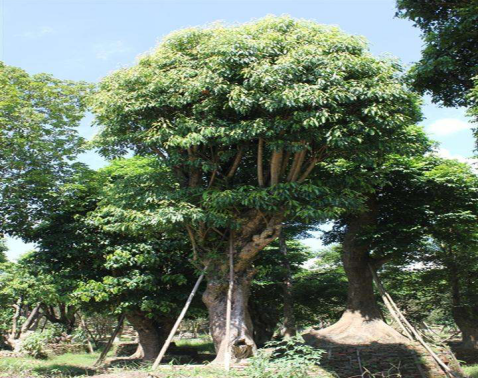
Cultivation Methods and Precautions for the False Sterculia How to Grow the False Sterculia
The false sterculia is a semi-deciduous tree species in the genus Sterculia of the family Sterculiaceae. Because the fruiting period of the false sterculia is close to the Chinese Festival of the Seventh Sister, it is called the Seventh Sister Fruit. So how is the false sterculia cultivated? Let us take a look below at the cultivation methods and precautions for the false sterculia!
I. Cultivation Methods for the False Sterculia
1. Best propagation time: cutting propagation of the false sterculia can be carried out in spring and autumn. Sowing can be done when the fruit of the false sterculia matures and splits, by picking the fruit for sowing.
2. Best growing soil: the false sterculia prefers loamy soil with a deep soil layer, warmth and moisture, and rich organic matter.
3. Growth humidity requirements: the false sterculia prefers a moist growing environment.
4. Best growing temperature: the false sterculia prefers a warm and humid climate, and is neither tolerant of drought nor of cold.
5. Best growing light: the false sterculia likes light, and sunlight needs to be sufficient.
II. Precautions for Cultivating the False Sterculia
1. Fertilizer application:
Young false sterculia trees are generally fertilized 4 to 6 times a year, once every 2 to 3 months, with either organic fertilizer or chemical fertilizer. Adult fruiting trees need more nutrients; to prevent the tree from weakening, fertilize more than 2 times a year. That is, apply once in late winter and early spring, mainly with organic fertilizer, applying 20 to 30 kg of organic manure per tree. The second time is a post-fruit fertilizer applied after harvest in August to September. Mainly with chemical fertilizer, applying 0.5 to 1 kg per tree, scattered within the root zone of the plant.
2. Key watering points:
The noble sterculia tree is tolerant of waterlogging but not of drought. During the flowering period and young fruit period, appropriate soil moisture and atmospheric humidity are required, commonly known as “mango on sunny days, sterculia on rainy days”. Therefore, during the flowering period, if dry weather occurs, water should be sprayed on the canopy. This increases air humidity to benefit flowering and fruit setting.
3. Key pruning points:
If the tree grows vigorously but flowers and fruits little, appropriate pruning and shaping must be carried out to facilitate ventilation and light penetration inside the canopy, which can reduce psyllids and the sooty mold they cause, and also benefits flowering and fruit setting. That is, after harvesting the fruit, thin out some of the dense branches, weak branches, and diseased or dead branches. The main trunk branches at the top of the tree should also be controlled. You can also score the branches and trunk in summer and autumn to promote spring flowering.
4. Key propagation points:
The false sterculia is commonly propagated by sowing or cutting.
5. Propagation by sowing
When the fruit of the false sterculia matures and splits, it can be picked together with the fruit, and the seeds extracted; it should not be exposed to the sun; it must not be dehydrated, and should be sown immediately after harvesting. The sand bed should not be too wet, so as not to affect the germination rate; the seeds can be sterilized with thiophanate-methyl or fungicides such as Dexon, and sown by the drill sowing method, germinating in 1 week. At the budding stage just as the seeds germinate, move them into nutrient bags, which can increase the survival rate of transplanting and reduce management work.
6. Propagation by cutting
Because the branches of the false sterculia root easily, cutting is mostly used for propagation, which is simple and easy to operate and grows rapidly. In spring and autumn, cut current-year semi-lignified branches, or two- to three-year-old lignified branches, or even old branches, all of which can survive as cuttings. Cut the cuttings to about 1.2 to 1.5 m in length, and insert them into the soil about 0.3 m; when material is scarce, they can also be cut to 20 to 30 cm, and as long as the humidity of the air and soil is maintained well, roots will develop in about 1 month.
7. Pest and disease control:
In warm and rainy years, the false sterculia is prone to anthracnose, causing leaf blight and easy leaf drop.
Control methods:
First, attention should be paid to garden sanitation, collecting diseased fallen leaves and burning them in a concentrated manner to reduce sources of infection. For gardens or plants with severe disease, on the basis of clearing the garden, spray comprehensively with 1% Bordeaux mixture or 30% copper oxychloride suspension concentrate at 600 times dilution.
Second, starting from the shoot sprouting and leaf unfolding stage of the false sterculia or from the early stage of disease onset, alternately and continuously spray with 4% sulfur multi-suspension concentrate at 600 times dilution.
III. Value of the False Sterculia
1. Economic value
The stem bark fiber of the false sterculia can be used as a raw material for burlap sacks and can also be used for papermaking; the seeds can be eaten and can also be pressed for oil.
The false sterculia bears abundant fruit in autumn, with bright colors and high ornamental value; the bark on the branches can be used as a raw material for weaving burlap sacks.
2. Medicinal value
Root and leaves: sweet, slightly warm. Relaxes sinews and unblocks collaterals, dispels wind and invigorates blood. Used for rheumatic pain, postpartum wind paralysis, traumatic injuries, waist and leg pain, jaundice, and traumatic bleeding.
The leaves of the false sterculia are pungent in flavor, warm in nature, and enter the liver meridian; they can dissipate blood stasis and relieve pain, and can treat blood stasis pain, traumatic injuries, swelling, and bruising.
Source: the leaves of the false sterculia, a plant of the family Sterculiaceae.
Efficacy: dissipates blood stasis and relieves pain.
Indications: treats traumatic injuries, blood stasis pain, bruising, swelling, and other conditions.
Flavor and meridian entry: pungent, warm. Liver meridian.
3. Edible value
The stem fiber of the false sterculia can be used as a raw material for weaving burlap sacks; the seeds after being fried can be eaten and can also be used for pressing oil.
Cultivation Methods and Precautions for the Noble Sterculia
Growth Habits of the Noble Sterculia
The noble sterculia has lush branches and leaves, an extremely dense canopy, and high landscape and ornamental value. In addition, the noble sterculia is an evergreen-leaved plant, and its bright red fruit adds yet another splash of color. The noble sterculia likes sun and moisture, has strong vitality, and is highly adaptable; it is not only tolerant of poor soil but also resistant to wind, so cultivating the noble sterculia is relatively simple and easy. The annual yield of the noble sterculia is relatively low, so many of the noble sterculia used in rituals are actually the false sterculia, so gardening enthusiasts should keep their eyes wide open.
Light Requirements for the Growth of the Noble Sterculia
Although the noble sterculia is a plant with strong vitality and relatively strong adaptability, its light requirements are also relatively high. As we already mentioned in its growth habits, the noble sterculia is a plant that likes sun and moisture, so it is best to ensure more than eight hours of light per day. In the mild and sunny spring and autumn, it can be placed on a balcony for open-air cultivation for long periods during the day, but in the summer when sunlight is relatively intense, shading treatment is needed at noon to avoid excessively strong sunlight causing the noble sterculia to wilt or even die.
Humidity Requirements for the Growth of the Noble Sterculia
The noble sterculia is a moisture-loving plant, so during cultivation it is necessary not only to keep the growing environment of the noble sterculia moist but also to keep the soil in which the noble sterculia grows moist. The general requirement is that the humidity of the growing environment should reach between 50 percent and 65 percent. As for the soil, besides being moist, it must not be poor; fertile soil should be used.
Precautions for Cultivating the Noble Sterculia
The precautions should correspond to the characteristics of the noble sterculia. The noble sterculia likes sun, so during cultivation it should be given sufficient light, but in summer strong light should be avoided, and appropriate shading treatment should be carried out at noon. Also, the noble sterculia likes moisture but is not tolerant of waterlogging, so when watering, water little but often. Finally, the soil for planting the noble sterculia should be loose, breathable, and moist; choosing fertile soil is better than ordinary soil.