How to grow variegated star jasmine? A full analysis of care precautions
1. Pruning.
Variegated star jasmine is a foliage plant. To make it look good and attractive, it needs proper pruning and shaping, and proper pruning can also promote branching and leaf growth, which helps the plant grow into a full, lush shape.
2. Pests and diseases
The main diseases that appear during the growth of variegated star jasmine are leaf spot and anthracnose, and the pests it is most prone to are mainly aphids, red spider mites and the like. Once pests or diseases are found, promptly cut off the diseased branches, or use specialized pesticides for spraying and control.
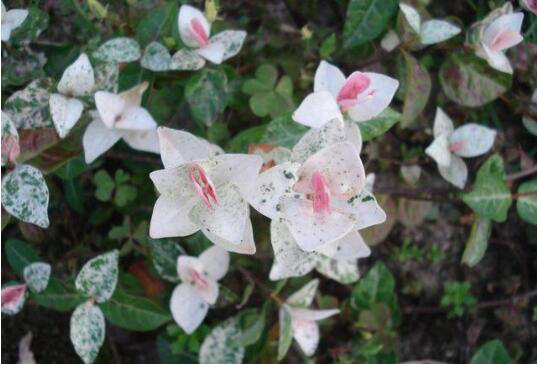
How to grow variegated star jasmine? Growing methods and precautions for variegated star jasmine
Variegated star jasmine, also known as 'First Snow' kudzu and variegated star jasmine, is a woody climbing plant in the genus Trachelospermum of the Apocynaceae family. Its leaves are rich in color, made up of red leaves, pink-red leaves, pure white leaves, variegated leaves and green leaves, and it has excellent ornamental value. So, how do you grow variegated star jasmine? The growing methods and precautions for variegated star jasmine are introduced below.
Image: Variegated star jasmine
I. Growing methods for variegated star jasmine
1. Fertilizer:Variegated star jasmine likes fertilizer, but is not demanding about it; all kinds of fertilizer can be used, and it can still bloom without fertilizer for a year, though with fewer flowers. For potted variegated star jasmine, if you want it to bloom profusely, apply more bone meal and phosphorus-potassium fertilizer and less nitrogen fertilizer. For variegated star jasmine planted in the ground, applying a nitrogen-phosphorus-potassium compound fertilizer once each in spring and autumn is enough; do not fertilize in winter or summer.
2. Watering:Variegated star jasmine likes moisture, and during the growing season the potting soil should be kept slightly moist. In spring and autumn, water once every two days; in summer, water once a day; in winter, water about once every half month. The potting soil should be slightly moist but not dry, and it must never become waterlogged at any time. For potted variegated star jasmine placed on a roof garden or in a courtyard, pay attention to draining accumulated water during the rainy season. Star jasmine planted in the ground should not be planted in low-lying land, otherwise the roots rot easily. During the growing season, it is fine to wait until the soil is dry before watering; plants grown in the ground in winter may not need watering.
3. Pruning:Variegated star jasmine tolerates pruning and stays evergreen all year round, and it can also be paired with golden privet and red-leaf barberry for use as color bands and color blocks in landscaping. Controlling the vine length through pruning can promote branching and help the plant form a full shape. The first pruning is done when the vine reaches 8 cm, cutting it back to about 6 cm; afterward, prune every time it grows 4-5 cm. Usually 2-3 prunings are enough to give a very good pot shape.
Image: Variegated star jasmine
4. Light:Variegated star jasmine is a temperate-zone flower that likes warmth and light. When planted in the ground, it should be placed in a sunny spot; in shady places it grows poorly, with fewer flowers and a weaker fragrance, or even no flowers. For potted plants, place them in full sunlight in spring, autumn and winter. In midsummer, if placed in a semi-shaded spot that gets sun in the morning or evening and avoids direct strong sunlight at noon, it will bloom continuously. If it is too sunny at noon, the flowers will be sparse, or even absent. Star jasmine is fairly cold-tolerant; in the Yellow River basin and areas to its south, it can overwinter safely outdoors, while in the north it is better to move it into a low-temperature greenhouse for the winter.
5. Pests and diseases:The main diseases of variegated star jasmine include anthracnose and leaf spot. Use a 600-800 times dilution of 50% thiophanate-methyl, or an 800-1000 times dilution of 70% mancozeb wettable powder, for control. For damage by mites such as red spider mites and by moth larvae, use a 1000-1500 times dilution of 15% pyridaben for control. For aphids, use a 1500 times dilution of 25% imidacloprid wettable powder or a 2000-3000 times dilution of 48% chlorpyrifos emulsifiable concentrate for control.
Image: Variegated star jasmine
II. Precautions for growing variegated star jasmine
1. Soil:Loose, fertile loam rich in humus is best. During the cultivation of seedlings and finished plants, treat them differently according to production goals.
2. Water and fertilizer:Mainly apply nitrogen fertilizer, either by foliar spraying or by drenching the roots, to increase growth. From March to August you can also fertilize it, which will further promote plant growth. From September to early October you can also apply additional fertilizer as appropriate to promote plant vigor.
Image: Variegated star jasmine
3. Pruning:Starting in October, pruning must be stopped.
4. Pests and diseases:Variegated star jasmine has bright leaf colors and is easily harmed by aphids, so aphid control must be done well.
[Editor's closing note]Variegated star jasmine is a light-loving plant with slight shade tolerance, and it likes environments with high air humidity, so special attention is needed during care. The above has introduced the growing methods and precautions for variegated star jasmine, and I hope it will be helpful to everyone!
Variegated star jasmine Trachelospermum jasminoides Flame: Variegated star jasmine illustrated guide: how to grow variegated star jasmine / how to propagate variegated star jasmine
Variegated star jasmine profileVariegated star jasmine Trachelospermum jasminoides Flame
Growing methods and precautions for variegated star jasmine: an introduction to variegated star jasmine
Variegated star jasmine is an evergreen woody climbing plant with inconspicuous lenticels on the stems. The branchlets, young petioles and leaf undersides are covered with short soft hairs, while the old branches and leaves are hairless. It is a light-loving plant with strong shade tolerance, likes environments with relatively high air humidity, can be used as a year-round "flowering" plant for various flower border arrangements, and is also an excellent material for potted plants.
Variegated star jasmine is suitable for growing in well-drained acidic and neutral soil environments. It is robust with strong disease resistance and vigorous growth, similar to China's native star jasmine, and it also has relatively strong drought tolerance, resistance to short-term flooding, and cold tolerance. Its leaf color changes are related to light and growth conditions; vivid color expression requires good light conditions and vigorous growth conditions.
Morphological characteristics of variegated star jasmine
Variegated star jasmine is an evergreen woody climbing plant with inconspicuous lenticels on the stems. The branchlets, young petioles and leaf undersides are covered with short soft hairs, while the old branches and leaves are hairless.
The leaves are leathery, elliptical to ovate-elliptical or broadly obovate, 2-6 cm long and 1-3 cm wide. Old leaves are nearly green or pale green; the first round of new leaves is pink, and a few plants have 2-3 pairs of pink-red leaves; the second to third pairs are pure white leaves; between the pure white leaves and the old green leaves there are several pairs of blotched variegated leaves. The whole plant is rich in leaf color, one could say brilliantly colorful.
Variegated star jasmine is a light-loving plant with strong shade tolerance. It likes environments with relatively high air humidity and well-drained acidic and neutral soil. It is robust with strong disease resistance and vigorous growth, similar to China's native star jasmine, and it also has relatively strong drought tolerance, resistance to short-term flooding, and cold tolerance. Its leaf color changes are related to light and growth conditions; vivid color expression requires good light conditions and vigorous growth conditions.
Variegated star jasmine is one of the excellent ground-cover tree species for landscaping newly developed and strongly promoted in Japan. With its advantages of vivid color, robust nature, excellent resistance and extensive cultivation management, this variety stands out among existing landscaping ground-cover plants.
Evergreen woody climbing plant with inconspicuous lenticels on the stems. The branchlets, young petioles and leaf undersides are covered with short soft hairs, while the old branches and leaves are hairless. The leaves are leathery, elliptical to ovate-elliptical or broadly obovate, 2-6 cm long and 1-3 cm wide. Old leaves are nearly green or pale green; the first round of new leaves is pink, and a few plants have 2-3 pairs of pink-red leaves; the second to third pairs are pure white leaves; between the pure white leaves and the old green leaves there are several pairs of blotched variegated leaves. The whole plant is rich in leaf color, one could say brilliantly colorful.
Ecological habits of variegated star jasmine
Variegated star jasmine is suitable for growing in well-drained acidic and neutral soil environments. It is robust with strong disease resistance and vigorous growth, similar to China's native star jasmine, and it also has relatively strong drought tolerance, resistance to short-term flooding, and cold tolerance. Its leaf color changes are related to light and growth conditions; vivid color expression requires good light conditions and vigorous growth conditions.
From trial cultivation, its leaf color changes are related to light and growth conditions; vivid color expression requires sufficient light conditions and vigorous growth conditions, but at this time the plant does not grow quickly, with growth in the growing months mostly around 3 cm. In terms of the plant's own growth, it is a light-loving, slightly shade-tolerant plant that likes environments with relatively high air humidity and well-drained acidic and neutral soil. It is robust and grows relatively fast, with monthly growth in the growing months reaching more than 4 cm. It is also a relatively drought-tolerant and cold-tolerant variety.
Cultivation techniques for variegated star jasmine
For container seedling production of variegated star jasmine, loose, fertile loam rich in humus is best. During the cultivation of seedlings and finished plants, treat them differently according to production goals. Adjust the light intensity and the application ratio of nitrogen, phosphorus and potassium fertilizers in a timely manner, and slow-release fertilizers with long effectiveness and easy application can be used.
In the early stage of container seedling cultivation, grow them under semi-shaded conditions, mainly applying nitrogen fertilizer, either by foliar spraying or by drenching the roots, to increase growth; in the middle stage, apply more phosphorus and potassium fertilizer to accelerate the lignification of the branches and make the seedlings strong. When the plant height reaches 20 to 30 cm and there are many branches, they can be moved to a place with stronger light for cultivation.
At this time, the mature leaves of variegated star jasmine still remain dark green, while the buds and new leaves show brilliant colors. The leaf color of variegated star jasmine is noticeably affected by light intensity and the length of light exposure, and the leaf color gradually changes as light intensity changes and light duration continues. Indoor potted variegated star jasmine must have moderate light. To maintain the best leaf color effect of variegated star jasmine, prune in a timely manner, and after pruning apply reasonable fertilizer in a timely manner to promote the sprouting of branches and leaves. At the same time, variegated star jasmine has bright leaf colors and is easily harmed by aphids, so aphid control must be done well.
The ornamental value of variegated star jasmine lies mainly in the color-leaf group formed by three levels of leaf color, namely red - pink or pink with green dots, pure white or white with green dots - green leaves, resembling clusters of blooming fresh flowers, colorful and brilliantly vivid. Because variegated star jasmine has strong sprouting ability and tolerates pruning extremely well, through pruning it can maintain a good ornamental effect all year round. In landscape plant configuration, it can be paired with colorful ground covers such as golden privet and red-leaf photinia, as well as climbing ground covers such as variegated creeping euonymus, golden creeping euonymus, small-leaf creeping euonymus, pachysandra and oriental bittersweet, as color bands and color blocks, and it can also be planted alone in blocks.
The creeping stems of variegated star jasmine have the trait of rooting where they touch the ground, with strong spreading ability, and can cover the ground in a short time with simple maintenance. Variegated star jasmine can also be used as a year-round foliage plant for flower border arrangements, and can also replace flowerbed flowers and potted flowers for landscaping, to overcome the shortcomings of potted flowers such as short flowering periods, the need for frequent replacement, and high costs. In addition, variegated star jasmine is also an excellent household potted plant, and because it is shade-tolerant, it can be cultivated indoors in all regions.
The rapid development of modern landscaping is reflected not only in the continuous rise of greening indicators, but also in the continuous improvement of greening standards. Entering the new century, people's expectations for environmental improvement are growing higher, requiring ground-cover plants to have richer colors. Among the many excellent ground-cover plants, variegated star jasmine is favored by people for its wide distribution, brilliantly colorful leaves, long ornamental period and multiple uses, and is one of the colorful-leaf ground-cover plants with considerable market potential.
Biological characteristics and suitable cultivation regions
Variegated star jasmine is an evergreen woody climbing plant with a plant height of 30 to 40 cm, and its vines can grow to several meters. The leaves are opposite, leathery, elliptical to ovate-elliptical or broadly obovate, 2 to 6 cm long and 1 to 3 cm wide. Old leaves are nearly green or pale green; the first round of new leaves is pink, and a few have two or three pairs of pink-red leaves; the second and third pairs are pure white or white with green dots or pink leaves; between the pure white leaves and the green old leaves there are several pairs of blotched variegated leaves. The whole plant is rich in leaf color, brilliantly colorful. The flowers are fragrant, the stems have inconspicuous lenticels, and the young branches and young petioles are covered with short soft hairs. Variegated star jasmine likes light and is also shade-tolerant, and is not strict about soil, but grows vigorously in loose, fertile, moist acidic or neutral loam, and has relatively strong drought tolerance, heat tolerance, moisture tolerance and cold tolerance.
Variegated star jasmine grows quickly and also has strong sprouting ability, and tolerates pruning extremely well. Variegated star jasmine originates from areas south of Hokkaido in Japan. Judging from its natural distribution range, it should be more cold-tolerant than China's native star jasmine, and can be cultivated in areas south of the Yellow River in China. If used as an indoor potted ornamental, it is suitable for cultivation in all regions.
Growing methods for variegated star jasmine: growth and differentiation
1. Obtaining aseptic material
Select healthy one-year-old seedlings; from pest-free and disease-free mother plants, cut the tips of spring shoots that sprouted in the current year, remove the leaves, keep the petioles, and cut the branches into 2-3 cm small sections. For disinfection, first soak in a 10% laundry detergent solution for 15 min, then rinse under running water for 30 min. Under aseptic conditions, soak and sterilize with 75% ethanol solution for 30 s, then sterilize with 0.1% mercuric chloride solution plus Tween-20 for 3, 5, 10, and 15 min. The sterilization effect of 0.1% mercuric chloride solution improves as sterilization time increases; when sterilization time is less than 10 min, the aseptic seedling acquisition rate is less than 13.5%; when sterilized for 15 min, the aseptic seedling acquisition rate is 23.7%, and the explant mortality rate reaches 33.3%. As sterilization time increases, the toxic effect of mercuric chloride on plant material intensifies, so a sterilization time of 10-15 min with 0.1% mercuric chloride solution is appropriate. After rinsing 3-5 times with sterile water, inoculate onto MS solid medium.
2. Bud induction
Transfer the aseptic seedlings 20 d after inoculation to medium (1). After 5-7 d the stem tips begin to sprout, after 10 d the axillary buds sprout, and the buds gradually grow larger. Continue culturing for 20 d, and all axillary buds on the stem sections sprout into lateral branches. The lateral branches grow normally, with dark green leaves and relatively little callus at the stem base, which is yellow-green.
3. Proliferation of test-tube plantlets
Divide the lateral branches of the test-tube plantlets into sections of 2-3 buds each and inoculate them onto medium (2). After 10 d the leaf buds on the stem sections sprout, and after 30 d they grow into large numbers of lateral branches, with many twin and triple branches produced. The inoculated stem sections form clustered shoots with 5-8 lateral branches, with an average proliferation rate of 5.8 times. The internodes of the test-tube plantlets noticeably elongate, the young leaves and stems are all pale red, the leaves are large, the stems are relatively thick, the tissues are not compact, and the callus at the stem base is large. Afterward, subculture once every 30 d; after 3-4 subcultures the test-tube plantlets show vitrification.
4. Strong seedling cultivation
After every 3-4 subcultures, transfer the proliferated test-tube plantlets to medium (3). After 40 d they form large numbers of lateral branches, averaging 4-6 lateral branches per stem section, with lateral branches averaging 1.8 cm long and an average proliferation rate of 3.1 times. There are basically no twin or triple branches. The lateral branches grow healthily, with compact tissues, dark green leaves, and small yellow-green callus at the base, with no vitrification.
5. Root induction
Divide lateral branches that are healthy and longer than 1.2 cm, and transfer them to medium (4). Increase the light intensity to 2500-3000 lx and extend the light period to 16 h per day. After 15 d of culture, root primordia begin to form, and once root primordia form, hardening can begin. Investigate rooting after 20-25 d: the rooting rate is 73%, with an average of 1-2 roots per plantlet.
6. Hardening and transplanting
Move rooted test-tube plantlets with their bottles into a cultivation greenhouse and culture for 1 week. When the roots are 0.5-1 cm long, open the bottle caps and harden for 3-5 d, then take out the rooted plantlets, wash off the medium from the roots, and plant them in seedling plug trays. Using black peat as the substrate, with temperature controlled between 20-25°C and humidity around 85%-95%, they can survive in 20 d, with a survival rate of more than 73%.
Propagation methods for variegated star jasmine
Propagation of variegated star jasmine is relatively easy. Most often cutting and layering methods are used, and where conditions permit, tissue culture can also be used for propagation.
Variegated star jasmine can be propagated by cuttings in any season of the year. The rooting rate in spring and autumn can both reach more than 98%. For summer cuttings, some branches that are too tender rot easily, but branches that have reached semi-lignification can all take root and survive. In addition, variegated star jasmine can also be propagated by layering. Generally, layering of old branches is done in early spring, and layering of young branches in summer, burying about 3 cm in soil; both nodes and internodes can take root and form a new plant. However, the propagation rate of layering is rather slow and it requires a large amount of labor, so it is difficult to apply in large-scale production.
The technique for rapid propagation of variegated star jasmine by tissue culture has been completed. Our tissue culture room has established a corresponding rapid propagation tissue culture system (see another article). Variegation can appear during the tissue culture process, and the ornamental traits are stable.
For the cultivation of variegated star jasmine, based on the dual considerations of growth and ornamental value, seedling production, plant cultivation, and finished seedling cultivation can be appropriately separated, that is, mass propagation and early-stage plant cultivation under the most suitable environmental conditions such as semi-shade and loose, fertile cultivation substrate; when the plant reaches 20 cm in length and has many branches, move it to stronger light conditions for cultivation, so as to achieve vivid leaf color.
1、Cutting propagation
Cutting propagation can be done in all four seasons, but spring, summer and autumn are the ideal three seasons for cuttings. Using full-substrate cuttings, the rooting rate is above 95% in all cases. Winter cuttings require heating conditions, otherwise it is difficult for them to root, and because production costs are relatively high, it is not advisable to take cuttings in winter. Container cuttings are better, and plug trays or small nutrient pots are mostly used. For potted variegated star jasmine, cuttings in small nutrient pots are ideal, with 3 to 5 plants inserted per pot, which can avoid root damage during transplanting in the propagation and cultivation process, improve the survival rate, and help the seedlings grow and take shape.
The cutting substrate uses peat, perlite, vermiculite and the like, mixed in a certain proportion. Cuttings are generally cut to 3 to 5 cm, leaving one or two pairs of leaves, and half of the cutting is inserted into the soil (be sure not to insert too deep or let the cutting's leaves touch the soil). After cutting, combined with watering, spray fungicides such as carbendazim to prevent the substrate and cuttings from becoming diseased. Then build a small plastic-film-covered arch shed, shade heavily, keep the temperature inside the arch shed at 20°C to 25°C, and spray pesticide once a week along with watering to prevent disease. Roots form in about 15 days, and seedlings are ready within 1 month.
2 、Layering propagation
Layering propagation is generally carried out in early spring or summer. Layering of old branches is done in early spring, and layering of young branches is best done in summer. Press the branches into the soil 2 to 3 cm, and when the nodes or internodes have rooted and the new shoots have grown to 8 to 10 cm, separate them from the mother plant to form new plants. Compared with cutting propagation, layering has a smaller propagation coefficient and requires a large amount of labor, making large-scale production difficult.
3、Tissue culture method
Considering trait segregation during the culture process, rapid propagation is often carried out by the bud-to-bud method, with an annual proliferation rate of 200 to 300 times. However, due to limitations in facilities and technical requirements, plus the operation process being more complex than cuttings and layering, its promotion is subject to certain limitations.
In short, variegated star jasmine is an easy-to-propagate species. Among the 3 propagation methods, cutting propagation is the best, with a short cutting cycle, quick seedling formation and a large propagation coefficient, making it more suitable for large-scale production and promotion.
Culture conditions
1. Medium for inducing dormant bud sprouting: MS+NAA 0.05 mg/L-1 (same unit below)+6-BA 2.0;
2. Bud proliferation medium: MS+IAA 0.2+6-BA 1.5;
3. Seedling strengthening medium: MS+NAA 0.5+6-BA 0.5;
4. Rooting medium: 1/2MS+NAA 0.5+IBA 0.2.
All the above media are supplemented with 20 g/L-1 sucrose and 7 g/L-1 agar, pH 6.0-6.2; light intensity 2000-2500 lx, 14 h of light per day; culture temperature 25-30°C during the day and 15-20°C at night.
Distribution range of variegated star jasmine
Variegated star jasmine can be cultivated in the open south of the Yangtze River basin. For safe overwintering, appropriate protective measures can be taken, such as increasing light; from March to August mainly apply nitrogen fertilizer to promote plant growth; in September and early October apply an appropriate amount of additional phosphorus and potassium fertilizer to promote plant vigor; starting in October, pruning must be stopped, and so on.
As an indoor potted ornamental plant, variegated star jasmine can be used in any region, and is especially suitable in regions with better light conditions.
Variety classification of variegated star jasmine: common varieties of variegated star jasmine
Purple-flowered star jasmine Trachelospermum axillare Hook. f.
Guizhou star jasmine Trachelospermum bodinieri (Levl.) Woods. ex Rehd.
Short-styled star jasmine Trachelospermum brevistylum Hand.-Mazz.
Chinese star jasmine Trachelospermum cathayanum Schneid.
Rusty-haired star jasmine Trachelospermum dunnii (Levl.) Levl.
Taiwan star jasmine Trachelospermum foetidum (Mats. et Nak.) Nak.
Slender-stalked star jasmine Trachelospermum gracilipes Hook. f.
Star jasmine Trachelospermum jasminoides (Lindl.) Lem.
Leathery star jasmine Trachelospermum tenax Tsiang
Yunnan star jasmine Trachelospermum yunnanense Tsiang et P. T. Li
Uses of variegated star jasmine: ornamental applications
1. Planting variegated star jasmine under or at the edge of other shrubs or trees not only enriches the understory and forest-edge landscape, but also plays a ground-decoration role, increasing the landscape layers of plant landscaping.
2. Variegated star jasmine has a certain resistance and strong growth ability. Arranging it beside rock features creates a comprehensive grouped landscape, while also showing the rigid beauty of the rocks.
3. Arranging variegated star jasmine at the forest edge and dotting it among other plants with green and golden-yellow backgrounds forms a strong color contrast, stimulates the visual nerves of visitors, and greatly enhances the appeal of the landscape.
4. Variegated star jasmine itself is a low-growing evergreen plant with relatively dense branches and leaves, so it can be used as ground cover.
5. Dotting variegated star jasmine among other plants adds color to the garden and also enriches the variety of garden plants.
6. Planting variegated star jasmine in large patches on both sides of roads forms a mass-planted landscape in continuous swaths.
7. Placing potted variegated star jasmine in entrance halls and similar places creates a welcoming atmosphere.
8. Hanging variegated star jasmine or planting it in pocket pots on windowsills, setting it off against balconies and walls to form a contrast, can both decorate the wall and beautify the environment.
Ground-cover application
So-called ground cover refers to the landscaping form of using low, dense plant materials to cover the ground. Variegated star jasmine itself is a low-growing evergreen plant with relatively dense branches and leaves. If combined with rockery, water features, buildings, garden ornaments and the like, it will surely form a garden art effect with strong visual impact. If arranged in combination at the water's edge to correspond with the surrounding scenery, it can greatly increase the ornamental color of the garden. Variegated star jasmine is very drought-tolerant and can also be planted as a water-saving ground cover on slopes with dry habitats and abundant mixed rocks.
Wall greening application
Wall greening refers to a greening form that uses planted vegetation to decorate walls and similar structures. Some climbing plants are commonly used to cling to walls or colonnades. In addition, an inset style can be used, planting variegated star jasmine in planting holes and letting its trailing branches hang down, forming a distinctive wall landscape.
Indoor greening application
Variegated star jasmine has the characteristics of Chinese star jasmine and relatively strong shade tolerance, thus providing the possibility for its indoor greening application. Potted variegated star jasmine can be placed in indoor wall corners, beside furniture, at elevator corners and similar spots, achieving the effect of softening space and supplementing space. Second, hanging variegated star jasmine is another means of enriching indoor space. For example, hanging it on indoor walls, windowsills, balconies and the like, letting its trailing branches hang down and sway with the wind, will surely become an important form of aerial greening. The details are as follows:
Coffee table and desk decoration
Coffee tables and desks are indispensable parts of indoor furniture, often placed in living rooms, studies or office spaces, playing an important role and often serving as a visual focal point of the entire space. Therefore, if a single potted plant of variegated star jasmine (Trachelospermum jasminoides 'Variegatum') is placed on a coffee table or desk, whether in a home space, an office space or a commercial space, it will add a great deal of charm to the decorated environment.
Balcony and windowsill greening
Balconies and windowsills are extensions of indoor space, architectural components that serve a decorative function on building facades, and also a window for communication with the outside world. A balcony can also become a place for people to rest outdoors, talk, or even dine, so greening it is an important aspect of cultivating people's character. There are diverse forms of greening design, among which inset, hanging and wall-attached forms all require climbing plants to accomplish, and variegated star jasmine possesses exactly these characteristics. Therefore, variegated star jasmine can be planted in specially made half-pot containers inset into balcony walls; or potted variegated star jasmine can be hung from walls, balcony ceilings or top eaves, forming a layer of colorful trailing curtains, full of interest.
Application in other spaces
The decoration of areas such as entrance halls and building entrances is also an indispensable element of certain functional indoor spaces. When greening, variegated star jasmine is planted in flower pots or planting beds, forming a standalone landscape as a single-species combination of variegated star jasmine; it can also be combined with other elements to form a landscape, ultimately creating an indoor entrance environment with a welcoming atmosphere that leaves a deep impression on visitors.
Landscape uses of variegated star jasmine
The ornamental value of variegated star jasmine is reflected in three levels of leaf color, namely the color group formed by red leaves, pink-red leaves, pure white leaves, variegated leaves and green leaves, which closely resembles a cluster of blooming flowers, extremely gorgeous and colorful, especially in the three seasons of spring, summer and autumn.
To achieve the best color effect, intense pruning is needed in spring to promote the sprouting of branches, increase ornamental branches, and at the same time form a compact plant clump.
In landscaping, it is an extremely beautiful groundcover plant material, and can be planted in isolation strips under urban street trees; or used as slope-protecting vine cover; it can replace potted flowers for scenery in parks and modern facilities, to overcome the shortcomings of potted flowers such as short ornamental periods and the high cost of frequent replacement.
In addition, it can also be used as an excellent plant for home potting, or as a landscaping plant for moss micro-landscapes.
Application in flower beds
Flower beds are an important form of garden flower application design. They have planting beds with a certain geometric outline, and flowers of different colors, forms and textures are planted in the planting beds to express their beauty of color or beauty of pattern. They are highly decorative and ornamental, and are generally arranged in regular spaces such as squares, entrances, and along the ***** of roads or on both sides or around them.
Variegated star jasmine itself has the advantages of brilliant colors, low plant height, and being evergreen, and its colors change with environmental changes, possessing characteristics that herbaceous flowers do not have. Therefore, if it is used as flower bed material, it can be used as the main carpet-bedding decorative material, not only expressing its beauty of color but also expressing the beauty of form of variegated star jasmine; secondly, it can be used in three-dimensional flower beds, because the branches and leaves of variegated star jasmine are relatively dense, and fixing it on a frame of a certain shape will certainly form a focal point of appreciation; thirdly, variegated star jasmine can also be combined with other elements to form flower beds with a title style, such as made into forms like calendars, sundials and clocks, and expressed in carpet-bedding form, with a unique charm; in addition, variegated star jasmine can also serve as edging material for flower beds, or be dotted among other plants, not only adding color to the garden but also enriching the variety of garden plant materials.
Application in flower borders
Variegated star jasmine arranged at hedges, railings, in front of buildings or on both sides of roads, without artificial modification, can already express the rich characteristics of form, color, height and texture that flower borders are meant to convey. Generally, flower border arrangements adopt different types of natural mottled patterns, requiring coordination among plants, forms and density.
First, variegated star jasmine is dotted or planted in patches among other green plants and combined with them to form flower borders. Viewed as a whole, variegated star jasmine is originally a foliage plant, but it often gives visitors the visual impression of a "flowering" plant, full of interest.
Second, variegated star jasmine can also be planted under or at the edge of other shrubs or trees, not only enriching the understory and forest-edge landscape, but also playing a ground decoration role, increasing the landscape layers of plant landscaping.
Third, variegated star jasmine combined with other elements is planted in front of buildings or on both sides of roads; against the backdrop of green grass, stones and grass inlays, variegated star jasmine appears particularly fresh and distinctive.
In addition, variegated star jasmine can also be planted in patches on both sides of roads, forming a mass-planted landscape in patches, with some stone groups arranged within and some green plants dotted at the edges, further showing the elegance of variegated star jasmine.
The flower language of variegated star jasmine
The flower language of variegated star jasmine: universal virtue and auspiciousness.
The color group of variegated star jasmine formed by red leaves, pink-red leaves, pure white leaves, variegated leaves and green leaves closely resembles a cluster of blooming flowers, extremely gorgeous and colorful, especially in the three seasons of spring, summer and autumn.
Pictures of variegated star jasmine