What are the care methods for the common pearlbush? Read this one article to understand
1. Pot and soil selection.
The common pearlbush can be grown outdoors in the ground or kept in a pot for ornament. When growing it in a pot, choose a suitable flowerpot according to the size of the common pearlbush plant. Before filling the soil, first place a drainage layer made of some broken tiles at the bottom of the pot, then fill it with soil made of garden soil, coarse sand, furnace slag or leaf mold, and at the same time add some decomposed organic fertilizer to the soil.
2. Sunlight and temperature.
The common pearlbush likes sunlight, and can also grow in shady places. It has relatively strong adaptability to the environment and can resist cold and tolerate drought. The suitable growing temperature is 16 to 28 degrees. In summer, when it exceeds 30 degrees, potted plants are best moved to a shady place to avoid direct sun exposure.
3. Watering and fertilizing.
During growth, the common pearlbush has a relatively large demand for water and fertilizer. Keep the pot soil moist, and water it in a timely manner according to conditions. During the growing season, it needs to be watered once or twice a month. During growth, adjust fertilization according to the needs of growth. When flowering, apply phosphorus and potassium fertilizer, and when overwintering, apply fertilizer once to ensure it survives the winter.
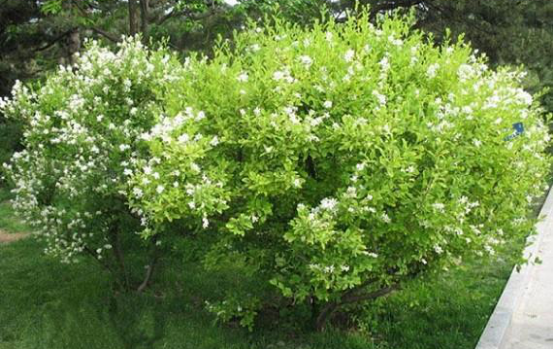
The cultivation methods and precautions for the common pearlbush
Chinese scientific name: Bai Juan Mei (common pearlbush)Latin scientific name: Exochorda racemosa (Lindl.) Rehd.Other names: Bai Juan Mei, Jin Gua Guo, Jian Zi HuaBinomial name: Exochorda racemosaKingdom: PlantaePhylum: AngiospermsSubphylum: SpermatophytaClass: DicotyledoneaeSubclass: ArchichlamydeaeOrder: RosalesSuborder: RosineaeFamily: RosaceaeSubfamily: SpiraeoideaeGenus: ExochordaSpecies: Exochorda racemosaDistribution area: Zhejiang, Jiangsu, Jiangxi, Hubei and other provinces in ChinaSubkingdom: EmbryophytaThe common pearlbush (scientific name: Exochorda racemosa) is a species under the genus Exochorda in the family Rosaceae. It is produced in Henan, Jiangxi, Jiangsu, and Zhejiang. It grows in shady mountain slopes, at an altitude of 250-500 m.1. Names
Common pearlbush (Chinese Dendrology), Zong Hua Bai Juan Mei (Handbook of Economic Plants), Jian Zi Hua (Handbook of Seed Plants of Southern Jiangsu), Jiu Huo Tou (Anhui local name), Jin Gua Guo (Zhejiang local name)2. Morphological characteristics
Deciduous shrub, up to 3-5 m tall, branches slender and spreading; branchlets cylindrical, slightly angular, hairless, reddish brown when young, brown when old; winter buds triangular-ovoid, apex obtuse, smooth and hairless, dark purplish red. Leaves elliptical, oblong to oblong-obovate, 3.5-6.5 cm long, 1.5-3.5 cm wide, apex rounded-obtuse or acute, rarely abruptly pointed, base cuneate or broadly cuneate, margin entire, rarely with blunt serrations above the middle, both surfaces hairless; petiole short, 5-15 mm long, or nearly sessile; stipules absent.Terminal raceme, with 6-10 flowers, hairless; bracts small, broadly lanceolate; flowers 2.5-3.5 cm in diameter; hypanthium shallowly campanulate, hairless; sepals broadly triangular, about 2 mm long, apex acute or obtuse, margin with sharp fine serrations, hairless, yellow-green; petals 5, obovate, about 1.5 cm long, about 1 cm wide, apex obtuse, base with a short claw, white; stamens 15-20, in clusters of 3-4 inserted on the edge of the disc, opposite the petals; carpels 5, styles free.
Capsule with 5 ridges, fruiting pedicel 3-8 mm long, seeds winged. Flowering period May, fruiting period June-August.
3. Growth habits
It likes light, and also tolerates half shade. It has strong adaptability, tolerates drought and barren soil, and has a certain degree of cold resistance. It can be cultivated in the open ground in Beijing.4. Habitat and distribution
It grows in shady mountain slopes, at an altitude of 250-500 m.It is produced in Henan, Jiangxi, Jiangsu, and Zhejiang. It grows in shady mountain slopes, at an altitude of 250-500 m.
5. Cultivation techniques
(1) The common pearlbush likes light, tolerates drought, and is slightly shade-tolerant. It is not strict about soil quality and can grow in both acidic soil and neutral soil.(2) It can be propagated by methods such as sowing, division, cutting, and tissue culture. Sowing, division, and cutting are mostly carried out in spring.6. Main value
Its branches and leaves are elegant, and it blooms white in spring. It is a beautiful ornamental tree species. Root bark and tree bark: used for soreness and pain of the waist and bones.
[Edible development]Both of these common pearlbush species have large and beautiful flowers, and both are woody plants that can be used for both ornament and food. Their flower buds and tender leaves are both edible, and this has a long history among the people of our country.
The common pearlbush has a graceful tree form, with large and numerous flowers, pure white as snow, clear and lovely. It is an excellent tree species for beautifying gardens. Its flowers and tender leaves are also extremely rich high-quality food raw materials. According to literature such as the "Atlas of Chinese Wild Vegetables", the content of various vitamins and nutrients such as calcium, iron, and zinc is higher than that of many common vegetables. It can be seen that the folk consumption of this plant in our country has a strong scientific basis.
Like many edible woody plants, the common pearlbush also has many ways to be eaten. Folk custom generally picks its tender leaves and flower buds between April and May. They can be eaten fresh, or blanched in water and dried in the sun for use when needed.
Its tender leaves and flower buds can be stir-fried, made into soup, or seasoned and served cold; when used as an ingredient, they can cook many meat and vegetable dishes, all clear-fragrant and delicious, with a distinctive flavor. Flower buds used to steam flower cakes and make snacks are especially popular.
Its dried product can be rehydrated in water, then used to stew meat, steam fish, cook soup, make fillings, etc., and is likewise delicious and pleasant.
[Health benefits]Modern research shows that every 100 grams of fresh tender leaves of the common pearlbush contain 6.9 mg of carotene, vitamin
B2 0.35 mg, vitamin C 271 mg and other nutrients.
Each gram of dried product contains potassium 9.8 mg, calcium 10.3 mg, magnesium 3.14 mg, phosphorus 1.5 mg, sodium 0.48 mg, iron
154 micrograms, manganese 127 micrograms, zinc 22 micrograms, copper 10 micrograms and other nutrients.
Every 100 grams of fresh flowers contain 2.1 mg of carotene, vitamin B2 0.35 mg, vitamin C 92 mg and
other nutrients.
Therefore, it has multiple health functions such as benefiting the liver and improving eyesight, enhancing human immunity, and antioxidant effects.
Common pearlbush
The common pearlbush has a graceful posture, glossy leaves, and when it blooms it is pure white as snow and dazzling. It is a good and excellent ornamental tree, suitable for use as an accent tree species on lawns, in pavilions and gardens, at forest edges, along roadsides, by rockeries, and in courtyard corners. Old trees and ancient trunks are also materials for making stump bonsai. Before full bloom, pick the flower buds together with the tender shoots, blanch them in boiling water, and dry them in the sun to use as a vegetable.
Name: Common pearlbush
Common pearlbush
Scientific name: Exochorda racemosa
English name: Common Pearlbush
Other names: Bai Juan Mei, Jin Gua Guo, Jian Zi Hua
Family name: Rosaceae
Genus name: Exochorda
Origin: Produced in Zhejiang, Jiangsu, Jiangxi, Hubei and other provinces in China
Habits: Likes light, tolerates drought, slightly shade-tolerant. Often grows in shrub thickets on gravelly low mountain slopes. It can grow in both acidic soil and neutral soil, and grows vigorously in well-drained, fertile and moist soil. Strong sprouting ability. Strong cold resistance
Ecological habits: Likes a warm and humid climate, likes sufficient light and is also slightly shade-tolerant, has strong cold resistance, is not strict about soil requirements, and is relatively tolerant of dry and barren conditions. It can grow in both acidic soil and neutral soil, and grows vigorously in well-drained, fertile and moist soil. Strong sprouting ability, strong suckering ability
Propagation and cultivation: Mainly by sowing. It can also be propagated by cutting. For sowing, collect seeds in September and sow in March of the following year. For cutting, dormant branches are mostly used, carried out in early spring before budding. Origin and distribution
It is a tree species native to China, mainly produced in Shanxi, Henan, Anhui and other provinces. It is cultivated in Hebei, Shandong, Shaanxi, Sichuan, Zhejiang, Jiangsu, Jiangxi, Hubei and other places. Morphological characteristics
Deciduous shrub. Mostly small-tree-like, up to 3-5 m tall, branchlets cylindrical, hairless, slightly angular, reddish brown when young, single leaves alternate, long elliptical
Common pearlbush
to oblong-obovate, 3.5-6.5 cm long, 1.5-3.5 cm wide, apex rounded-obtuse, base cuneate, leaf margin entire, both surfaces hairless, petiole extremely short, leaf underside gray-white. Flowers bisexual, terminal raceme, with 6-10 flowers, entirely hairless, with short pedicels, hypanthium campanulate, yellow-green, sepal margins with sharp fine serrations, petals obovate, white, about 1.5 cm long, apex obtuse, base with a short claw, stamens 15-20, in clusters of 3-4 borne on the edge of the disc, carpels 5, styles free. Capsule, obconical, with 5 ridges, with a short fruiting pedicel. Flowering period April. Fruiting period August-September. Common varieties
1. Red-stalked common pearlbush (E. giraldii Hesse): Deciduous shrub. Its main difference from the common pearlbush is that the petiole is longer, up to 1.5-2.5 cm, often red. The pedicel is extremely short, nearly sessile, and the petal base has a long claw
2. Serrate-leaf common pearlbush (E. serratifolia S. Moore): Deciduous shrub. Its main feature is that the upper middle part of the leaf has sharp serrations, the underside of young leaves is slightly pubescent, the petiole is 1-2 cm long, and the pedicel is 2-3 cm long. Propagation and cultivation
The common pearlbush can be propagated by methods such as layering, softwood cutting, sowing, and transplanting.
Common pearlbush
Common pearlbush 1. Sowing: Seeds can be collected in September, stored in sealed storage until sowing in March of the following year. About 20-30 days after sowing, they sprout and emerge in April. When the seedlings are 4-5 cm tall, they can be thinned in stages. The seedlings are slender and weak, and in midsummer they need shading to prevent sun scorching and avoid damaging the seedlings. In early spring of the second year, before budding and leafing out, they can be transplanted to a different bed for separate planting. Since the 20th century, shoot-tip tissue culture has been applied, which can greatly increase the propagation coefficient of seedlings. Seedling transplanting is best carried out after leaf fall in late autumn or before budding and leafing out in early spring. Small and medium seedlings can be transplanted bare-rooted, while large seedlings need to be transplanted with a soil ball.
2. Cutting: It can be divided into two methods: old-branch cutting and softwood cutting
(1) Old-branch cutting, using dormant branches for cutting, that is, carried out in early spring before budding and leafing out. For the cuttings, select vigorous branches grown in the previous year and cut them off at the node. Each cutting is about 15 cm long, but should have at least 3 nodes and 2 internodes. Insert the cutting into the seedbed soil to two-thirds of its length. Never insert it upside down. After firming the bed soil, water thoroughly. It roots easily;
(2) Softwood cutting, that is, selecting semi-lignified branches grown in the current year, keeping a small number of leaves on the upper one to two nodes, and removing the leaves on the lower nodes. Insert the lower end of the cutting into the seedbed soil. The cutting length and cutting method are the same as for old-branch cutting, and it also roots very easily. When carrying out softwood cutting, in the period of vigorous growth from late spring to early autumn, select vigorous branches grown in the current year as cuttings. After cutting the branches off, select the sturdy part and cut it into sections 5-15 cm long, each section with more than 3 leaf nodes. When cutting the cuttings, note that the upper cut should be made flat about 1 cm above the topmost leaf node, and the lower cut should be made diagonally about 0.5 cm below the bottommost leaf node. Both the upper and lower cuts should be smooth (the knife should be sharp). When carrying out hardwood cutting, after the temperature rises in early spring, select vigorous branches from the previous year as cuttings. Each cutting usually retains 3-4 nodes, and the cutting method is the same as for softwood cutting. After cutting, the following management should be noted:
Common pearlbush temperature: The optimum temperature for cutting rooting is 20°C-30°C. Below 20°C, the cuttings root with difficulty and slowly; above 30°C, the cuttings'
Common pearlbush
upper and lower cuts are easily infected by pathogens and rot, and the higher the temperature, the greater the proportion of rot. When low temperatures are encountered after cutting, the main measure for keeping warm is to wrap the flowerpot or container used for cutting with film; when the temperature is too high after cutting, the main measure for cooling is to shade the cuttings, blocking 50-80% of sunlight, and at the same time spray the cuttings, 3-5 times a day. On sunny days with higher temperatures, spray more times; on cloudy and rainy days with lower temperatures and higher humidity, spray fewer times or not at all.
Humidity: After cutting, the relative air humidity must be maintained at 75-85%. The basic requirement for cutting rooting is that before the cuttings root, it must be ensured that the cuttings remain fresh and tender and can carry out photosynthesis to produce rooting substances. However, cuttings that have not rooted cannot absorb enough water to maintain their internal water balance. Therefore, spraying must be used to reduce water evaporation from the cuttings: under shaded conditions, spray the cuttings 3-5 times a day. The higher the temperature on sunny days, the more times to spray; the lower the temperature on cloudy and rainy days, the fewer times to spray or not at all. But excessive spraying makes the cuttings easily infected by pathogens and rot, because many kinds of pathogens exist in water
Light: Cutting propagation cannot do without sunlight, because the cuttings still need to continue photosynthesis to produce nutrients and rooting substances to supply their rooting needs. However, the stronger the light, the higher the temperature inside the cuttings, the more vigorous the transpiration of the cuttings, and the more water consumed, which is not conducive to the survival of the cuttings. Therefore, after cutting, 50-80% of sunlight must be blocked. After the root system grows out, gradually remove the shading net: on sunny days, remove the shading net at 4:00 p.m. every day, and cover the shading net before 9:00 a.m. the next day
3. Layering propagation: Select a vigorous branch, and from about 15-30 cm below the top shoot, peel off a ring of bark. The width of the wound after peeling is about 1 cm, and the depth is limited to just peeling off the epidermis. Cut a piece of film 10-20 cm long and 5-8 cm wide, place some moistened garden soil on it, and wrap and bind the girdled part like wrapping a wound. Tie the upper and lower ends of the film tightly, with the middle bulging. It roots after about four to six weeks. After rooting
Common pearlbush
, cut off the branch together with the root system, and it becomes a new plant4. Transplanting: When potting small seedlings or repotting large plants that have been grown for several years, first place coarse granular substrate 2-3 cm thick at the bottom of the pot as a drainage layer, sprinkle a layer of fully decomposed organic fertilizer on top as base fertilizer, about 1-2 cm thick, then cover with a thin layer of substrate, about 1-2 cm thick, and then place the plant in, so as to separate the fertilizer from the root system and avoid burning the roots
The substrate used for potting can be one of the following: vegetable garden soil: furnace slag = 3:1; or garden soil: medium-coarse river sand: sawdust (mushroom residue) = 4:1:2; or one of paddy soil, pond mud, and leaf mold. After potting, water once thoroughly, and place it in a shaded environment for one week of care. When transplanting small seedlings, first dig the planting hole, sprinkle a layer of organic fertilizer at the bottom of the planting hole as base fertilizer, about 4-6 cm thick, then cover with a layer of soil and place the seedling in, so as to separate the fertilizer from the root system and avoid burning the roots. After placing the seedling in, backfill the soil to cover the root system, firm the soil with your feet, and water once thoroughly.