What should be noted when growing clover?
Pests and diseases
Clover is quite prone to pests and diseases. Sclerotinia rot and viral infections are the main diseases of clover. If clover becomes diseased, we must pull out the affected plants to cut off the source of the disease, and second, chemical agents can be used. Common pests include leafhoppers, cutworms, white butterflies, and others. These pests need to be eliminated using specialized insecticides or pesticides.
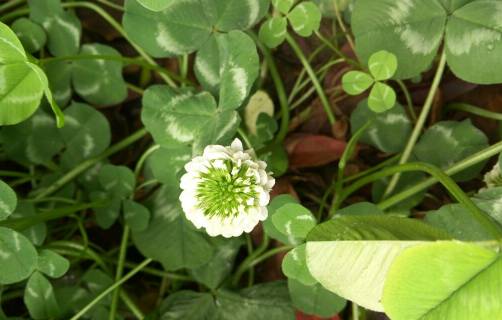
Clover growing methods and precautions
Clover growing methods
Soil
Clover seeds are relatively small, so their emergence force is weak, and the seedlings are rather slender, so their growth during the seedling stage is relatively slow. Therefore, before sowing, the soil must be well prepared: lightly turn the soil and remove debris from it so that the clods become fine and crumbly. At this point the soil also becomes loose and favorable for sowing.
Sowing and seed treatment
The best sowing times for clover are spring and autumn. The suitable sowing temperature should be 19-24°C. When the spring temperature stabilizes above 15°C, sowing can be carried out, and autumn sowing can be done in mid-to-late September. Before sowing, the seeds should be soaked. The sowing depth is 1-2 cm; if it is too deep, it may make emergence difficult.
Post-sowing management
After clover is sown and before emergence, if the soil is compacted, timely loosening should be done to help emergence. Because clover grows relatively slowly during the seedling stage, it is highly susceptible to weed infestation. During the seedling stage, the soil should be loosened and weeds removed 1-2 times. In addition, pest and disease control for clover should be done well to ensure that clover can grow smoothly. When the soil is relatively dry, moisture retention should be done well; keeping the soil moist is more conducive to clover growth.
Fertilizing
Clover belongs to the legume family, so it has nitrogen-fixing ability. However, during its seedling stage, a small amount of nitrogen fertilizer still needs to be supplemented to strengthen the seedlings; otherwise, the plants will be short and the leaves will turn yellow. After the seedlings are strong, a set amount of phosphorus and potassium fertilizer can also be applied.
Precautions for growing clover
Pests and diseases
Clover is quite prone to pests and diseases. Sclerotinia rot and viral infections are the main diseases of clover. If clover becomes diseased, first, we can pull out the affected plants to cut off the source of the disease, and second, chemical agents can be used. Common pests include leafhoppers, cutworms, white butterflies, and others. These pests need to be eliminated using specialized insecticides or pesticides.
How to grow white clover
For potting soil, loose, fertile sandy loam should be chosen. Every year in early spring, before moving the plants outdoors in April, repotting should be carried out. When repotting white clover, 3 things should be done: first, replace with new growing medium; second, cut away some of the overly dense, curled fibrous roots; third, apply sufficient base fertilizer, with a little phosphate fertilizer added at the bottom of the pot. In order to maintain a beautiful tree shape and a large number of flowers, based on white clover's strong branching and sprouting ability, pruning and shaping can be done around early spring before and after the plants are moved out. For each branch, except for leaving 2-3 buds at the base, the upper part is all cut off. Pruning can promote new branches, making growth more vigorous and the plant shape more attractive. After pruning, because the aboveground part consumes less, water and fertilizer should be appropriately restricted.
White clover is a sun-loving tree species. In early May, it should be moved outdoors to a spot with ample sunlight. This is also the growing season for white clover, so management work such as fertilizing, watering, loosening the soil, and weeding should be strengthened. Apply a dilute liquid fertilizer once every 7-10 days. Watering should depend on whether the potting soil is dry or wet; being too dry or too wet will both affect flowering.
If light is insufficient, flower buds tend to drop and flowers become smaller. Daily sunlight must not be less than 8 hours. White clover has a relatively high fertilizer demand, and during cultivation, light should be supplemented in a timely manner. For potted hibiscus, it is generally moved out in April. Before moving out, repot it and carry out appropriate shaping and pruning to maintain a beautiful crown. During the growing season, watering should be sufficient; it must not lack water, nor should it become waterlogged. Usually water once a day, and during the dog days of summer, water once each in the morning and evening. Sprinkle water on the ground frequently to increase humidity and lower temperature, preventing tender leaves from scorching and flowers from dropping early. After the weather turns cool at the end of October, move it into a greenhouse, keeping the temperature above 12°C. Management after autumn should be cautious, and attention should be paid to applying less fertilizer later to avoid producing autumn shoots. Autumn shoot tissue is tender and has weak cold resistance, and will suffer frost damage in cold weather.
White clover is not tolerant of frost. After Frost's Descent and before the Start of Winter, it must be moved indoors to keep warm. The overwintering temperature should be no lower than 5°C to avoid frost damage, and no higher than 15°C to avoid affecting dormancy. Poor dormancy will lead to weak growth and flowering the following year. As long as it is a south-facing room with good insulation conditions, it can overwinter there. When the weather is relatively cold, paper or plastic film can be used to cover it for warmth. When first moved indoors, windows should be opened for ventilation during the day every day, and attention should be paid to changes in whether the potting soil is dry or wet, with appropriate watering. On the coldest days, watering helps prevent frost damage, but fertilizing should be stopped.