Detailed Explanation of Propagation Methods and Techniques for the Chinese Chestnut (Sterculia monosperma)
Seed propagation
This is one of the simplest propagation methods, but it requires a certain amount of time to mature.
First, wait for the Chinese chestnut (Sterculia monosperma) to mature, then remove it; take care with seed storage, and before sowing, do not expose the seeds to the sun, keep them moist, prepare the soil first, then harvest, and finally scatter the seeds into the soil.
Cutting propagation
Cutting propagation is a very commonly used propagation method, with simple steps, a high survival rate, and a short time required to mature, so most plants are propagated by cuttings. The cutting method for the Chinese chestnut (Sterculia monosperma) is no different from that for other plants, and you can take cuttings yourself according to the situation.
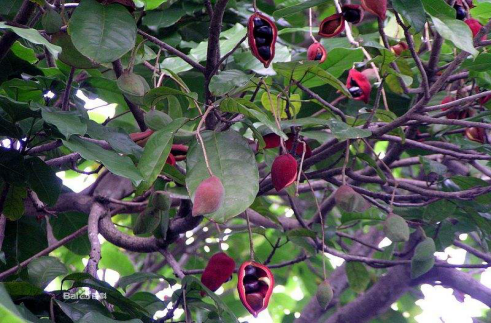
The above are the cultivation methods for the Chinese chestnut (Sterculia monosperma). I hope they are helpful to you, and thank you for reading!
Propagation methods for the Chinese chestnut (Sterculia monosperma)
There are many propagation methods for the Chinese chestnut (Sterculia monosperma). We will now focus on introducing cutting propagation and seed propagation and seedling raising.
Cutting propagation
The branches of the Chinese chestnut (Sterculia monosperma) root easily, so many branches can survive as cuttings, and cutting propagation has also become an important method in the propagation of the Chinese chestnut (Sterculia monosperma). In spring and autumn, place the cuttings in a seedbed. To improve the survival rate, rooting hormones can also be used for treatment, and attention should also be paid to maintaining the soil temperature and humidity to meet the most suitable conditions for rooting.
Seed propagation and seedling raising
Seed propagation and seedling raising is also one of the commonly used propagation methods. Because when the pod matures and splits open, the seeds can be removed very conveniently, both the sand bed and the seeds must be carefully sterilized before sowing, and the sowing method is generally dibbling. After sowing, be sure to provide shade and keep moist, so that sprouting can be better and the germination rate will also be somewhat higher. In the spring of the following year, when the plants reach 20-40 cm, they can be transplanted, and attention should be paid to a suitable spacing between the seedlings.
From the introduction above, have you understood the propagation methods and effects and functions of the Chinese chestnut (Sterculia monosperma)? After shelling and drying in the sun, the kernels of the Chinese chestnut (Sterculia monosperma) can be eaten, and no special processing is needed. Not only do they have many effects, they are also convenient to eat.
Propagation methods for the false Chinese chestnut (Sterculia lanceolata) - Effects and functions of the false Chinese chestnut (Sterculia lanceolata)
Although the name "false Chinese chestnut" (Sterculia lanceolata) is a bit strange, its canopy is dense and its tree form is graceful, and both its ornamental effect and landscaping effect are good. So how is the false Chinese chestnut (Sterculia lanceolata) propagated? What effects and functions does it have? Let's learn about it together below.
I. Propagation methods for the false Chinese chestnut (Sterculia lanceolata)
1. Sowing: When the follicle matures and splits open, it can be picked together with the fruit, and the seeds can be peeled out. It should not be exposed to sunlight, must not be dehydrated, and should be sown immediately after collection. The sand bed should not be too wet, so as not to affect the germination rate. The seeds can be sterilized with thiophanate-methyl or sterilizing agents, and sown by dibbling. After sowing, pay attention to shading and keeping moist. Generally, germination can occur about 1 week after sowing, and in the spring of the following year the plants can reach 20-40 cm, and can be transplanted in March to April.
2. Cuttings: Because the branches of the Chinese chestnut (Sterculia monosperma) root easily, propagation mostly uses the cutting method, which is simple and easy to perform, and growth is rapid. In spring and autumn, cut semi-lignified branches of the current year, or lignified branches 2-3 years old, or even old branches, and all can survive as cuttings. Cut the cuttings to about 15 cm in length and insert them into the soil about 3 cm. As long as the humidity of the air and soil is maintained, roots can develop and they can survive after about 1 month.
3. Root-sucker seedlings: The root system of the Chinese chestnut (Sterculia monosperma) is relatively well developed and its regenerative ability is strong. The root system often exposed above the ground can sprout root-sucker seedlings, which can be dug up and planted, and this is also very simple and convenient. Air layering is also one of the propagation measures, characterized by forming plants relatively quickly and having more root suckers.
II. Effects and functions of the false Chinese chestnut (Sterculia lanceolata)
1. Medicinal effects: Both the roots and leaves of the false Chinese chestnut (Sterculia lanceolata) can be used as medicine. They are sweet in taste and warm in nature. Dispelling wind and invigorating blood, and relaxing muscles and invigorating blood, are its important effects after being used as medicine. It can usually be used to treat various adverse symptoms such as bruises, jaundice, and traumatic bleeding. In addition, the false Chinese chestnut (Sterculia lanceolata) can also be used to treat rheumatism pain in humans and can play a good analgesic role.
2. Ornamental effect: The trunk of the false Chinese chestnut (Sterculia lanceolata) is especially straight, and the canopy looks like a sphere from a distance, with dense branches and leaves and bright red fruit, giving it high ornamental value. It can absorb various toxic substances in the air and can play a role in greening the environment.
3. Economic effect: The false Chinese chestnut (Sterculia lanceolata) is a distinctive plant with high economic value. There are large amounts of fiber in the outer bark of the stems of this plant, which after extraction can be used as material for producing gunny sacks. In addition, these fibers can also be used for papermaking. The seeds are even a kind of edible food and also contain large amounts of oil, which can be used for oil pressing and used by humans. These are all important manifestations of the economic effects of the false Chinese chestnut (Sterculia lanceolata).
The above ispropagation methods for the false Chinese chestnut (Sterculia lanceolata)andeffects and functions of the false Chinese chestnut (Sterculia lanceolata)introduction. Friends who like the false Chinese chestnut (Sterculia lanceolata) should not miss it. I hope it is helpful to everyone.