A Detailed Guide to Making Cedar Bonsai, Easy for Beginners to Learn
When making a cedar bonsai, pay attention to pot selection, soil, and shaping. For making cedar, it is best to use a purple clay pottery pot or a glazed pottery pot. If the bonsai is relatively large, a deep round pot or a carved stone pot can be used, but wire must be used to secure the base of the roots to prevent loosening. The soil chosen should preferably be loose in texture and well-draining.
Precautions
When shaping, pay attention to pruning the tree form according to personal preference, remove unnecessary branches, and maintain a good tree shape. Small decorations can also be placed in the pot to make the bonsai even more beautiful.
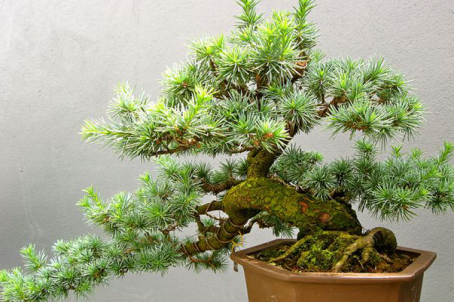
After reading this article, do you know how to grow a cedar bonsai? It seems that this kind of plant, which looks majestic and upright, also needs careful tending!
Cedar Bonsai Growing Methods and Cedar Bonsai Making Methods
Cedar, also known as Himalayan cedar, is an evergreen tree. Its crown is spire-shaped and it has high ornamental value, so many people grow cedar bonsai. Below, we will introduce the cedar bonsai growing methods and cedar bonsai making methods.
Cedar Bonsai Growing Methods
1. Water and Fertilizer
Cedar has a certain drought resistance and is afraid of waterlogging, so it is enough to keep the soil in the pot moist. Observe the pot soil frequently. If it is dry, water it thoroughly, but do not let water accumulate in the pot (so it is best to use one with holes in the bottom and cushion it with crushed stones). Drain promptly after rain (especially in summer rainstorms and autumn plum rain periods; the potted plant can be moved indoors to a bright spot). If it cannot be handled in time, it may cause cedar root rot.
For fertilizing cedar, it is best to use fermented and decomposed human manure fertilizer and cake fertilizer. For pot cultivation, cake fertilizer is mainly used. The fertilizing time is best controlled to April-May, and note that the fertilizer solution should not be too concentrated. It can be applied in 2-3 separate applications.
2. Repotting
It is best to repot once every 2-3 years, preferably before budding in spring in March-April. When repotting, replace half with fresh loose and fertile soil and cut off rotten roots. After repotting, place it in a shaded place for half a month first, then return to normal care.
3. Pruning
During management, cedar needs attention to shaping and changing the leader. If cedar has heavy branches, the leader will be damaged or weakened, so strong side branches must be pulled up and tied well to later become the central dominant one. This process is changing the leader.
The pruning method mainly involves combing out excessively dense branches and leggy branches, and cutting off dead branches and diseased or pest-infested branches. The tree shape is mainly based on personal preference. To prevent the cedar from growing too tall, the terminal bud needs to be removed to eliminate apical dominance, so that the cedar can sprout more side branches.
Cedar Bonsai Making Methods
1. Pot Selection
For cedar, purple clay pottery pots are suitable, and glazed pottery pots can also be used. For large bonsai, deep round pots can be used, and various carved stone pots can also be used, but wire must be used to secure the base of the roots. For medium bonsai, crabapple-shaped and trough-shaped pots are suitable. For small seedlings planted together in a forest style, shallow carved stone pots such as white alum stone or marble can be used.
2. Soil
For cedar, loose-textured, well-draining, slightly acidic sandy loam can be used. For pot cultivation, aged garden soil or leaf mold mixed with sand is commonly used.
3. Planting
Spring in March-April is preferable, and after autumn is also acceptable. Cedar seedlings dug from the ground must retain the original soil to help survival. Also thin out and cut dead roots, spread out the fibrous roots, cover with fine soil, gently shake the pot, and press firm with a bamboo stick so that the pot soil and root system are firmly attached. For the planting position, it is best for the trunk to lean to one side at the 1B3 position.
4. Shaping
The shaping and styling of cedar bonsai is mainly based on training and binding, supplemented by pruning. Training and binding are best in winter and spring, and palm fiber is often used for binding. The cedar trunk stands upright and the side branches spread horizontally, so the side branches are often bent into an S shape. The trunk is generally not bent, naturally growing upward into a large tree form, with an extremely simple and beautiful posture. You can also take 5-7 current-year seedlings and plant them together in a forest style with varied heights, with swaying branches and leaves, giving a distinctive charm.
5. Tree Form
The cedar tree body is tall and upright, with side branches spreading horizontally and drooping. When making bonsai, its natural form must be used. For the tree shape, upright trunk style, double trunk style, slanting trunk style, and forest style are good. Through binding and pruning, the branches and leaves can be made into layered or cloud-like forms. After years of care, it can become a fine bonsai with both strength and softness and an elegant posture.
The above is the relevant knowledge about cedar bonsai introduced to everyone. We hope it can help you. For more home knowledge, please stay tuned.
Cedar Bonsai Making Methods
Pot Selection
For cedar, purple clay pottery pots are suitable, and glazed pottery pots can also be used. For large bonsai, deep round pots can be used, and various carved stone pots can also be used, but wire must be used to secure the base of the roots. For medium bonsai, crabapple-shaped and trough-shaped pots are suitable. For small seedlings planted together in a forest style, shallow carved stone pots such as white alum stone or marble can be used.
Soil
For cedar, loose-textured, well-draining, slightly acidic sandy loam can be used. For pot cultivation, aged garden soil or leaf mold mixed with sand is commonly used.
Planting
Spring in March-April is preferable, and after autumn is also acceptable. Cedar seedlings dug from the ground must retain the original soil to help survival. Also thin out and cut dead roots, spread out the fibrous roots, cover with fine soil, gently shake the pot, and press firm with a bamboo stick so that the pot soil and root system are firmly attached. For the planting position, it is best for the trunk to lean to one side at the 1B3 position.
Shaping
The shaping and styling of cedar bonsai is mainly based on training and binding, supplemented by pruning. Training and binding are best in winter and spring, and palm fiber is often used for binding. The cedar trunk stands upright and the side branches spread horizontally, so the side branches are often bent into an S shape. The trunk is generally not bent, naturally growing upward into a large tree form, with an extremely simple and beautiful posture. You can also take 5-7 current-year seedlings and plant them together in a forest style with varied heights, with swaying branches and leaves, giving a distinctive charm.
Tree Form
The cedar tree body is tall and upright, with side branches spreading horizontally and drooping. When making bonsai, its natural form must be used. For the tree shape, upright trunk style, double trunk style, slanting trunk style, and forest style are good. Through binding and pruning, the branches and leaves can be made into layered or cloud-like forms. After years of care, it can become a fine bonsai with both strength and softness and an elegant posture.