Causes of and Solutions for Yellowing Leaves on Dwarf Gardenia
1. Iron and magnesium deficiency.
When plants grow, some essential trace elements cannot be lacking; once deficient, leaves lose their green color and turn yellow.
To identify yellowing leaves on dwarf gardenia, observe carefully: if the yellow spreads from the leaf margin toward the veins, and in severe cases the veins also lose their green and the leaves dry out and turn yellow, that indicates yellowing caused by iron deficiency.
If the yellowing of dwarf gardenia leaves shows the old leaves at the lower part of the branches losing green and turning yellow, while the upper leaves remain green, that is caused by magnesium deficiency.
Solution: Know what is deficient and supplement accordingly. If it is iron deficiency, water once every ten days with ferrous sulfate water or black vitriol water diluted 500 times. If it is magnesium deficiency, spray a 1% to 2% magnesium sulfate solution on the leaves once every ten days; after the yellowing lessens, reduce the amount and lengthen the interval before using it again, because too much magnesium hinders the development of the xylem of roots and stems.
2. Over-fertilization.
If too much fertilizer is applied during cultivation, it can also make leaves turn yellow. The sign is that the veins turn yellow first, then it slowly spreads to the whole leaf.
Solution: Flush the roots with a large amount of water or repot and change the soil to reduce the fertilizer content in the potting soil.
3. Over-watering.
Friends raising dwarf gardenia for the first time will encounter this situation: because they are unfamiliar with care knowledge, they usually cause yellowing leaves through over-watering. The sign is yellow margins on old leaves with green veins.
Solution: Reduce watering, remove the yellowed old leaves, and wait for new leaves to grow.
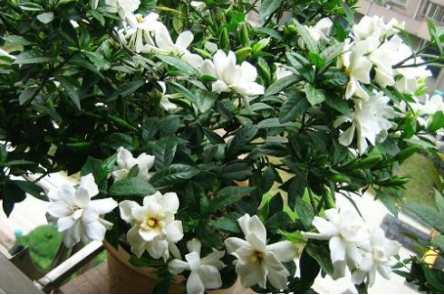
What causes gardenia leaves to turn yellow_What to do when gardenia leaves turn yellow?
Gardenia is a very common flowering plant in people's lives. What attracts people most is the fragrance released when its flowers are in full bloom, which is also why many people very much like to grow gardenia. However, problems always arise during the process of growing gardenia, such as gardenia leaves turning yellow, whether the gardenia fragrance is toxic, and so on. Today let us take a look at what causes gardenia leaves to turn yellow, and what to do when gardenia leaves turn yellow.
[Introduction to Gardenia]
Gardenia is also called zhizi, jade lotus flower, white toad flower, huangqi, and so on. It is a perennial evergreen shrub plant belonging to the order Gentianales and the family Rubiaceae. Gardenia is mainly distributed in Sichuan, Jiangxi, Jiangsu, Anhui, Zhejiang, Hunan, Taiwan, China, Yunnan, Fujian, Guangdong, and other places. Its branches and leaves are very lush, and its leaves remain green all year round. When the flowers bloom they give off a captivating fragrance, and it is called an important garden ornamental plant. Gardenia is not only ornamental for its flowers; its fruit, leaves, and roots all have very good medicinal value, with effects such as removing toxins and cooling blood, clearing heat and promoting urination, and reducing fire and relieving irritability.
[Growth Habits of Gardenia]
Gardenia likes to grow in a sunny, warm, and humid environment that is fairly sun-facing. It has fairly good cold tolerance and tolerates semi-shade fairly well, but fears waterlogging. It is suitable for growing in loose, fertile, well-aerated acidic sandy soil. During cultivation, avoid direct strong light; it is suitable for growing in a fairly sheltered environment. The suitable growing temperature for gardenia is 16°C, and in winter the temperature must not drop below 0°C, otherwise it will enter a dormant state. In regions such as Northeast China, Northwest China, and North China, it is suitable as a potted flowering plant, and it is a very typical acid-loving flowering plant.
[What Causes Gardenia Leaves to Turn Yellow]
1. Improper watering: Gardenia fears waterlogging. During cultivation, too much watering makes the young leaves dull and lusterless, the leaves turn yellow-green, and new leaves do not grow.
2. Improper light: Under relatively strong light, gardenia leaves develop yellow spots, and the leaves also turn yellow. If gardenia is placed in a shaded place for a long time, it does not get sufficient light, and the leaves also turn yellow or drop off; it needs timely photosynthesis.
3. Improper fertilization: When growing gardenia, fertilizer that is too concentrated or too strong can also cause plant leaves to turn yellow. Generally, the tips of new leaves turn brown; although the leaves are fairly thick, they have no luster and cannot fully spread out, while old leaves turn scorched yellow and droop. Insufficient fertilizer can also cause gardenia leaves to turn yellow or drop off. When gardenia lacks nitrogen, the leaves turn yellow, and new leaves grow very small and are fairly brittle. When it lacks potassium, old leaves turn brown, which affects ornamental value. When it lacks iron, the leaves slowly turn pale yellow, then yellow or white, and finally slowly wither. When it lacks magnesium, old leaves turn yellow first, then new leaves also turn yellow, and finally the leaves completely wither and drop. When it lacks phosphorus, old leaves turn purplish red or dark red.
4. Unsuitable temperature: Temperatures that are too low can cause leaves to turn yellow. In winter, preparations for protection must be made, and in early spring or early winter, keep it warm.
[What to Do When Gardenia Leaves Turn Yellow]
1. If yellowing leaves are caused by too much watering, you can put the plant in a ventilated place to dry and then place it back in the pot. The yellowed and withered plants will naturally drop off, and new leaves will grow fairly normally; water sufficiently.
2. If yellowing leaves are caused by too strong light, you can place the gardenia in a fairly sheltered place. If it is a case of insufficient light, give it sufficient light.
3. If the fertilizer concentration is too high, you can reduce the concentration of fertilizer in the soil. In cases of iron deficiency, ferrous sulfate can be sprayed; in cases of magnesium deficiency, boron-magnesium fertilizer can be sprayed.
4. In winter, the growing temperature for gardenia must not drop below 0°C, otherwise the plant will enter a dormant state or freeze to death; make preparations against freezing.
More related information: what pink roses represent how to grow mosquito-repellent geranium magnolia flower meaning how to grow wintersweet cultivation of canna
Analysis of Causes of Gardenia Leaves Turning Yellow and Treatment Methods for Gardenia Leaves Turning Yellow
The article carefully selected and shared by our editors about what to do when gardenia leaves turn yellow and treatment methods for gardenia leaves turning yellow lets you learn more floral knowledge. Take a look!
Analysis of Causes of Gardenia Leaves Turning Yellow:
1. Improper water: During the planting process, gardenia should not be watered too much. Water accumulation in the pot or overly wet potting soil will make young leaves dull and lusterless and slow-growing, while old leaves become yellow-green and gradually wither.
2. Improper light: Too much or too little light both cause plant leaves to turn yellow. With long periods of direct strong light, yellow spots appear on the leaf surface, but if placed in a shaded environment for a long time, the leaves drop because they cannot get enough sunlight; supplement light in time.
3. Improper fertilization: During the gardenia planting process, a high fertilizer concentration causes the plant to turn yellow. The leaf tips of new leaves appear yellow-brown, the leaf surface is uneven and lusterless, and old leaves gradually wither and drop. At this time, fertilizer needs to be supplemented in time, but before that, judge from the plant's symptoms which fertilizers should be supplemented.
4. Too low temperature: Gardenia can tolerate low temperatures, but temperatures that are too low can cause leaf yellowing. During gardenia care, it is easily frostbitten in winter. If no warmth measures are taken on early spring and early winter nights, the plant is easily frostbitten.
Treatment Methods for Gardenia Leaves Turning Yellow:
1. Slowly adapt to the environment: Gardenia just bought back from the market has mostly been taken out of a greenhouse and needs a period of adaptation when moved to a new environment. If the environmental difference is too great, it causes yellow leaves; this is an uncontrollable factor. Therefore, if leaves turn yellow, observe for a period first and care for it well during this time.
2. Water more: Gardenia likes water, likes the warm south wind, and likes a humid environment, but in the north the weather is dry and the air humidity is insufficient, all of which cause plant leaves to turn yellow. Whether in the south or the north, the best method is to place the plant in a large tray, fill the tray with water, and be sure to sprinkle water on the leaf surface every day so the leaves absorb water and become plump and glossy.
3. Acidic water is more suitable: Gardenia likes acidic soil, while the tap water at home is alkaline or neutral, so when watering, often add some acidic substances, such as edible vinegar or citric acid.
4. Open windows for ventilation: Gardenia grown indoors needs frequent ventilation. Ensure the environment is bright with light, and place the plant near a window for care.
5. Fertilize reasonably: For the various signs of fertilizer deficiency in gardenia, supplement fertilizer appropriately according to the plant's growth state to ensure a balance of every nutrient. If too much fertilizer is applied, immediately water to flush it out, or repot and change the soil.
6. Prune yellow leaves: Gardenia has woody stems. When yellow leaves appear, directly cut off the yellowed branches, which can ensure normal growth of the main trunk. With careful care, new leaves will grow before long.
The above is the related introduction in this article. I believe after reading it you also have a simple understanding of this. If needed, you can continue to follow Yihao Home Network to learn more information.