Blueberry Propagation Methods and Key Technical Points
Cuttings are the main propagation method for blueberries. When taking cuttings, the following points should be noted:
1. Selection of cuttings
Take cuttings before spring bud break, and it is suitable to choose 1-2 year old branches that are vigorous and free of pests and diseases. When taking cuttings, try to choose the middle and lower parts of the branch. The cutting length is about 30 cm.
2. Cutting medium
A mixture of rotten moss, peat, and river sand can be used, but do not add base fertilizer. Before cutting, the substrate needs to be watered thoroughly but not waterlogged. The cutting container should be slightly deeper.
3. Cutting
Use a sharp blade to cut the end of the cutting at an angle, then insert it vertically into the medium, leaving only one terminal bud exposed, and then spray water once. The spacing between cuttings should generally not be less than 5 cm, because too dense cuttings can easily lead to poor seedling development after rooting.
4. Management after cutting
1. Water management
After cutting, keep the soil moist frequently, but also be careful to avoid waterlogging, otherwise it will cause blueberry root rot. May to June is the key period for water management. At this time, although the leaves have already unfolded, the cuttings have not yet rooted, and insufficient water can easily cause the cuttings to die.
2. Fertilizer management
Do not fertilize before the cuttings root. After rooting, fertilizer can be applied to promote plant growth. Fertilizer should be applied in liquid form once a week, and water should be sprayed promptly after fertilizing to wash off residual fertilizer on the leaf surface and avoid damaging the leaves.
After reading the editor's introduction, do you also want to grow a pot of blueberry bonsai at home? Then go and try it!
How do blueberries propagate? Blueberry cutting propagation methods and key post-cutting management points
Blueberries can be said to be one of the fruits with the greatest development potential, attracting many farmers to grow them. However, to successfully grow blueberries, doing a good job in blueberry propagation can be said to be the foundation of foundations. In fact, there are many propagation methods for blueberries, including cuttings, division, and sowing. However, in blueberry cultivation in our country at present, the cutting propagation method is usually adopted. So, how do blueberries propagate? The blueberry cutting propagation methods and key post-cutting management points are introduced below.
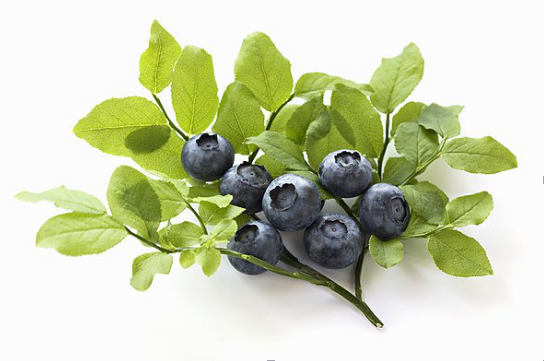
Image: Blueberry
1. Seedbed preparation for blueberries
1. Substrate selection:River sand, sawdust, peat, rotten moss, etc. can all be used as cutting substrates, but if river sand and sawdust are used as cutting substrates, they need to be transplanted after rooting, which is relatively labor-intensive and affects seedling development. The relatively ideal cutting substrate is a mixed substrate of rotten moss and peat with river sand (1:1).
2. Seedbed selection:Cuttings can be taken directly in the field. The cutting substrate is spread into a bed 1 m wide and 25 cm thick, and the length depends on need. However, because air temperature and ground temperature are low with this method, the rooting rate is relatively low. The most widely used and relatively inexpensive option is a wooden raised bed structure, made with wooden boards into a wooden box about 2 m long, 1 m wide, and 40 cm high, with a hard board nailed to the bottom of the wooden box with 0.3-0.5 cm mesh openings. The wooden box is raised off the ground with round logs. This method can effectively increase substrate temperature and improve the rooting rate.
Image: Blueberry
2. Blueberry cutting methods
1. Cutting selection:Cuttings should be cut from trees that are vigorous and free of pests and diseases. It is suitable to choose branches with greater hardness, good maturity, and health. Try to avoid selecting excessive vegetative shoots, branches with large pith, and branches that suffered freeze damage in winter. If viral diseases occur in the orchard, the tree from which cuttings are taken should be at least 15 cm away from diseased trees. The cuttings are best taken from 1-year-old vegetative branches. If there are not enough cuttings, 1-year-old flower bud branches can be selected, and the flower buds should be removed when taking cuttings. However, the rooting rate of flower bud branches is often relatively low, and the root quality is poor. The position of the cutting on the branch also has a very significant effect on the rooting rate. For cuttings taken from the base of the branch, whether vegetative branches or flower bud branches, the rooting rate is significantly higher than that of cuttings taken from the upper part of the branch. Therefore, try to choose the middle and lower parts of the branch for cuttings.
2. Cutting time:When the number of seedlings to be raised is small, take cuttings before spring bud break (generally March to April), and insert them immediately after cutting, which can save the need for cutting storage. However, when raising seedlings in large quantities, cuttings need to be taken in advance. Generally, branch bud break requires 800-1000 hours of chilling, so the cutting time should ensure that the branches have already accumulated sufficient chilling. Generally speaking, February is more suitable.
Image: Blueberry
3. Preparing the cuttings:The tool for preparing cuttings must be sharp, and the cuts should be smooth. The length of the cuttings is generally 8-10 cm. The upper cut is a flat cut, and the lower cut is a slanted cut. The lower cut should be located exactly below a bud, which can improve the rooting rate. After cutting, tie every 50-100 cuttings into a bundle and temporarily bury them in wet river sand, etc.
4. Cutting method:After everything is ready, water the substrate thoroughly to ensure moisture but not waterlogging, then insert the cuttings vertically into the substrate, leaving only one terminal bud exposed, with spacing at 5×5 cm. Do not plant cuttings too densely. Too dense planting first causes poor seedling development after rooting, and second easily causes bacterial infection, causing the cuttings or seedlings to rot. When taking hardwood cuttings of highbush blueberries, rooting agents are generally not needed. Many rooting agents have little or no effect on rooting of hardwood cuttings.
Image: Blueberry
3. Post-cutting management for blueberries
1. Water management:After cutting, water frequently to maintain soil moisture, but avoid overwatering or underwatering. If left in the sun for too long and the water temperature is high, wait for the water to cool before watering to avoid injuring the seedlings. The most critical period for water management is from early May to late June. At this time, the leaves have already unfolded, but the cuttings have not yet rooted, and insufficient water can easily cause the cuttings to die. When the terminal leaves begin to turn green, it indicates that the cuttings have begun to root.
2. Fertilizer management:Do not apply any fertilizer to the substrate before cutting, and do not fertilize after cutting before rooting. After the cuttings root, begin applying fertilizer to promote seedling growth. Fertilizer should be applied in liquid form, using a complete fertilizer of 13-26-13 or 15-30-4, at a concentration of about 3%, once a week. After each fertilization, spray water to wash off the fertilizer on the leaf surface to avoid damaging the leaves.
Image: Blueberry
3. Transplanting method:Rooted seedlings generally overwinter in the seedbed, or they can be transplanted for cultivation in September. If rooted seedlings overwinter in the seedbed, soil should be mounded on both sides of the seedbed before winter.
4. Pest and disease management:During the rooting and seedling period, ventilation and removal of diseased plants are mainly used to control diseases. For seedling raising in greenhouses or plastic houses, ventilate promptly to reduce fungal diseases and lower temperature.
[Editor's concluding remarks]Cutting propagation has the characteristics of being simple and easy to do, convenient to manage, and fast growing, and is one of the most important propagation methods in blueberry cultivation and production. The above introduced the blueberry cutting propagation methods and key post-cutting management points for everyone. Have you all learned them?
Blueberry cutting propagation methods and key seedling-stage management points
There are many propagation methods for blueberries, such as cuttings, seedlings from seed, and division. At present, blueberry cultivation in our country mainly relies on cutting propagation in production. Other methods such as seed seedling raising, rhizome cuttings, and division are also used. Propagation methods vary by species. Highbush blueberries mainly use hardwood cuttings, rabbiteye blueberries use softwood cuttings, and lowbush blueberries can use either softwood cuttings or hardwood cuttings. Hardwood cuttings are mainly applied to highbush blueberries, but rooting difficulty varies by cultivar. For example, Blue Line, Rubel, and Jersey root easily from hardwood cuttings, while Bluecrop is difficult to root.
Seedbed preparation for blueberries
1. Substrate selection: River sand, sawdust, peat, rotten moss, etc. can all be used as cutting substrates, but if river sand and sawdust are used as cutting substrates, they need to be transplanted after rooting, which is relatively labor-intensive and affects seedling development. The relatively ideal cutting substrate is a mixed substrate of rotten moss and peat with river sand (1:1).
2. Seedbed selection: Cuttings can be taken directly in the field. The cutting substrate is spread into a bed 1 m wide and 25 cm thick, and the length depends on need. However, because air temperature and ground temperature are low with this method, the rooting rate is relatively low. The most widely used and relatively inexpensive option is a wooden raised bed structure, made with wooden boards into a wooden box about 2 m long, 1 m wide, and 40 cm high, with a hard board nailed to the bottom of the wooden box with 0.3-0.5 cm mesh openings. The wooden box is raised off the ground with round logs. This method can effectively increase substrate temperature and improve the rooting rate.
Blueberry cutting methods
1. Cutting selection: Cuttings should be cut from trees that are vigorous and free of pests and diseases. It is suitable to choose branches with greater hardness, good maturity, and health. Try to avoid selecting excessive vegetative shoots, branches with large pith, and branches that suffered freeze damage in winter. If viral diseases occur in the orchard, the tree from which cuttings are taken should be at least 15 cm away from diseased trees. The cuttings are best taken from 1-year-old vegetative branches. If there are not enough cuttings, 1-year-old flower bud branches can be selected, and the flower buds should be removed when taking cuttings. However, the rooting rate of flower bud branches is often relatively low, and the root quality is poor. The position of the cutting on the branch also has a very significant effect on the rooting rate. For cuttings taken from the base of the branch, whether vegetative branches or flower bud branches, the rooting rate is significantly higher than that of cuttings taken from the upper part of the branch. Therefore, try to choose the middle and lower parts of the branch for cuttings.
2. Cutting time: When the number of seedlings to be raised is small, take cuttings before spring bud break (generally March to April), and insert them immediately after cutting, which can save the need for cutting storage. However, when raising seedlings in large quantities, cuttings need to be taken in advance. Generally, branch bud break requires 800-1000 hours of chilling, so the cutting time should ensure that the branches have already accumulated sufficient chilling. Generally speaking, February is more suitable.
3. Preparing the cuttings: The tool for preparing cuttings must be sharp, and the cuts should be smooth. The length of the cuttings is generally 8-10 cm. The upper cut is a flat cut, and the lower cut is a slanted cut. The lower cut should be located exactly below a bud, which can improve the rooting rate. After cutting, tie every 50-100 cuttings into a bundle and temporarily bury them in wet river sand, etc.
4. Cutting method: After everything is ready, water the substrate thoroughly to ensure moisture but not waterlogging, then insert the cuttings vertically into the substrate, leaving only one terminal bud exposed, with spacing at 5×5 cm. Do not plant cuttings too densely. Too dense planting first causes poor seedling development after rooting, and second easily causes bacterial infection, causing the cuttings or seedlings to rot. When taking hardwood cuttings of highbush blueberries, rooting agents are generally not needed. Many rooting agents have little or no effect on rooting of hardwood cuttings.
Post-cutting management for blueberries
1. Water management: After cutting, water frequently to maintain soil moisture, but avoid overwatering or underwatering. If left in the sun for too long and the water temperature is high, wait for the water to cool before watering to avoid injuring the seedlings. The most critical period for water management is from early May to late June. At this time, the leaves have already unfolded, but the cuttings have not yet rooted, and insufficient water can easily cause the cuttings to die. When the terminal leaves begin to turn green, it indicates that the cuttings have begun to root.
2. Fertilizer management: Do not apply any fertilizer to the substrate before cutting, and do not fertilize after cutting before rooting. After the cuttings root, begin applying fertilizer to promote seedling growth. Fertilizer should be applied in liquid form, using a complete fertilizer of 13-26-13 or 15-30-4, at a concentration of about 3%, once a week. After each fertilization, spray water to wash off the fertilizer on the leaf surface to avoid damaging the leaves.
3. Transplanting method: Rooted seedlings generally overwinter in the seedbed, or they can be transplanted for cultivation in September. If rooted seedlings overwinter in the seedbed, soil should be mounded on both sides of the seedbed before winter.
4. Pest and disease management: During the rooting and seedling period, ventilation and removal of diseased plants are mainly used to control diseases. For seedling raising in greenhouses or plastic houses, ventilate promptly to reduce fungal diseases and lower temperature.