Torch lily flowering period care and management methods and key technical points
The flowering of the torch lily is actually linked to its overall growth. First of all, when growing the torch lily, you need to meet its water and nutrient needs, apply sufficient base fertilizer and topdress promptly during the growing period, and water in moderation to keep the potting soil moist. Only when the torch lily's nutrient needs are met will it grow well and bloom normally.
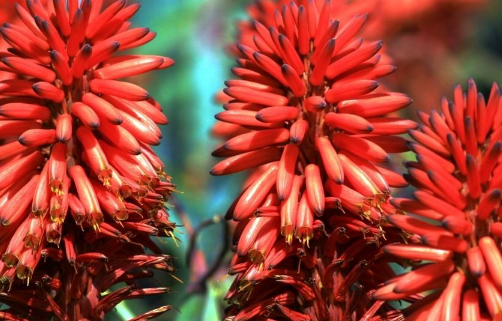
When the torch lily's flower scape begins to appear, you can apply monopotassium phosphate once or twice for foliar topdressing, generally at an interval of 7-10 days. Alternatively, use superphosphate for topdressing. Using these phosphorus and potassium fertilizers can make the torch lily's flowers more brilliant and the flower quantity larger.
Before the torch lily blooms, you need to increase watering to meet the needs of flowering. After the flowers fade, stop watering.
Note that during the torch lily's flowering period, it may suffer from some pests and diseases, such as damage from beetles and other pests eating it, so pesticides need to be sprayed promptly for control.
After reading this, aren't you curious about the torch lily's flowers? Then go buy a pot right away, it is very easy to grow! Once the flowering period arrives, you will be able to see the torch lily's flowers.
How to care for the torch lily during its flowering period
When does the torch lily bloom
Generally, the torch lily blooms from late May to mid-June. However, if sown in the previous year and transplanted in April-June of the following year, it can bloom in September-October.
When the torch lily blooms, the entire inflorescence bears hundreds of small flowers, looking like a large torch.
Torch lily flowering period care and management
The flowering of the torch lily is actually linked to its overall growth. First of all, when growing the torch lily
, you need to meet its water and nutrient needs, apply sufficient base fertilizer and topdress promptly during the growing period, and water in moderation to keep the potting soil moist. Only when the torch lily's nutrient needs are met will it grow well and bloom normally.
When the torch lily's flower scape begins to appear, you can apply monopotassium phosphate once or twice for foliar topdressing, generally at an interval of 7-10 days. Alternatively, use superphosphate for topdressing. Using these phosphorus and potassium fertilizers can make the torch lily's flowers more brilliant and the flower quantity larger.
Before the torch lily blooms, you need to increase watering to meet the needs of flowering. After the flowers fade, stop watering.
Note that during the torch lily's flowering period, it may suffer from some pests and diseases, such as damage from beetles and other pests eating it, so pesticides need to be sprayed promptly for control.
How to care for the torch lily during its flowering period, and the four-season care methods for the torch lily
Introduction from Flower Bonsai Network: Today the Flower Bonsai Network editors share with you an article on what to do when gardenia leaves turn yellow, buds drop, and it does not bloom. Let's take a look.
Torch lily, also known as red-hot poker and torch lily, Latin name: Kniphofia uvaria, a perennial herbaceous plant in the Liliaceae family, Kniphofia genus. It likes warmth and is suitable for growing in loose, fertile sandy loam. It can be planted in clumps on lawns or beside rockery stones as a landscape accent. It often appears in some poems, symbolizing grand and passionate scenes!
The torch lily's flowering is quite eye-catching, but this depends on proper care during the flowering period. So, when is the torch lily's flowering period, and how should it be cared for during that period?
When does the torch lily bloom
Generally, the torch lily blooms from late May to mid-June. However, if sown in the previous year and transplanted in April-June of the following year, it can bloom in September-October.
When the torch lily blooms, the entire inflorescence bears hundreds of small flowers, looking like a large torch.
Torch lily flowering period care and management
The flowering of the torch lily is actually linked to its overall growth. First of all, when growing the torch lily
, you need to meet its water and nutrient needs, apply sufficient base fertilizer and topdress promptly during the growing period, and water in moderation to keep the potting soil moist. Only when the torch lily's nutrient needs are met will it grow well and bloom normally.
When the torch lily's flower scape begins to appear, you can apply monopotassium phosphate once or twice for foliar topdressing, generally at an interval of 7-10 days. Alternatively, use superphosphate for topdressing. Using these phosphorus and potassium fertilizers can make the torch lily's flowers more brilliant and the flower quantity larger.
Before the torch lily blooms, you need to increase watering to meet the needs of flowering. After the flowers fade, stop watering.
Note that during the torch lily's flowering period, it may suffer from some pests and diseases, such as damage from beetles and other pests eating it, so pesticides need to be sprayed promptly for control.
Four-season care methods for the torch lily
The torch lily likes a warm environment full of light and requires moisture. So when growing the torch lily, how should it be cared for throughout the four seasons?
Key points for summer care of the torch lily
In summer, the torch lily needs a sufficient supply of water and timely topdressing. When both water and nutrient conditions can be met, the torch lily will grow rapidly. At this time, give the torch lily sufficient light and keep the temperature between 25°C-28°C, and it can bloom after a few months. Note that when the flower stem begins to grow, topdress promptly.
Key points for autumn care of the torch lily
In autumn, the torch lily can be propagated by division. The time for division is generally from late September to early October. When dividing, base fertilizer should first be applied to supplement the plant's nutrients.
Note that after growing the torch lily for a period of time, the plant's root system will reduce its ability to absorb nutrients, so division is needed, generally once every 2-3 years.
Key points for winter care of the torch lily
For the torch lily to overwinter, the first thing to consider is nutrient accumulation. Generally speaking, with more nutrient accumulation, overwintering is easier. Therefore, after the torch lily blooms, the spent flowers need to be cut off promptly so that the plant will not set seed, reducing nutrient consumption.
Second, water thoroughly. Watering thoroughly at this time can meet the torch lily's overwintering needs.
It is best to cover it with cold protection material so it can overwinter safely, generally dry grass or fallen leaves. Note that in early spring the cold protection material should be removed, but not too early, to avoid a late spring cold snap that could freeze the plant.
Cultivation methods and management
Torch lilies are mostly grown in open ground, but can also be potted. The planting site should be chosen in a high, dry, wind-sheltered, sunny spot with humus-rich clay loam. Before planting, apply more decomposed organic fertilizer, add phosphorus and potassium fertilizer, and then deeply plow the soil. Plant when the seedlings are about 10 cm tall, with a plant-to-row spacing of 30 cm x 40 cm. After planting, water thoroughly twice, then cultivate, loosen the soil, and firm the seedlings to encourage new root growth.
In summer, provide sufficient water and topdressing, and it will grow rapidly. Under conditions of 25-28°C and sufficient sunlight, it can send up spikes and bloom in about 5 months. When the flower stem appears, apply foliar topdressing of monopotassium phosphate 2-3 times, with an interval of 7-10 days each time, at a concentration of 0.1%; or use 1%-2% superphosphate as a soil topdressing once, which can increase the stiffness of the flower stem and prevent bending. In autumn, before division and replanting, apply more base fertilizer to supplement the plant's internal nutrient deficiencies.
The torch lily's overwintering ability is closely related to its internal nutrient accumulation. After flowering, the spent flower stems should be cut off as early as possible so they do not set seed, to avoid consuming nutrients. In dry winter and spring areas, water thoroughly before the ground freezes, and cover the plant with dry grass or fallen leaves to prevent death from drying or freezing. In early spring, remove the cold protection cover late, and watch out for late spring cold snaps to prevent damage to the plant.
The torch lily is a shallow-rooted flower with a slightly fleshy root system and few root hairs. If planted for too long, the roots become densely clustered, the number of root hairs decreases, and absorption capacity declines. Therefore, it must be replanted once every 2-3 years to promote new root growth.
When transplanting seedlings, water thoroughly twice, cultivate and loosen the soil, and firm the seedlings to encourage new root growth, at 25-28
For ground planting, apply sufficient base fertilizer. Water promptly after planting. During the vigorous growth period in spring and summer, fertilize once a month. Before flowering, water thoroughly and keep the soil moist. After flowering, watering can be reduced. After the first frost, the tips of the old leaves turn red or wither, but the plant remains evergreen. In winter, cover the ground with dry grass or fertile soil to prevent frost damage.
Sow seeds in a greenhouse in January for seedling cultivation, plant out in the open field in April, and bloom in July-August in summer. Before planting, apply an appropriate amount of base fertilizer. After transplanting seedlings or dividing, water thoroughly 2-3 times, weed promptly, and keep the soil moist. When the flower scape appears, apply 0.1% monopotassium phosphate foliar topdressing 2-3 times, with an interval of 7-10 days, or apply 1%-2% superphosphate once, to enhance the stiffness of the flower scape. Increase irrigation before the flowering period, and stop watering after the flowers fade. The torch lily has strong cold tolerance, and when grown in the open field it should be covered with grass for warmth to help it overwinter safely.
Before planting, apply an appropriate amount of base fertilizer and phosphorus and potassium fertilizer. After transplanting seedlings or dividing, water thoroughly 2-3 times, cultivate and weed promptly, and keep the soil moist. Growth resumes after about 2 weeks. When the flower scape appears, apply 0.1% monopotassium phosphate foliar topdressing 2-3 times, with an interval of 7-10 days each time, or apply 1%-2% superphosphate once, to enhance the stiffness of the flower scape and prevent bending. Increase irrigation before the flowering period, and stop watering after the flowers fade.
Potted management
Insufficient light
Madagascar periwinkle likes a warm, sunny environment. If a potted plant is placed in a shaded spot for a long time, the leaves will turn yellow due to insufficient light.
Poor potting soil aeration
Madagascar periwinkle requires a loose substrate with good aeration. If planted in sticky, slightly alkaline soil, the soil becomes compacted, causing poor root development, which affects aboveground growth and makes the leaves turn yellow.
Lack of fertilizer and waterlogging or excessive moisture
During the growing period of potted Madagascar periwinkle, insufficient fertilization, excessive watering, or poor drainage will all cause the leaves to turn yellow. In response to the above causes, promptly strengthening care can prevent the leaves from turning yellow.
Disease and pest control
The main problem is rust disease harming the leaves and flower stems. In the early stage of the disease, spray lime sulfur mixture or 25% carboxin emulsifiable concentrate at 400 times dilution for control.
If beetles bite the flowers during the flowering period, spray 0.21% omethoate.
The torch lily has strong cold tolerance, and when grown in the open field it should be appropriately covered with grass for warmth to help it overwinter safely.