Blueberry Planting Methods and Key Technical Points Explained
I. Light
Light is essential for the growth of blueberries. Long-term insufficient light will lead to fewer flower buds on blueberry plants, affecting fruit quality. At the same time, the plants should be properly pruned, and old branches should be cut off in time, which is beneficial to the photosynthesis of potted blueberries and helps produce beautiful fruit.
II. Watering
Blueberries like a moist soil environment, so timely watering is extremely important. When watering potted blueberries, attention should be paid to the water source and water quality. Since the water usually used is alkaline and contains relatively high levels of sodium and calcium, long-term watering with this kind of water is not conducive to the growth of blueberries. Therefore, when watering blueberries, sulfuric acid can be mixed with water, adjusted to weakly acidic, and then used to irrigate the blueberries.
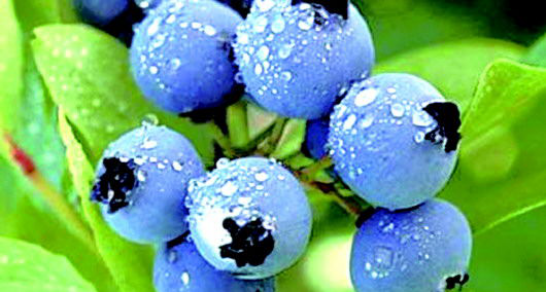
III. Fertilizing
Blueberries have the characteristics of being averse to fertilizer and averse to calcium. Generally, at the initial stage of blueberry planting, leaf mold soil or some decomposed animal manure can be used, and in the later planting process only a small amount of topdressing is needed. Generally, a nitrogen-phosphorus-potassium compound fertilizer with a content ratio of 1:1:1 is sufficient. Remember to keep blueberries away from everything containing calcium. For example, some flower lovers often like to casually place eggshells in flower pots to provide calcium, but this not only is not conducive to the growth of blueberry plants, but instead will accelerate the death of blueberries.
After learning how to grow a pot of your own potted blueberries at home, we might as well learn about the plant culture background of blueberries!
Planting Methods and Cultivation Management Points for Potted Blueberries
Blueberry is also called blue plum, dusi, dushi, etc. It is a low shrub of the genus Vaccinium in the family Ericaceae. In increasingly compact cities where land is precious, it is mainly grown in pots, and almost all blueberries are suitable for pot cultivation. However, for balcony pot cultivation, attention should be paid to selecting varieties of suitable height so that the flower pots can be moved. Let us take a look below at the planting methods for potted blueberries!
Pot Soil Preparation
Blueberries can only grow healthily in an acidic medium. A pH value of the growing soil between 4.5 and 5.5 is most suitable for blueberry growth. The pH value of garden soil is generally between 6 and 7. Even the acidic soil sold in flower and bird markets has a pH value at the lowest between 5.5 and 6. Planting bases generally use sulfur powder to adjust acidity. Adding one gram of sulfur powder per liter of soil can lower the soil pH value by 1. There are also some individual varieties with little demand for acidity, but none grow as well as when planted in acidic soil.
Rational Fertilization
Blueberries are averse to fertilizer and averse to calcium. In planting, generally at the initial stage of planting, decomposed cow, sheep, or rabbit manure or leaf mold soil can be added. Being averse to fertilizer does not mean fertilizer cannot be applied as topdressing, so in later planting a small amount of topdressing is still necessary. Absolutely avoid heavy fertilization. Generally, a nitrogen-phosphorus-potassium compound fertilizer with a content of 1:1:1 or a 1:2000 times solution of ammonium sulfate is used. Also note to keep away from things containing calcium, for example, some people often put eggshells in flower pots.
Timely Watering
The root system of blueberries is shallowly distributed, and they like moisture, so timely watering is very necessary. When watering blueberries, attention should be paid to the water source and water quality. Deep well water generally has a relatively high pH value and high sodium and calcium content. Long-term use will affect the growth of blueberries. When irrigating, sulfuric acid can be used to adjust the pH value to about 4.5 to 5.5 before watering, but acidic water should be applied about once every 3 irrigations. Proper watering can help blueberries resist high temperatures and safely pass the summer.
Light Control
Blueberries, like other plants, have an indispensable demand for light. Comparatively speaking, for the same variety, if light intensity is insufficient, fewer flower buds will be produced and fruit quality will be reduced. For orchards with excessively high planting density, proper pruning is beneficial to photosynthesis. For balcony and terrace growers, the light management of blueberries is simpler than that of orchards, but attention should be paid to ventilation.
Cold Protection Management
Lowbush and half-highbush blueberries have relatively strong cold resistance, but due to different low temperatures in various places, freezing damage still occurs when extreme weather appears. The most important of these are freezing damage to the tips of branches and flower buds overwintering in the open air, and even the death of the entire plant from freezing. Therefore, in cold regions, blueberry cultivation and overwintering protection are also important measures to increase yield.
How to Plant Blueberries? Blueberry Planting Methods
Blueberries are a fruit that many people like, so how to plant blueberries is a question, and many people are also thinking about how to plant blueberries better. Next, I will explain the planting methods of blueberries for everyone.
Blueberry Planting Methods:
1. Seedlings in Blueberry Planting Methods
Seedlings are not better the larger they are. Many people (including me) think to themselves that they can taste fresh fruit in the same year they plant. Although the idea is good, often in the first year after planting, due to water loss during express transportation, root damage, and transplant shock, the fruit set rate is very long and the fruit quality is hard to praise.
Because the few months of blueberry flowering and fruiting are the best season for their growth, excessive nutrient consumption on this can lead to poor seedling growth and even the occurrence of seedling death, which is not impossible. Therefore, when planting, nurturing the seedlings in the first year is most important, and the second year is the season for harvest.
Large seedlings (container seedlings) also have another defect, which is that they are prone to growing in limited space, causing root aging and lack of vitality. Although many large seedlings have thick main trunks, they actually have very few white tender fibrous roots, resulting in a long transplant recovery period after planting and very high requirements for the substrate. Otherwise, although flowers bloom and leaves grow, they lack staying power. The fundamental reason is that the root system has not been effectively restored!! The result is often either stunted seedlings or dead seedlings, with more loss than gain!!! So buying seedlings is buying their roots. Only if the roots are retained will there be fruit! Therefore, growers generally pay more attention to the number and size of the seedling root system when setting the price of seedlings.
2. Soil in Blueberry Planting Methods
Since blueberries are shrubs (not researched), their roots are mainly fibrous roots. This determines their requirements for soil: 1. Loose 2. Breathable 3. Acidic soil rich in organic matter. If you use a 7-gallon pot to grow blueberries, and after growing them well you find the pot is too heavy to move, then the seedlings are destined not to grow easily, or the root system grows on the surface of the pot, resulting in seriously insufficient staying power later. Because a substrate with high density cannot satisfy a good growth environment for blueberries! Therefore, when choosing the soil ratio, it is recommended that garden soil account for no more than 20%, with the rest composed of leaf mold soil, pine needle soil, peat, perlite, etc. (Of course, different varieties have different soil requirements.) Some fruit-growing friends can also grow them well with garden soil, but of course their own soil basically already meets the growth conditions for blueberries.
3. Water in Blueberry Planting Methods
Outdoor rainwater is best. Indoor tap water is also no problem. If a variety really requires water to be exposed to the sun before watering, then I personally think it is better to eliminate that variety!
To judge whether a seedling is healthy, first look at whether the growth of side branches in the previous year was luxuriant, and second look at the sprouting of basal branches in the autumn of the previous year.
Blueberries that are stunted may have survived last year but will also find it hard to survive this year! Do not think that just because the leaves are green it is alive and you can eat delicious blueberries. Things may often turn out contrary to one's wishes.
If you notice slow growth in the previous year, then March is the time to get to work. The first priority is to change the substrate. After tipping the pot, remove the soil below the root system and replace it with soil more suitable for blueberry growth. At this time, try to choose not to wash the roots and not damage the roots, so that it basically does no harm to seedling growth! At the same time, you will find that after a year of "growth," the white tender fibrous roots of the blueberry are basically very few. The planting soil from last year has all compacted and settled at the bottom of the pot during a year of watering, not breathable and not permeable. The truth why blueberries do not grow is right here!
After that, prune and cut back. Absolutely do not be soft-hearted no matter how thick the main trunk is. In fact, when the blueberry soil is good, it is really not easy to die. Cutting it short is to save nutrients and restore the root system. The new shoots produced this year are next year's fruiting branches!!
The above is the blueberry planting methods summarized for everyone by the editor. I hope it can improve the harvest of blueberry growers.